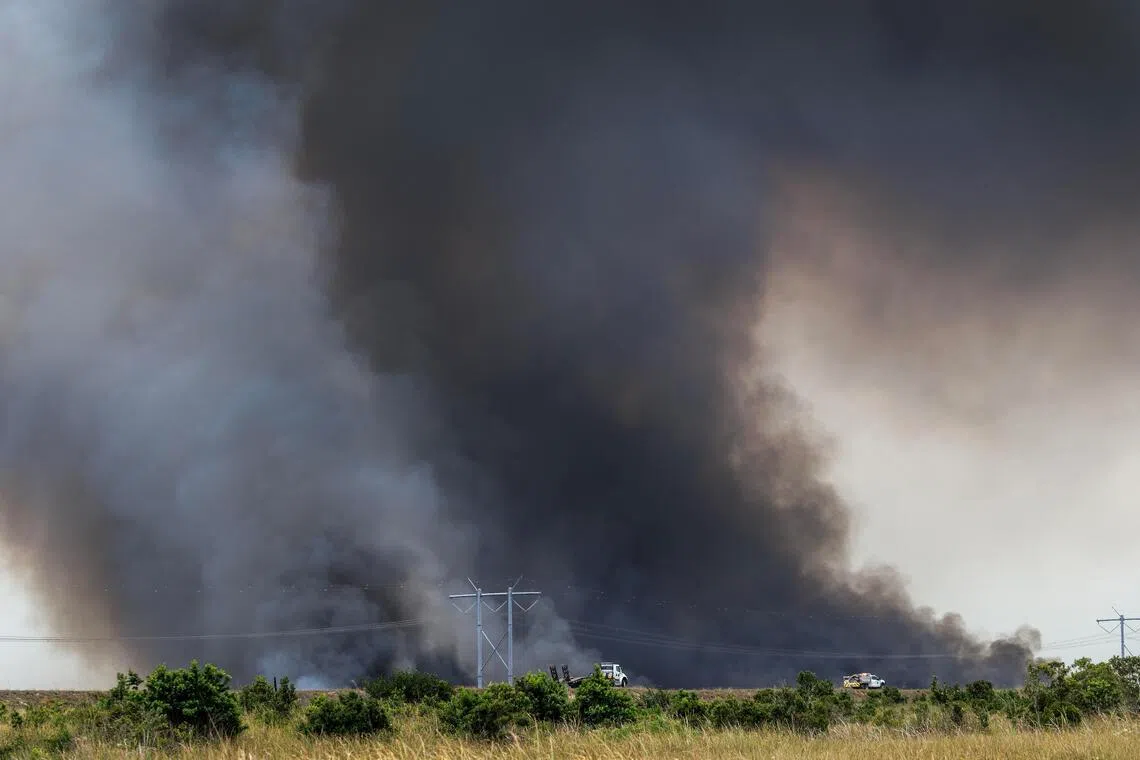
Researchers warn 2026 could see a particularly severe wildfire season, with global area scorched already 50% above average for this time of year and more than 163 million hectares burned from January through the first week of May, about 20% above the previous record. The risk is being amplified by climate change and a potentially strong El Nino, with record burns reported across West Africa, the Sahel, Sudan, South Sudan, Asia, the US and Australia. The article points to elevated risks for commodities, agriculture, insurance and broader climate-sensitive assets, though the immediate effect is mainly risk assessment rather than a direct market event.
The first-order read is obvious for agriculture, utilities, and insurers, but the more interesting effect is margin compression in anything exposed to heat, smoke, and logistics disruption. If fires stay elevated into the next 1-2 quarters, the biggest losers are likely not the obvious exposure names but firms with geographically concentrated operating footprints: regional power utilities with aging grid assets, freight/rail operators facing intermittent corridor shutdowns, and consumer packaged goods companies that rely on just-in-time distribution across fire-prone regions. The second-order winner is less about commodity inflation and more about pricing power for firms that can pass through climate-risk surcharges faster than peers. The real catalyst is not the headline fire season itself, but whether an El Nino-driven spike turns a bad year into a multi-quarter earnings reset. That matters because market pricing typically underestimates duration: the initial move is usually a brief volatility bid, while the bigger impact arrives in guidance cuts, higher insurance retentions, and capex reprioritization over the following 2-4 quarters. Reinsurers are especially sensitive here: one severe season can push loss-cost assumptions higher into the next renewal cycle, tightening terms even for companies not directly in the fire zones. Contrarianly, the market may already be semi-aware of climate risk, but underpricing the correlation shock. What is missing is that multiple regions can simultaneously experience elevated fire risk, which reduces the usual geographic diversification benefit in catastrophe portfolios and makes diversification models break down. That argues for favoring balance sheets with low exposure to property-cat exposures and shorting businesses that look cheap on trailing multiples but have hidden climate concentration in hard-to-insure assets. The most tactical setup is to own volatility where the market is still complacent and fade low-quality balance-sheet stories that depend on stable insurance costs. Over a 3-6 month horizon, the cleaner expression is long high-quality reinsurers and short regional infrastructure/utilities with fire-prone asset bases, while using options to limit gap risk around any major fire escalation or El Nino upgrade.
AI-powered research, real-time alerts, and portfolio analytics for institutional investors.
Request DemoOverall Sentiment
moderately negative
Sentiment Score
-0.45
