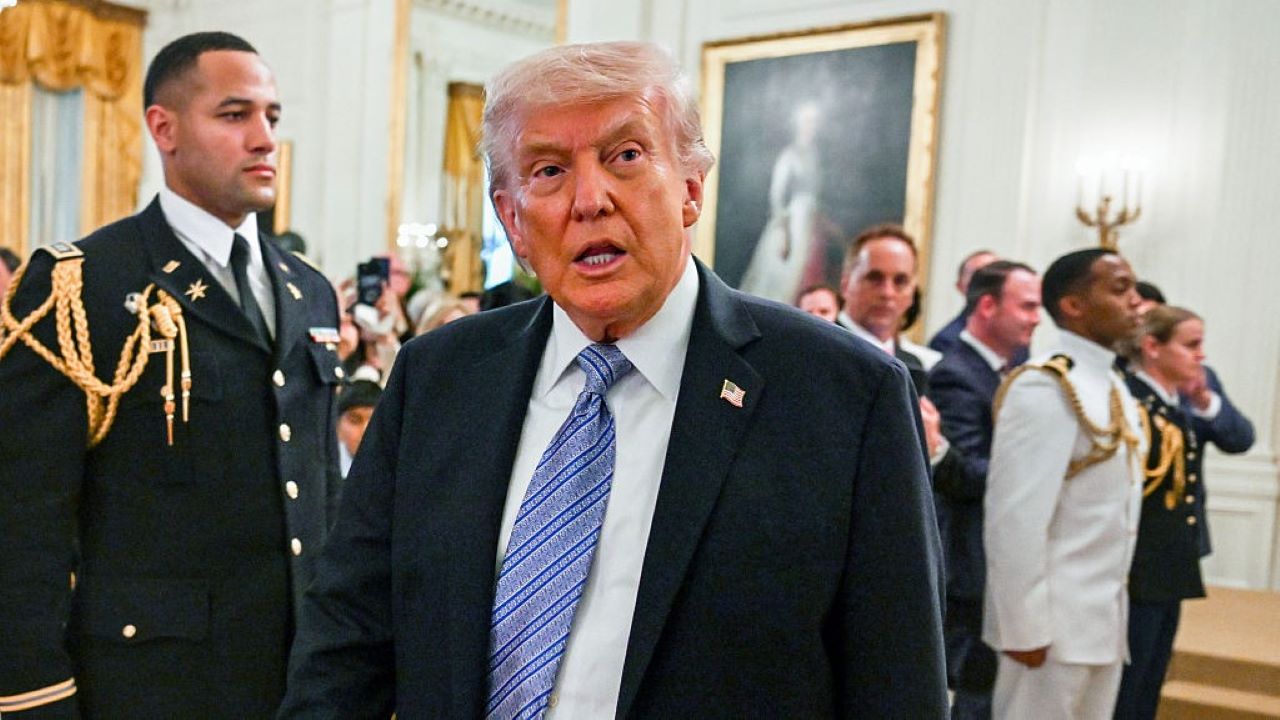
Trump said a U.S.-Iran peace deal could be reached in as soon as one week, while pausing Project Freedom in the Strait of Hormuz and warning bombing could resume at a much higher intensity if talks fail. China also ordered firms to ignore U.S. Iran sanctions, escalating the standoff around Iranian crude flows and enforcement risk. The article implies elevated geopolitical and energy-market volatility, especially for oil shipping through Hormuz.
The market is underpricing how quickly a “peace window” can flip into a supply shock. Even if the diplomacy headlines soften near-term risk premia, the more important change is that the Strait of Hormuz has moved from a background geopolitical tail risk to an explicit bargaining chip, which keeps prompt energy volatility bid and makes shipping insurance, tanker utilization, and regional air-defense demand structurally tighter over the next several weeks.
China’s instruction to ignore U.S. Iran sanctions is the bigger second-order signal: it converts what was previously a compliance problem into a sovereignty test for Beijing. That raises the odds of uneven enforcement, more opaque payment channels, and a widening discount for sanctioned barrels, which helps keep headline crude capped in the near term while supporting the profitability of entities able to intermediate or hedge around the sanctions regime. The real beneficiaries are not just upstream producers, but also midstream, storage, and select defense/surveillance names tied to Persian Gulf convoy protection and base hardening.
The contrarian risk is that traders focus too much on the peace headline and not enough on the enforcement asymmetry. If Washington cannot credibly punish Chinese buyers, Iran’s export cash flow is more resilient than consensus assumes, reducing the probability that pressure alone resolves the conflict; that argues for a longer-duration volatility bid rather than a one-way directional oil trade. Conversely, if negotiations fail, the upside in crude is convex because spare capacity cannot be deployed fast enough to offset a sudden Hormuz disruption, so short-vol positions are unattractive here.
Net: this is a regime where the best trade may be owning optionality on both oil and defense while avoiding outright beta until the next 1-2 weeks of diplomatic signaling resolve. Any pullback on peace headlines is likely to be transient unless there is visible, verifiable compliance from both Iran and China, which looks unlikely in the near term.
AI-powered research, real-time alerts, and portfolio analytics for institutional investors.
Request DemoOverall Sentiment
moderately negative
Sentiment Score
-0.35
