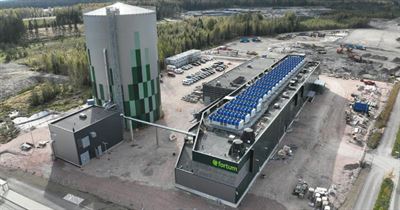
Valmet will deliver its DNAe Energy Balance Optimizer and a customized district heating accumulator optimization solution to Fortum’s Espoo energy assets, with the order recorded in Valmet’s Q4 2025 orders received and customer takeover scheduled for Q4 2026; the order value was not disclosed. The automation will integrate with Fortum’s Valmet DCS to optimize electric boiler dispatch and heat storage charging/discharging, supporting Fortum’s shift from fossil fuels to electricity, improved participation in electricity reserve markets, and greater district heat cost efficiency. For Valmet (2025 net sales ~EUR 5.2bn), the deal reinforces recurring digital/automation demand in the Nordic energy transition, though financial impact is unclear without order value disclosure.
Market-structure: Valmet (VALMT.HE) and Fortum (FORTUM.HE) are direct winners — Valmet captures higher-margin software/optimization revenue and recurring service upside, Fortum monetizes electric boilers and heat accumulators to capture reserve-market spreads. Incumbent fossil-dependent district‑heating operators and short‑duration gas peakers face demand loss and lower utilization; expect localized downward pressure on spot gas burn in Nordic winters (5–15% seasonal reduction possible as electrified heat scales). Competitive dynamics favor vendors that bundle DCS + optimization (higher switching costs, stickier O&M revenue), compressing margins for pure hardware suppliers over 2–4 years.
Risk assessment: Key tail risks are regulatory changes to reserve-market settlement (which can remove paybacks), cyber/OT breaches on integrated DCS, and delivery delays — each could wipe 10–30% of projected incremental earnings. Immediate price impact is likely muted (days); expect earnings re‑rating over 3–12 months as annualized service revenue is recognized; structural benefits play out over 2–5 years. Hidden dependencies include market liquidity for reserves and Fortum’s bidding sophistication — if reserve prices fall >20% annualized the business case weakens.
Trade implications: Primary trade is long VALMT.HE size 2–3% portfolio via equity or 9–12 month call spreads (buy 12‑month 15–25% OTM call spread) to capture recurring revenue re‑rating; target +25–35% in 12 months, stop-loss 15%. Complement with 1–2% long FORTUM.HE equity or Jan 2027 calls to capture operational upside from optimized dispatch; trim on +20% move or if Nordic reserve prices drop >15%. Pair trade: long VALMT.HE vs short ABB (ABB) small weight (0.5–1%), expecting niche DCS premium to outperform diversified automation over 6–18 months.
Contrarian angles: Markets may underprice software-as‑service upside and annuity margins — but also risk commoditization: if competitors undercut pricing by 20–30% or regulators cap reserve payouts, valuation multiples revert. Historical parallels: early grid‑optimization incumbents (SCADA/DMS) saw 2–3x P/S multiple expansion once recurring services hit >20% rev; flip side, rapid tech adoption concentrated risk (cyber + single‑vendor lock‑in). Monitor reserve-market auction outcomes and cybersecurity incidents as primary catalysts that can rapidly reprice these names.
AI-powered research, real-time alerts, and portfolio analytics for institutional investors.
Request DemoOverall Sentiment
mildly positive
Sentiment Score
0.28
