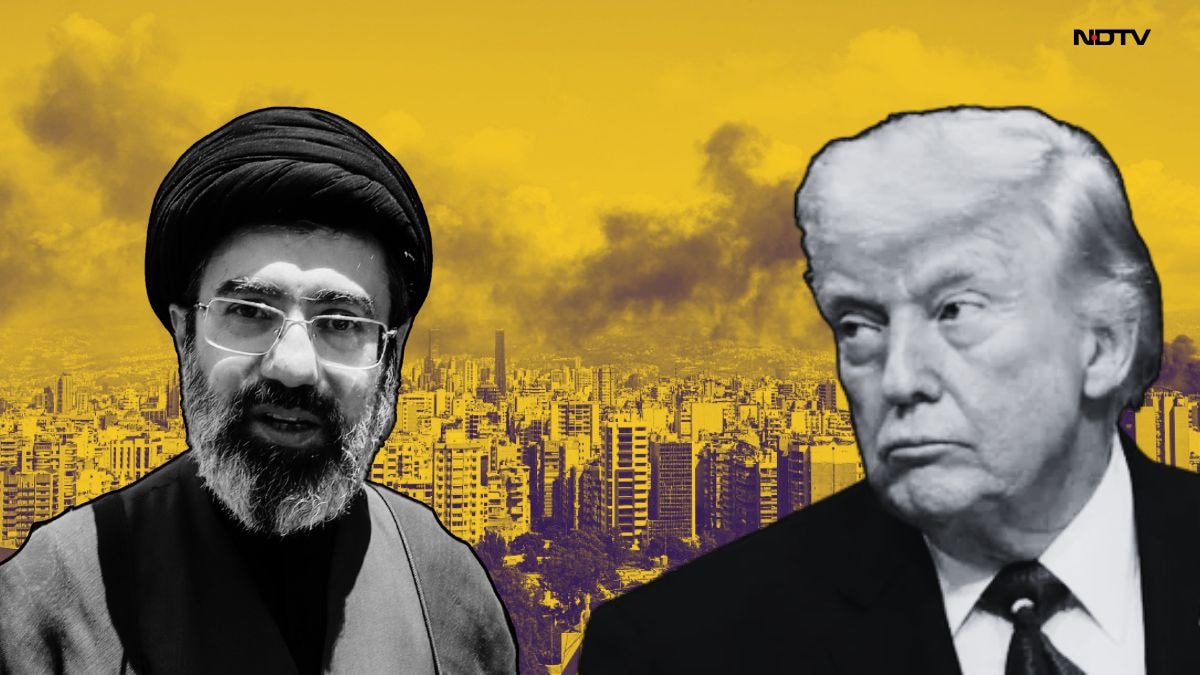
The US ordered an immediate naval blockade of the Strait of Hormuz after Iran's Revolutionary Guards claimed full control of the waterway and warned of "deadly" consequences for any miscalculation. The standoff follows failed US-Iran talks in Pakistan, leaving a fragile ceasefire uncertain and raising the risk of disruption to a critical route for global oil shipments. Trump also threatened 50% tariffs on countries supplying weapons to Iran and warned of strikes on Iranian civilian infrastructure if nuclear concessions are not made.
The key market issue is not the headline blockade itself, but the repricing of tail insurance across every asset that depends on uninterrupted Gulf transit. The first-order move is higher crude and freight; the second-order move is a volatility bid in rates, FX, and credit as inventories, chartering, and hedging costs rise simultaneously. Even if physical flows are only partially disrupted, the market will likely price a scarcity premium before barrels are actually lost, which can persist for days to weeks because tankers, refiners, and insurers all re-underwrite risk on slower cycles than headlines.
Winners are upstream producers with low decline rates and minimal Gulf exposure, but the cleaner trade is actually in “optionality” around energy inflation: tanker owners, select US LNG/export infrastructure, and refiners with cheap domestic feedstock can benefit from dislocations in global shipping and regional spreads. Losers are airlines, chemicals, and consumer discretionary names with high fuel sensitivity, plus EM importers and European industrials exposed to both energy and shipping cost pass-through. A prolonged blockade also tightens working capital across supply chains as firms carry more inventory and longer transit times, which is a quiet negative for small-cap cyclicals and lower-quality credit.
The market may be underestimating policy reversibility. If the blockade proves symbolically assertive but operationally leaky, the premium in crude and freight can fade quickly, especially if there is a diplomatic backchannel or if the US avoids a hard physical confrontation. Conversely, the true risk is escalation into asymmetric attacks on energy infrastructure or insurance sanctions, which would extend the shock from days into months and force broader inflation repricing. That asymmetry argues for expressing the view with convex structures rather than outright commodity longs.
Consensus is likely overconfident that this is a short-lived headline risk. In reality, even a temporary disruption can trigger precautionary buying, inventory restocking, and derivative hedging that outlast the immediate event, while central banks will be reluctant to ease into an energy shock. The best contrarian angle is that the worst gap may be in shipping and insurance rather than oil itself, because those markets are thin, reactionary, and can reprice faster than physical crude supply can normalize.
AI-powered research, real-time alerts, and portfolio analytics for institutional investors.
Request DemoOverall Sentiment
strongly negative
Sentiment Score
-0.80
