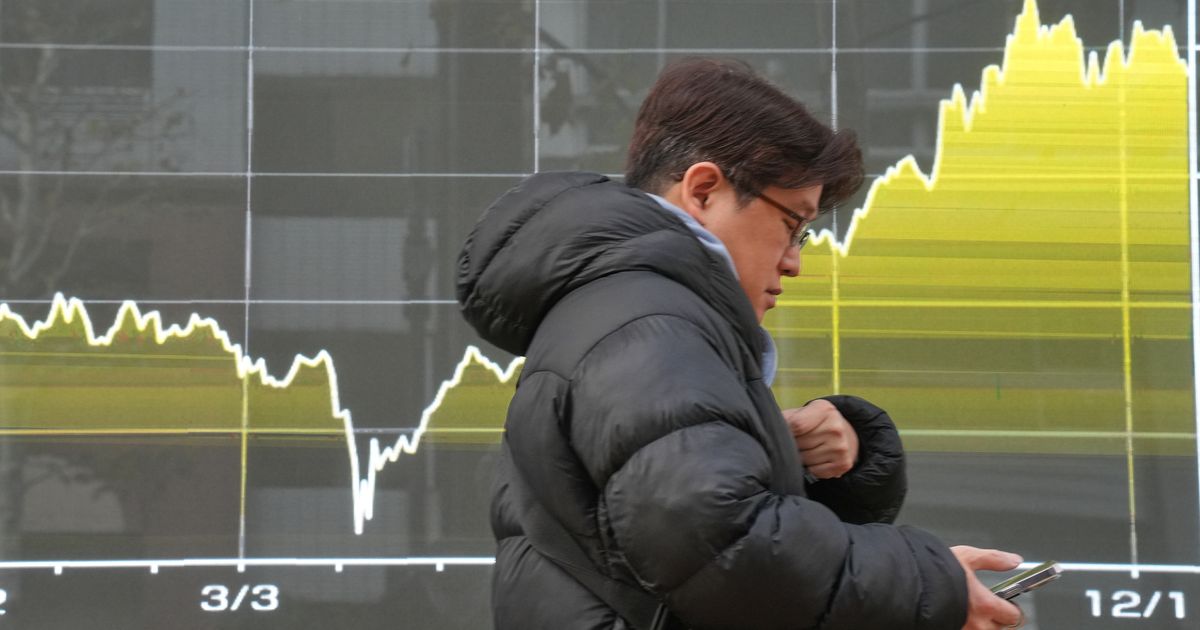
The Bank of Japan raised its policy rate by 25 bps to 0.75% — the highest since 1995 — and Japan’s 10-year JGB yield topped 2% for the first time since May 2006, while the Nikkei climbed ~1% to 49,507.21. U.S. CPI for November rose 2.7% (below expectations), boosting hopes for eventual Fed cuts and leaving S&P futures marginally higher even as Dow futures slipped; U.S. markets saw the S&P 500 up 0.8% to 6,774.76 with techs led by Micron (+10.2%) and Nvidia (+1.8%). Currency and commodity moves included USD/JPY rising to 156.36, Brent at $59.61/bbl, and bitcoin up ~3.8% to about $88,000, suggesting a cautious but constructive market reaction to central bank and inflation signals.
Market structure: BOJ’s 25bp hike and JGB 10y >2% instantly reprice duration — Japanese banks, insurers and exporters are the primary beneficiaries (improved NIMs and FX-translated revenues) while global long-duration growth names (high multiple US tech) face renewed multiple risk. Micron’s beat and USD weakness in Asia support cyclical semis (MU, NVDA) demand; rising JGB yields and a softer yen imply higher global rates volatility and a stronger dollar bias for EM and FX-sensitive corporates.
Risk assessment: Key tails include a rapid yen snap-back (eg. USD/JPY <150 within 30 days) that would slam exporters and levered Japanese financials, or Fed surprise inflation prints that delay cuts and reflate global rates. Immediate (days) risk is headline-driven FX and options-IV moves; short-term (weeks) is repositioning into/away from Japan and semis; long-term (quarters) is secular BOJ normalization forcing higher real rates and multiple compression for long-duration assets.
Trade implications: Favor selective exposure to memory demand recovery (MU) and conviction-sized, capped-upside NVDA option structures while hedging market-rate moves with bond-duration shorts or steepening trades. Rotate 5–10% of growth exposure into Japan financials and cyclicals; use pair trades (long MU / short AVGO or ORCL) where relative earnings leverage favors memory over diversified chipmakers.
Contrarian angles: Consensus of imminent Fed cuts is likely overstated given noisy CPI and delayed data; tech re-rating on hopes of cuts is vulnerable. The market may underprice the risk that sustained JGB repricing forces BOJ asset-liability adjustments, producing a global duration shock — that creates a hedge-able divergence between cyclicals (cheap) and long-duration growth (expensive).
AI-powered research, real-time alerts, and portfolio analytics for institutional investors.
Request DemoOverall Sentiment
mildly positive
Sentiment Score
0.25
Ticker Sentiment
