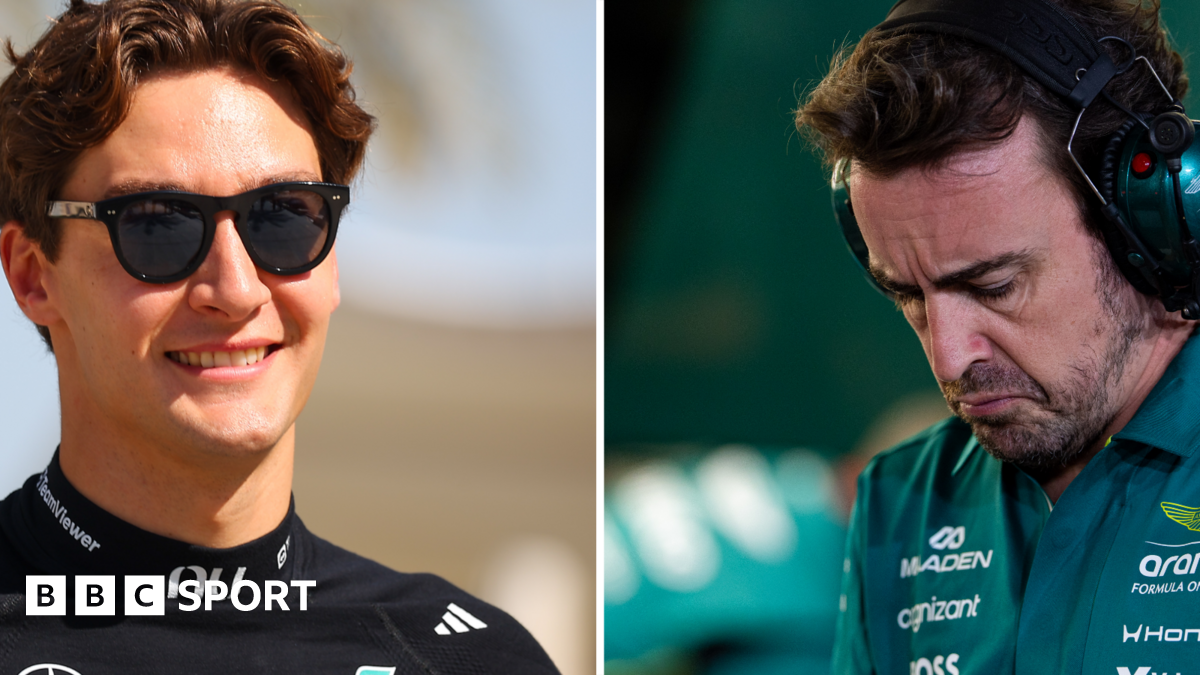
Bahrain pre-season testing suggests Ferrari and Mercedes lead the competitive order—Charles Leclerc posted the fastest lap (1:31.992), 0.811s clear of Mercedes—and race-simulation runs reinforce their advantage while McLaren and Red Bull trail closely. Aston Martin's new Honda power unit and first in-house gearbox proved unreliable and uncompetitive (very limited running, battery shortages and only six laps for Lance Stroll on the final day), leaving the team effectively at the back alongside Cadillac; Williams' car is reportedly 25–40 kg overweight and lacking downforce. Alpine appears to have climbed into the top of the midfield after switching to Mercedes power, Audi/Sauber are respectable, and an off-track dispute over engine compression-ratio measurement prompted an FIA compromise (ambient and 130C) unlikely to change the pecking order—start-line and energy-management issues add execution risk early in the season.
Market structure: Pre-season testing implies a bifurcation — Ferrari (RACE) and Mercedes-equivalent packages are the short-term winners while Aston Martin and Cadillac are clear losers; a 0.811s single-lap margin for Leclerc and superior race sims imply materially higher competitive probability for Ferrari in early rounds (implied win-rate uplift of ~15–25% vs baseline). Alpine’s step-up and Audi/Sauber stability create a deeper midfield, pressuring smaller teams (Williams) that face weight/downforce deficits and likely lower sponsorship/leverage.
Risk assessment: Key tail risks include an FIA rule change on compression ratio within ~30–60 days that could erode Mercedes/Ferrari advantages, and engine reliability failures (Honda/Aston) forcing DNFs or technical penalties; these create high P&L skew in the first 3–6 races. Hidden dependencies: engine deployment/energy management affects start-line volatility and race outcome dispersion — increasing implied volatility for event-driven instruments and making early-season results noisy.
Trade implications: Use concentrated, time-boxed exposure: favor Ferrari-linked equity/options for 3–6 month alpha while capping downside; avoid or underweight suppliers/exposures tied to Aston/Honda until reliability benchmarks are demonstrated (20–30% run-rate improvement in lap-completion over two consecutive tests/races). Cross-asset: expect modest knee-jerk flows into luxury autos (positive for RACE) and increased short-dated option premium across motorsport-sensitive names; consider gamma-friendly option structures around Australia and first 3 races.
Contrarian angles: Consensus may over-weight test headline times; team sandbagging and differing fuel/PU specs mean Mercedes reliability concerns could be underpriced — a conservative view is that first 3 races will re-rate teams by 10–25% relative to testing. Conversely, Aston Martin’s equity downside could be overdone given PIF/Stroll capital and Newey’s track record — a recovery play becomes viable only after clear telemetry fixes (consistent pit-lap times, battery endurance ≥3 race-distance stints).
AI-powered research, real-time alerts, and portfolio analytics for institutional investors.
Request DemoOverall Sentiment
mixed
Sentiment Score
-0.05
Ticker Sentiment
