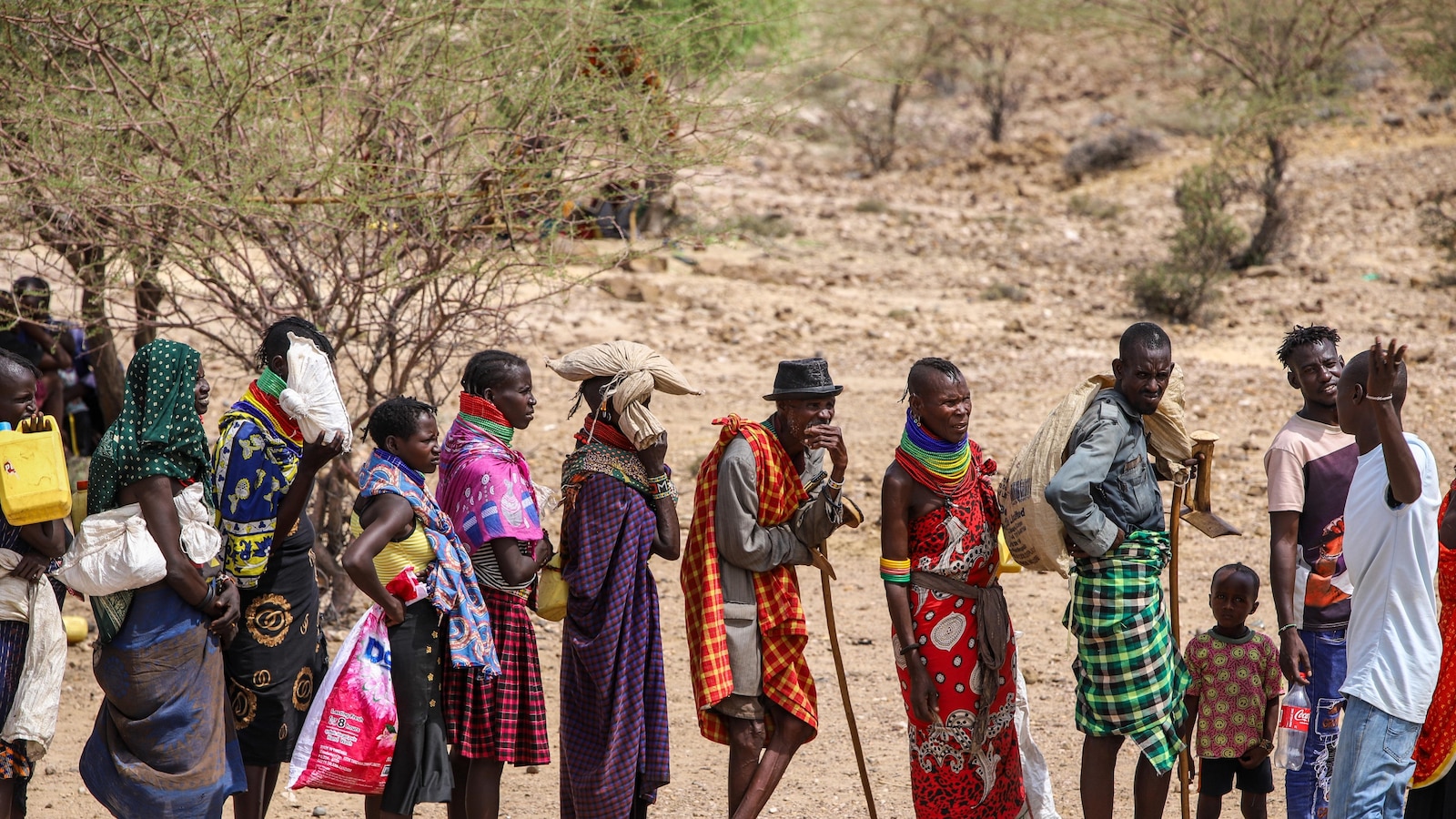
Severe drought in parts of Kenya has left over 2 million people facing hunger, with 10 counties affected and the northeastern county of Mandera at an "alarm" classification after four consecutive failed wet seasons; livestock losses mirror the mass mortality seen between 2020 and 2023. The humanitarian crisis extends across the Horn of Africa—more than 3 million displaced in Somalia and acute malnutrition in IDP camps—driven by Indian Ocean warming and climate change, creating downside pressure on regional agricultural output, food security, humanitarian aid demand, and related commodity market exposure.
Market structure: Short-term winners are global fertilizer producers (NTR, MOS, CF) and water/irrigation equipment suppliers (XYL, PNR) as import demand and CAPEX for drought relief rise; losers are East African ag producers, regional meat processors and Kenyan sovereigns/banks due to asset-quality stress and lost livestock income. Regionally cereal and maize prices can spike 10–30% locally within months even if global supply impact is muted, shifting pricing power to exporters (ADM, BG) and logistics providers. Risk assessment: Tail risks include mass displacement, social unrest and a sovereign rating shock in Kenya/Ethiopia that could widen local USD sovereign spreads by 100–300bp and push KES/SOS depreciations of 5–15% if rains fail again. Immediate (days–weeks) impacts are humanitarian and FX stress; short-term (1–6 months) affects planting cycles and import bills; long-term (years) risks are desertification and structural decline in pastoral economies reducing taxable base. Trade implications: Tactical trades: buy fertilizer equities and 3–9 month calls tied to NTR/MOS (target +12–25% if regional grain prices rise >10%); buy short-dated corn call spreads (CME) sized small (0.5–1% notional) to capture supply-tightening premiums; selectively long water infrastructure names (XYL, PNR) for 12–18 months. Credit/FX trade: buy 1-year Kenyan CDS or go long USD/KES forwards (size 0.25–0.5% NAV) to express sovereign/FX stress; trim if major donor package >$500m announced. Contrarian angles: Consensus may overstate global commodity impact — Africa is a small share of global cereals — so the market could underprice fertilizer and water-equipment CAPEX, and concurrently overprice sovereign stress if swift donor relief materializes as in 2022–23. Watch triggers: Oct–Dec rainfall forecasts (ICPAC) and Indian Ocean SSTs; if rains miss by >20% or UN aid shortfall persists, increase allocation to fertilizer/water and commodity shorts for banks with high ag exposure.
AI-powered research, real-time alerts, and portfolio analytics for institutional investors.
Request DemoOverall Sentiment
moderately negative
Sentiment Score
-0.60
