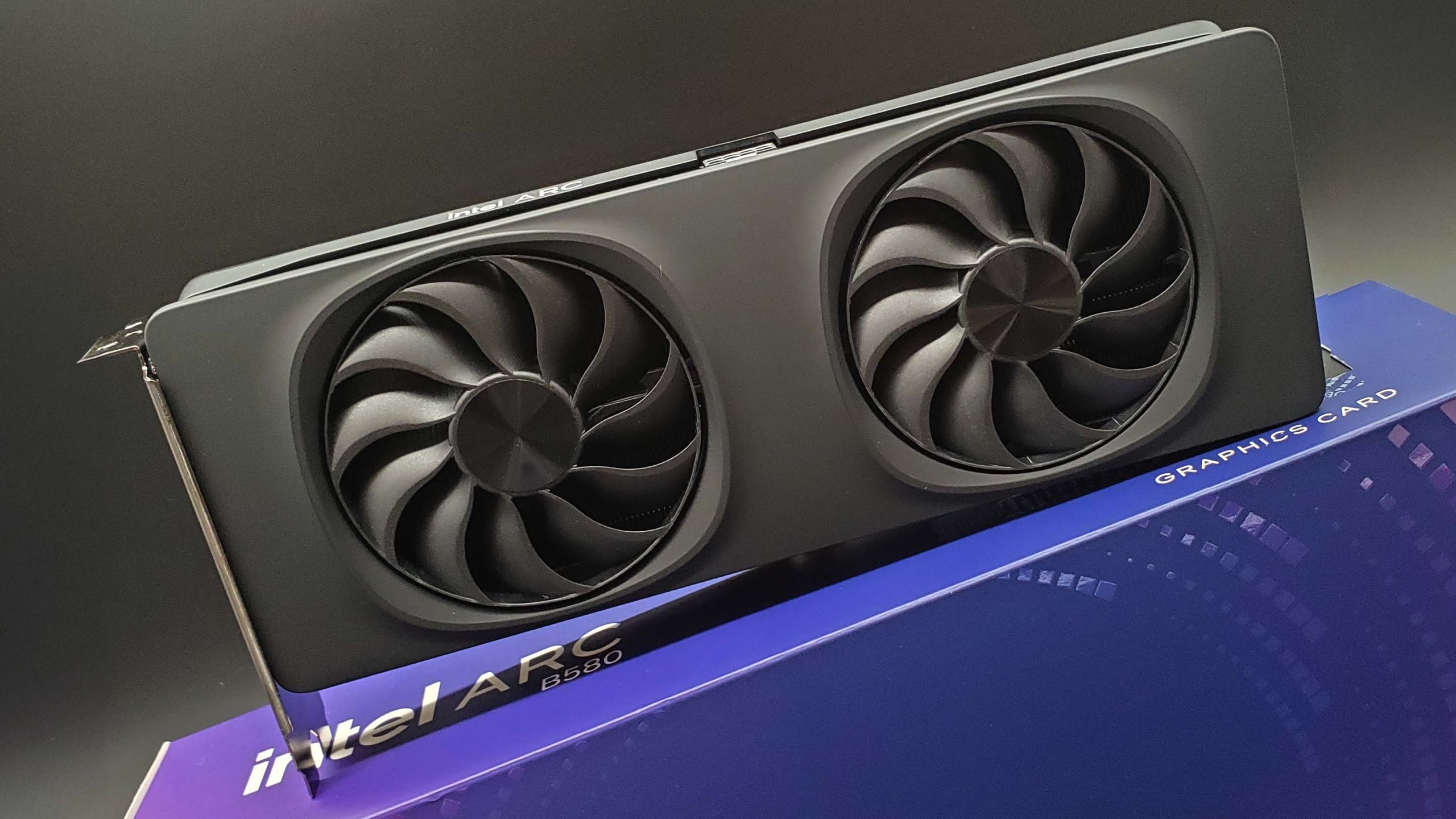
References to an unannounced Intel GPU codenamed G31 (rumoured as Arc B770) were found in a Panther Lake laptop driver package after the card failed to appear at CES, renewing speculation about a potential high-end Intel gaming GPU. Performance expectations range broadly (roughly equivalent to an NVIDIA RTX 5060 Ti up to RTX 4070/5070 with potential 16 GB VRAM), and Intel may be delaying a launch due to RAM price volatility, prioritising its Panther Lake CPU debut, or continuing driver development. A competitive B770 could exert meaningful pressure on NVIDIA/AMD in the mid-range, but persistent lack of official confirmation and product timing mean immediate market impact is limited.
Market structure: If Intel ships a B770-class part with ~16GB VRAM at aggressive pricing, mid-range Nvidia (RTX 4060–4070 tier) would face direct pricing pressure and potential 200–500bp share shifts in mid-range discrete GPUs over 6–12 months. AMD's RX 90xx line benefits if Intel fails or is delayed, preserving AMD pricing power; DRAM suppliers (Micron) are second-order beneficiaries if OEMs buy more VRAM. Short-term demand signals hinge on VRAM spot pricing movements and OEM channel inventory; a 5–10% fall in DRAM spot would materially improve unit economics for a 16GB card launch.
Risk assessment: Tail risks include Intel cancelling the product (negative surprise), catastrophic driver/firmware failures causing recalls, or antitrust scrutiny if price-subsidized GPUs trigger investigations — any could cause >20% intraday moves in INTC/NVDA. Immediate (days) impact is low; key windows are 0–3 months (driver leaks, CES follow-ups), 3–9 months (product reveal), and 9–18 months (aggregate share shifts and pricing). Hidden dependencies: OEMs (HP, Dell) firmware references and foundry capacity trade-offs with Panther Lake 18A node.
Trade implications: Tactical allocations — small, event-driven long INTC (2–3% portfolio) ahead of potential B770 confirmation with 3–9 month horizon, target +20–30%, stop -12%; pair trade overweight AMD (1–2%) vs underweight NVDA (1–2%) over 6–12 months to express mid-range squeeze risk to Nvidia. Options: buy a 6–9 month NVDA 10% OTM put spread sizing cost ~1–2% portfolio to hedge; consider 6–12 month long MU (Micron) 1% if DRAM spot prices fall >7% QoQ supporting higher VRAM adoption.
Contrarian angles: Consensus underestimates Intel’s willingness to use pricing to buy share — a sub-$400 B770 with 16GB would compress NVDA mid-range ASPs by 10–25% over a year, an outcome the market has not fully priced. Historical parallel: Intel’s Arc initial stumble then incremental driver gains (similar to AMD’s Vega → RDNA transition) suggests driver maturity is a 3–6 month catalyst; unintended consequence is accelerated OEM channel restocking that boosts incumbents' GPU unit sales but compresses margins across the supply chain.
AI-powered research, real-time alerts, and portfolio analytics for institutional investors.
Request DemoOverall Sentiment
mixed
Sentiment Score
0.10
Ticker Sentiment
