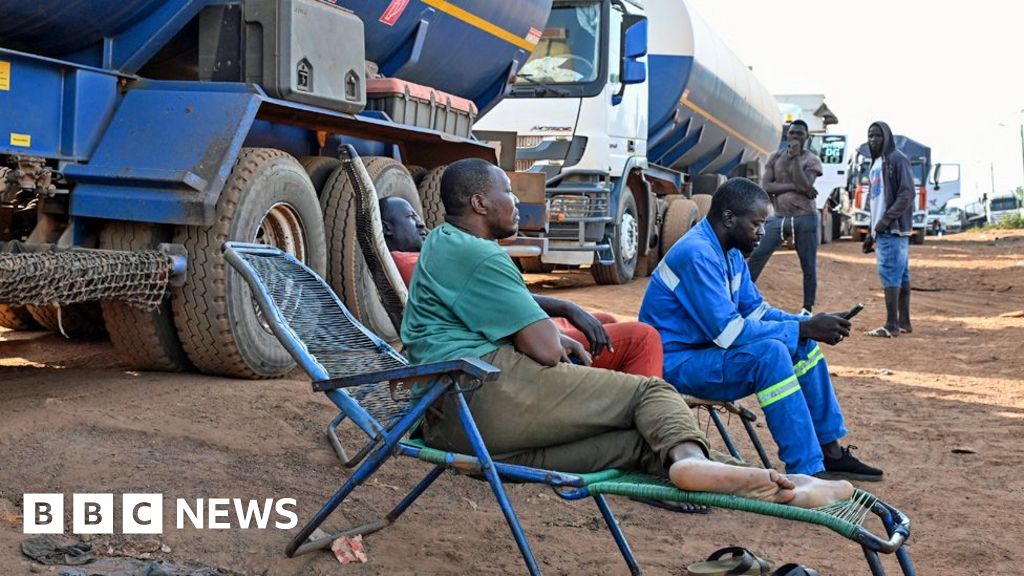
Mali is experiencing severe economic paralysis due to a two-month fuel blockade orchestrated by the al-Qaeda-affiliated JNIM, which has escalated its insurgency into economic warfare by targeting fuel tankers and supply routes. This has led to widespread economic disruption, including tripled food prices, soaring transport costs, critical supply chain breakdowns, and power shortages affecting essential services like hospitals and schools. The crisis highlights the Malian government's weakening control and has compelled it to secure an emergency fuel supply agreement with Russia, deepening its reliance on Moscow and further straining relations with Western partners, potentially impacting future aid and investment.
Mali faces severe economic paralysis from a two-month fuel blockade by the al-Qaeda-affiliated JNIM, escalating its insurgency into economic warfare. This has led to widespread disruption, including reported tripling of food prices, surging transport costs, and critical supply chain breakdowns for imported goods. Essential services like hospitals and schools are severely impacted by power cuts and fuel shortages.
The Malian government has responded with army-escorted convoys and an emergency fuel supply agreement with Russia. This increasing reliance on Moscow, following Western troop withdrawals, signals a significant geopolitical shift. Such a move risks further alienating Western partners, potentially jeopardizing future aid and investment from the US and EU, whose relations are already strained.
The crisis highlights the government's weakening control beyond Bamako and its reactive approach, undermining public confidence. Prolonged instability and economic hardship raise concerns about increased crime and a worsened security situation, presenting significant operational and investment risks for entities with regional exposure.
AI-powered research, real-time alerts, and portfolio analytics for institutional investors.
Overall Sentiment
extremely negative
Sentiment Score
-0.90
