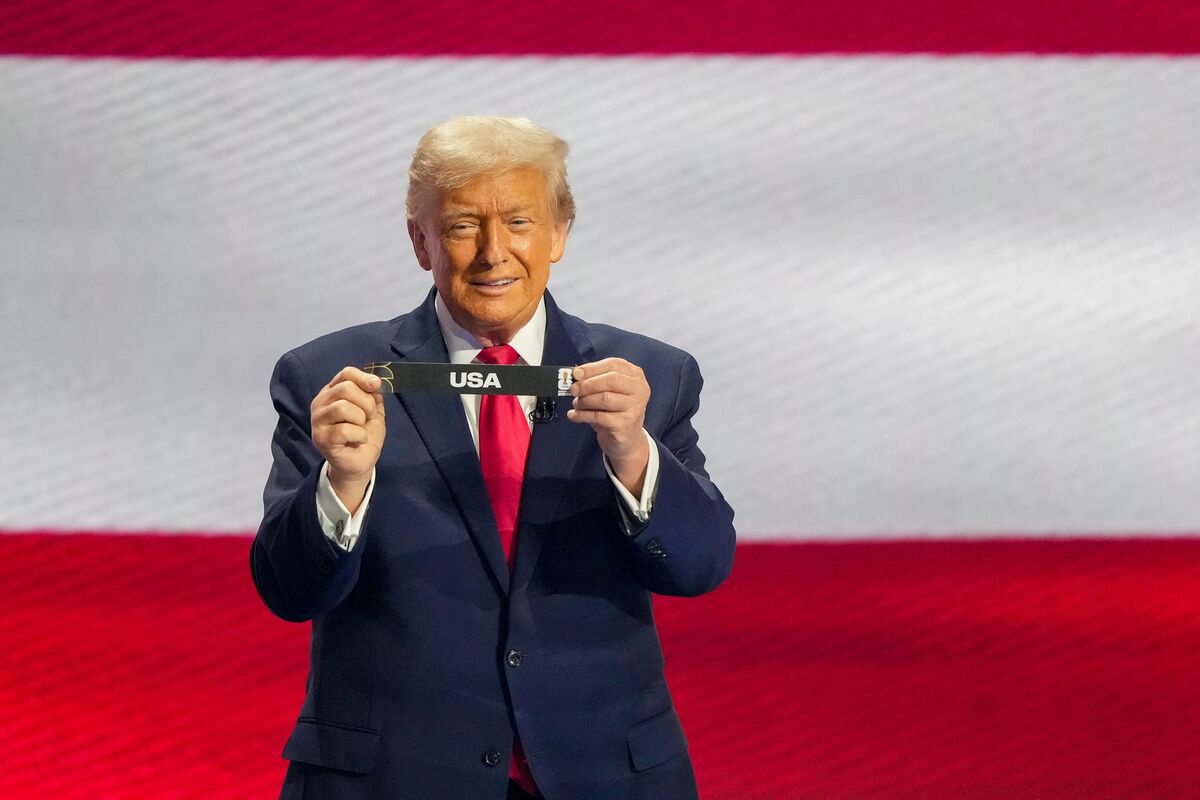
President Trump is launching a road campaign next week to push his economic agenda as polls show slipping support and Americans express concern about affordability; the White House has sought to downplay affordability as an issue. For markets, the development signals political focus on economic messaging and the potential for future fiscal policy proposals, but absent concrete policy measures the immediate market impact should be limited while investor sentiment may remain sensitive to any substantive fiscal or regulatory announcements.
Market structure: A sagging presidential poll and renewed on‑the‑road campaigning increase political/ policy uncertainty that amplifies demand for defensive cash flows (consumer staples XLP, utilities XLU, healthcare XLV) while compressing discretionary spending (XLY, AMZN). If the campaign pivots to tax cuts or fiscal stimulus the winners shift toward cyclicals (industrial XLI, energy XLE) and banks (XLF) as yields and growth expectations rise; if it leans on tariff/price rhetoric, input costs and commodities (CL=, copper) gain. Cross‑asset signal: near‑term bid for USD and safe havens (GLD, UUP, Treasuries) but a medium‑term tug‑of‑war between fiscal‑driven higher yields and risk‑off duration rallies.
Risk assessment: Tail risks include a large fiscal surprise (>$500bn package) that pushes 10‑yr >40bp higher quickly, or a political shock that triggers >5% equity drawdown; both materially affect rates, credit spreads and FX. Time horizons: immediate (days) = event volatility around rallies; short (6–12 weeks) = positioning ahead of policy rollouts; long (6–18 months) = structural fiscal trajectories that reset term premium. Hidden dependencies: consumer affordability data (real wages, CPI ex‑food/energy) will determine whether stimulus translates to growth or inflationary surprise. Catalysts: policy speeches, CBO score, monthly CPI/retail sales and 2–3 national polls.
Trade implications: Favor tactical hedges and relative value over directional large beta. Direct plays: small long GLD/UUP as tail hedge and short long‑duration Treasuries (TLT) on fiscal surprise; pair trade long XLP vs short XLY for 1–3 month horizon. Options: buy 1–3 month SPY put spreads as low‑cost tail hedges and consider TLT put spreads if 10‑yr >15–20bp off current. Sector rotation: overweight staples/healthcare, selective energy/basics on stimulus signals, underweight discretionary and long‑duration tech until policy clarity.
Contrarian angles: Consensus expects reflexive safe‑haven flows; underappreciated is that credible fiscal expansion would instead lift yields and cyclicals — a mispricing opportunity to short duration and pair long banks vs long TLT. Reaction may be underdone on the upside for energy/industrials if markets price a >$300–500bn fiscal package within 6–12 months. Historical parallels: 2017 tax‑cut playbook shows equities can rally while yields jump; unintended consequence of crowding into GLD/UUP is leaving portfolios exposed to a yield‑driven repricing that hurts long‑duration holders.
AI-powered research, real-time alerts, and portfolio analytics for institutional investors.
Request DemoOverall Sentiment
moderately negative
Sentiment Score
-0.30
