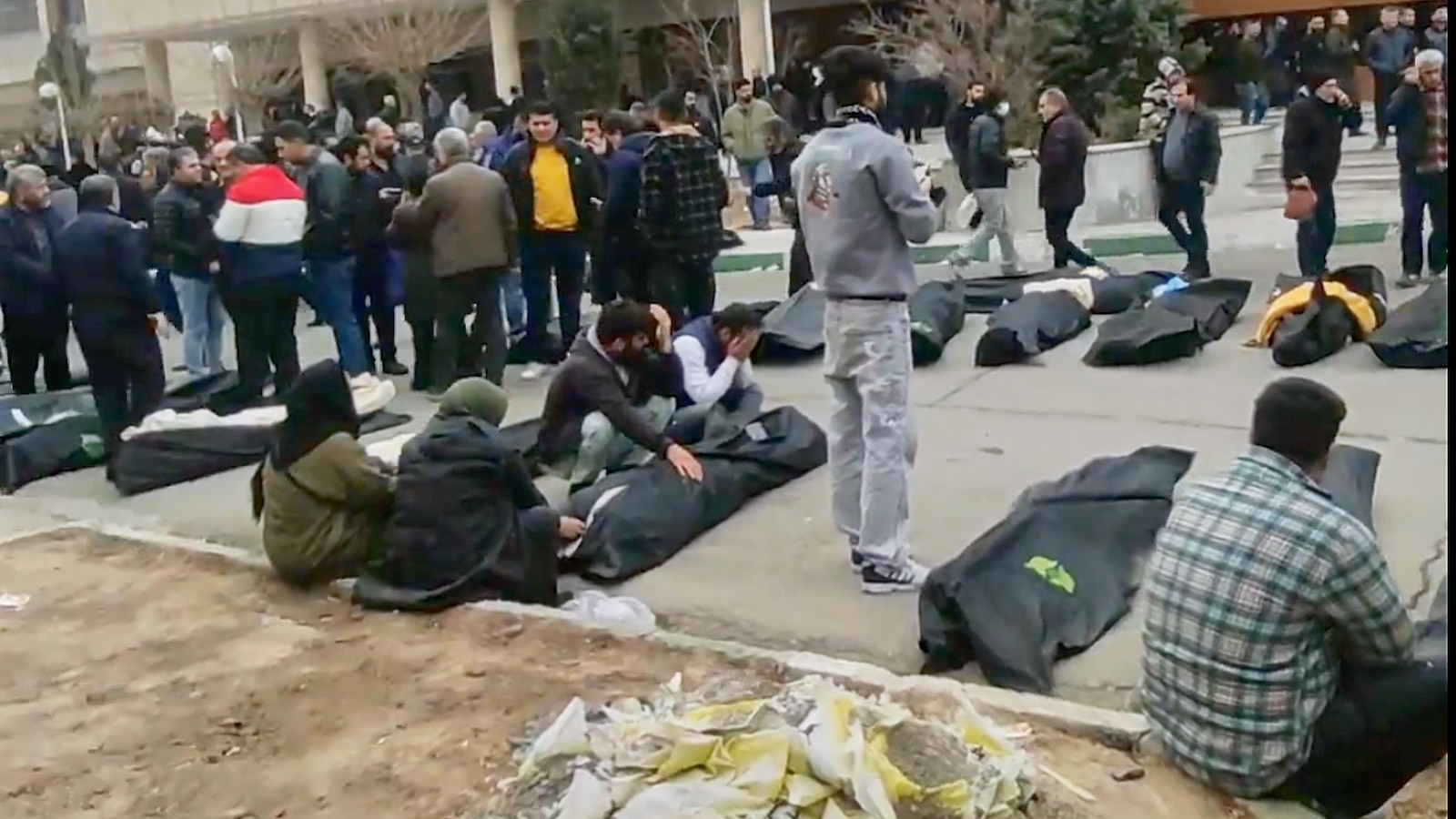
Widespread protests across Iran, driven initially by inflation and a plunging rial, prompted a severe security crackdown that activists say killed more than 6,000 people and triggered an internet blackout and hospital interference. The confrontations — accompanied by government claims that protesters are foreign agents and by a recent history of conflict and sanctions — raise downside political and stability risk for Iran, with potential second-order impacts on regional geopolitics, sanctions exposure and FX/market sentiment for investors with emerging-market and Middle East exposure.
Market structure: Domestic unrest in Iran raises a persistent negative shock to Iran’s FX, inflation, and export capacity with immediate winners being safe-haven assets (USD, gold) and regional defense suppliers; losers are EM sovereign credit and Iran-linked commodity supply (oil) if exports are interrupted by sanctions or strikes. Pricing power shifts toward energy producers and arms contractors if escalation forces a sustained premium; conversely global manufacturers with EM supply-chain exposure will face higher input-cost volatility and shorter-term order postponements.
Risk assessment: Tail risks include a low-probability Iran Strait disruption that adds 0.5–1.0 mbpd effective supply loss and a >$10/bbl oil spike, or targeted strikes that trigger U.S. involvement; operational risks include sanctions-extension to secondary oil buyers. Time horizons: days—volatility spikes and flight to safety; weeks–months—oil and defense rerating if hostilities persist; quarters—EM debt impairments and slower growth in energy-importing countries. Hidden dependencies: Russian/OPEC spare capacity capacity, insurance (war risk) premiums, and tanker routing delays will amplify effects nonlinearly. Key catalysts: recorded drop in Iranian exports from tanker-trackers by >200 kbpd, U.S. naval action, or formal new sanctions within 14–45 days.
Trade implications: Tactical plays favor 1–3 month option structures on energy and convex long gold/treasuries, and selective longs in defense names if escalation persists beyond two weeks. Risk-off rotation: reduce EM credit/equity beta and increase allocation to long-duration Treasuries and physical/ETF gold while using call spreads to limit premium decay. Entry/exit: build positions on volatility spikes and trim at predefined thresholds: oil up +8% intraday or gold up +5% in 10 days.
Contrarian angles: Consensus assumes persistent dislocation—this may be overdone if the regime brutally suppresses unrest and oil exports are maintained via covert channels; in that scenario defense rerating and oil spikes will fade in 2–3 months. Relative-value opportunities include selling near-term EM volatility and shorting broad EM equity beta (EEM) while keeping a small convex hedge in energy calls; historical parallels (2019–2020 Mideast flare-ups) show 6–12 week mean reversion in equity impacts if no wider war occurs.
AI-powered research, real-time alerts, and portfolio analytics for institutional investors.
Request DemoOverall Sentiment
strongly negative
Sentiment Score
-0.75
