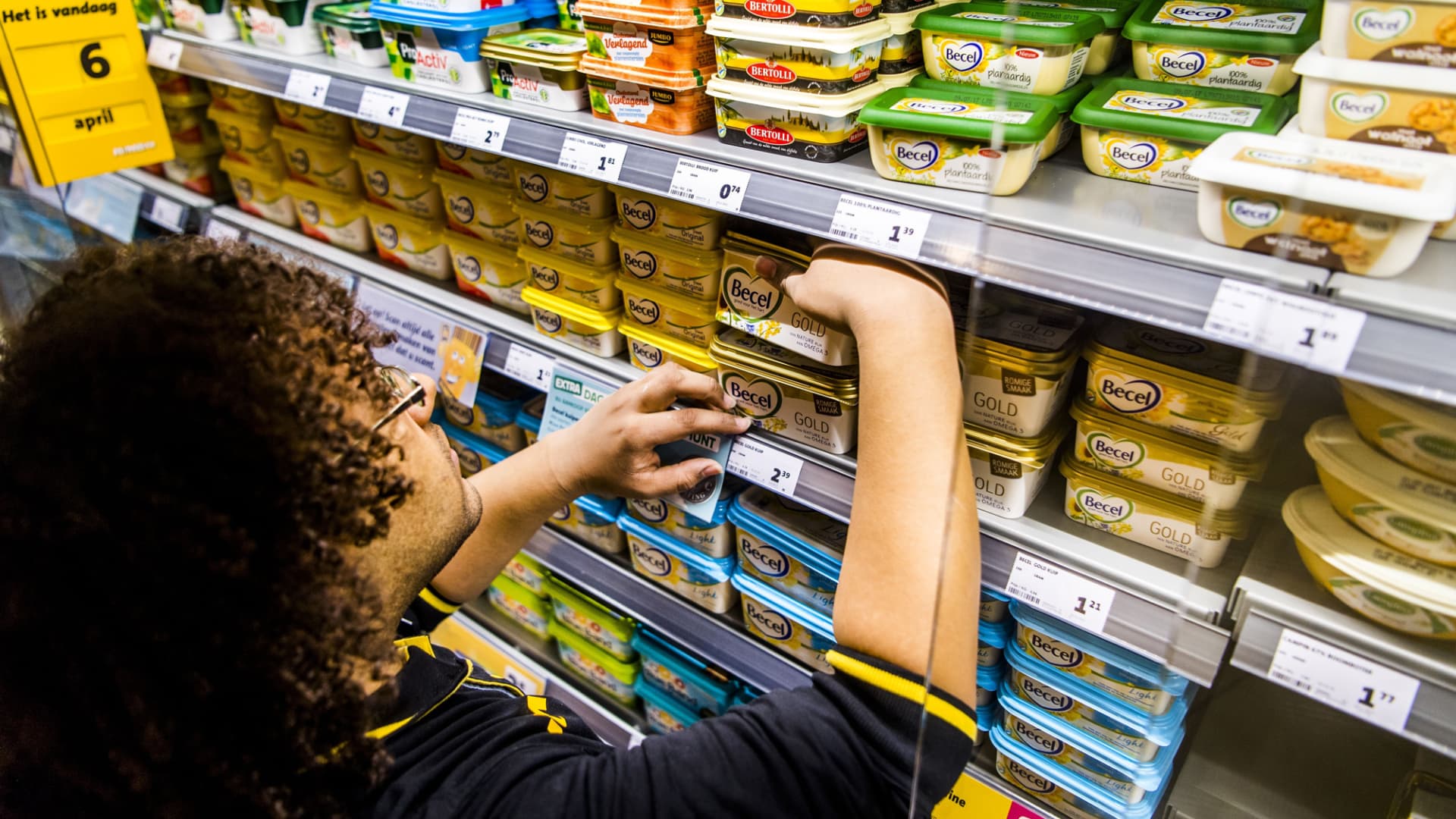
Unilever is in advanced talks to combine its foods business with McCormick via a Reverse Morris Trust that would deliver roughly $15.7bn in cash and leave Unilever shareholders with an estimated 65% stake in the combined entity. Barclays values the food business at €28–31bn including debt; the deal would exclude certain assets (notably India), remains non‑binding and complex given McCormick's smaller size, so closure is uncertain despite potential strategic and tax benefits.
The market reaction will be driven less by the headline transaction and more by the re-rating mechanics: a de-risked balance sheet at the parent, a chunky cash inflow, and clearer growth optics for the retained consumer-facing portfolio. Expect most of the near-term move to be driven by sentiment and multiple expansion rather than immediate EPS accretion — meaning valuation arbitrage trades (pairs/vol) will likely outperform simple directional longs.
Second-order winners include retailers and private-label suppliers that gain negotiating leverage if the combined food business streamlines SKUs and shifts promotional cadence during integration; conversely, mid-market CPGs that compete on scale for shelf space face higher customer concentration risk. Integration risk is non-trivial — supply-chain harmonization (recipes, sourcing contracts, co-manufacturing capacity) and brand rationalization can depress margins for 12–36 months post-close, creating a window for tactical shorts or hedges.
Key catalysts and failure modes: regulatory/tax certainty and the structure of the spin/merger drive timing more than commercial synergies, so monitor filings and tax opinions; activist or strategic counterproposals could reprice the story quickly. From a risk perspective, a failed transaction or a messy carve-out that preserves legacy food liabilities would likely trade the parent back to a double-digit discount to peers over months, while successful execution could compress that gap within a 6–18 month window.
AI-powered research, real-time alerts, and portfolio analytics for institutional investors.
Overall Sentiment
mildly positive
Sentiment Score
0.30
Ticker Sentiment
