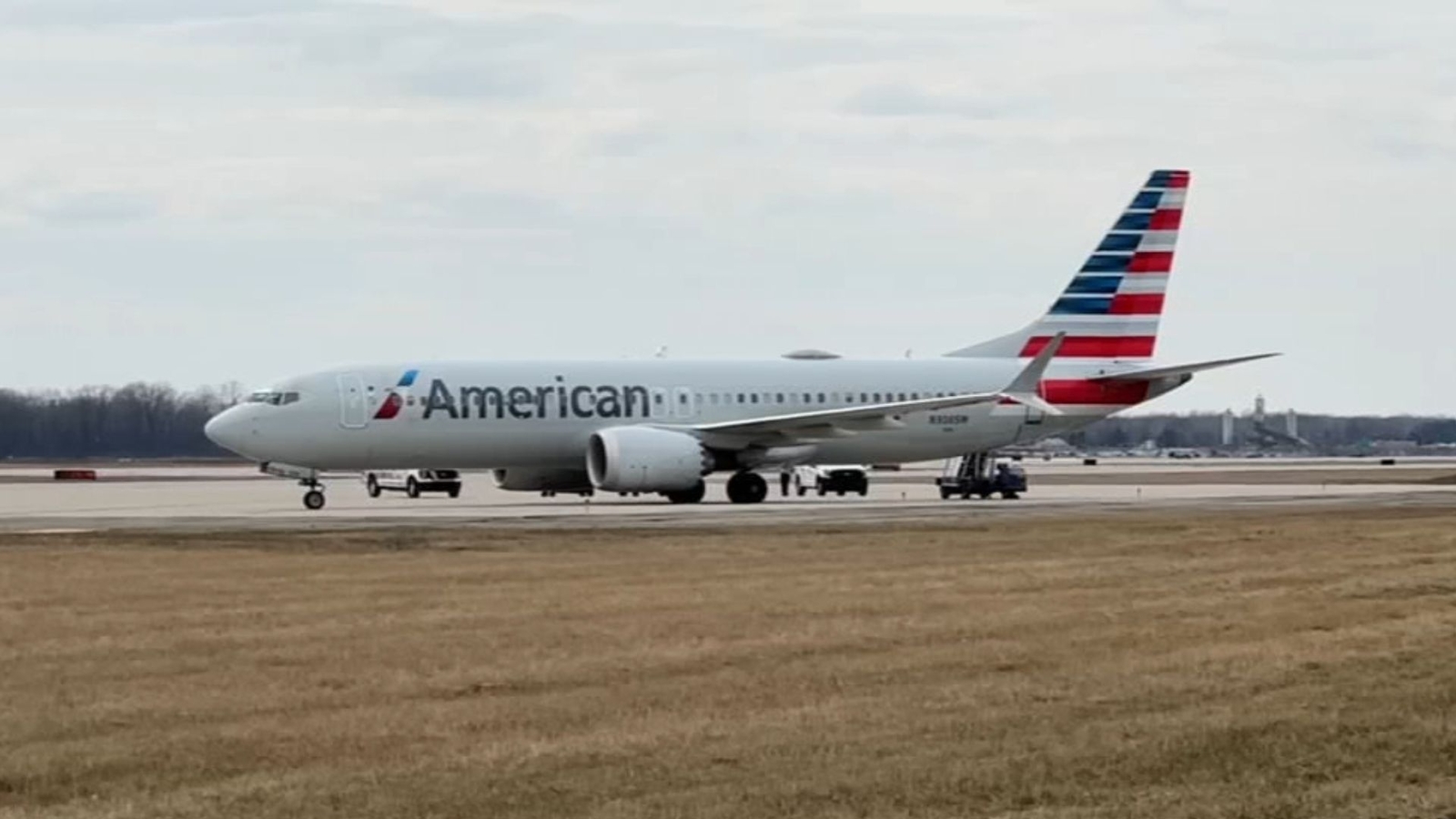
American Airlines Flight 2819 (JFK→ORD) was diverted to Detroit due to a disruptive passenger and landed at O'Hare about nine hours late (arriving just after 7:00 p.m.); Wayne County Airport police, FBI and medical personnel responded and the passenger deplaned with authorities concluding there is no public threat. The incident caused a significant operational delay for affected passengers but appears isolated with no reported injuries and minimal near-term financial or market impact for the airline.
This kind of isolated diversion is economically small on a single-event basis for a large network carrier, but the second-order operational frictions are where value is transacted: crew duty-time knock‑on effects, repositioning costs, and gate/slot congestion can cascade into measurable same-week unit cost increases. Expect a single diversion to generate incremental direct cash outlays in the low five‑figure to low six‑figure range (ground handling, fuel, crew overtime, passenger care) and 24–72 hour network-wide recovery effects that inflate CASM for the impacted tail and its connecting flows.
Regulatory and legal tail risk is asymmetric: operational incidents rarely move long-term revenue but they concentrate reputational, litigation and regulatory attention in windows of weeks–months. If disruptive passenger incidents cluster (2–3 in a quarter), carriers face amplified customer compensation, potential FAA enforcement guidance, and higher security/medical escort costs that could shift unit economics by mid-single-digit percent in the following quarter; otherwise the market treats these as idiosyncratic noise.
Competitively, regional/low‑cost operators with simpler point‑to‑point networks can exploit temporary demand elasticity (rebook flows, last‑mile reroutes) and pick up revenue from fatigued network carriers. Conversely, full‑service global carriers with dense hubs are more exposed to cascading delays and crew shortages, making them relatively more sensitive to incident frequency than headline severity.
The near‑term catalyst set to watch is frequency: an uptick to multiple diversions in a 90‑day window would be the trigger to re‑price idiosyncratic equity risk and force changes in contingency provisioning. Absent that, price moves should be transient and present tactical option/relative‑value opportunities rather than a fundamental re‑rating.
AI-powered research, real-time alerts, and portfolio analytics for institutional investors.
Request DemoOverall Sentiment
neutral
Sentiment Score
0.00
Ticker Sentiment
