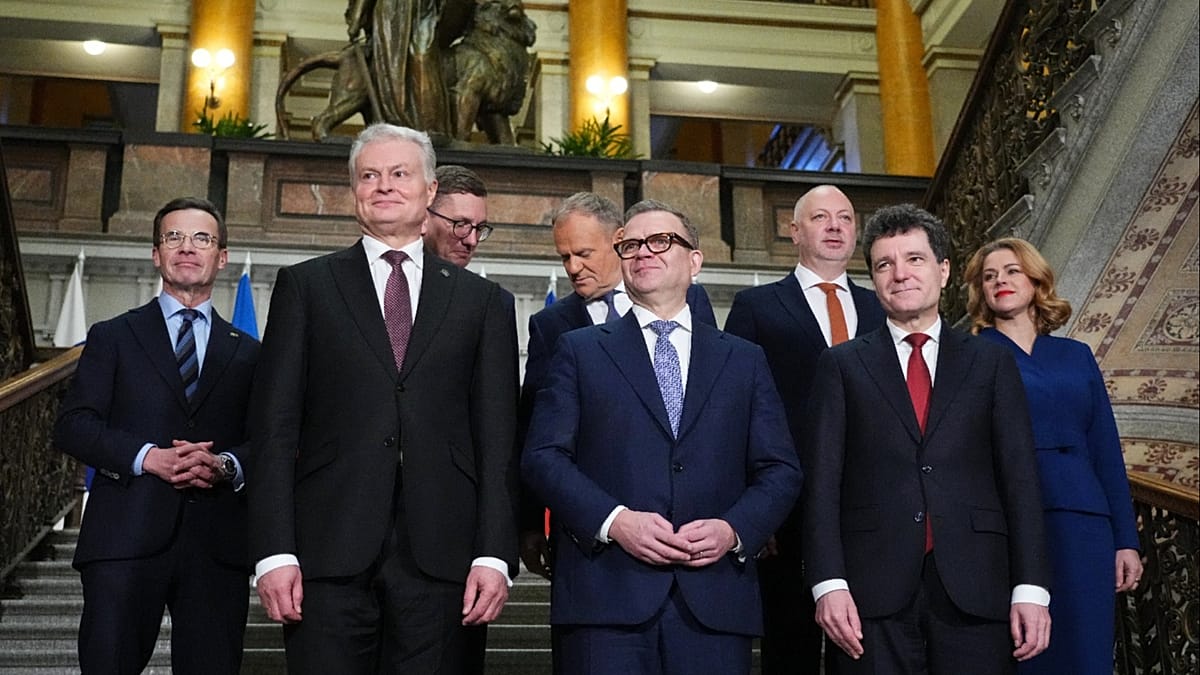
Eight eastern EU members — Sweden, Finland, Poland, Estonia, Latvia, Lithuania, Romania and Bulgaria — urged immediate prioritisation of the European Commission’s proposed “Eastern Flank Watch,” one of four Defence Readiness 2030 flagship projects, arguing it should become the bloc’s first line of defence against what they call the most direct long‑term threat from Russia. The Commission envisions the project as a European Defence Project of Common Interest to fast‑track funding and planning for capabilities from drone and air/missile defence to border and critical‑infrastructure protection, but the proposal currently lacks concrete design and costings and has not yet been endorsed by all EU27 leaders (a decision is expected at a Brussels summit). Finland and Poland offered to lead technical work to define the project, and the group pressed for use of existing instruments including the €1.5bn European Defence Industry Programme and a share of the proposed 2028 multi‑annual budget defence envelope (potentially up to €131bn), signalling a coordinated push to accelerate European defence procurement and fiscal flexibility amid warnings Moscow could test NATO in the next four to five years.
Eight EU eastern-border leaders — Sweden, Finland, Poland, Estonia, Latvia, Lithuania, Romania and Bulgaria — issued a joint declaration after the Helsinki summit urging immediate prioritisation of the European Commission’s proposed Eastern Flank Watch, one of four flagship projects in the Defence Readiness 2030 roadmap, arguing Russia represents the “most significant, direct and long-term threat.” The Commission envisions the project as a European Defence Project of Common Interest to accelerate planning and unlock additional EU funding, alongside other initiatives such as a European Drone Initiative and a European Space Shield that were pitched in mid‑October.
The proposal identifies capabilities to be incorporated — ground combat, drone defence, air and missile defence, border and critical‑infrastructure protection, military mobility and strategic enablers — but currently provides no concrete design or costings and lacks endorsement from the full EU27, with a decision expected at the upcoming Brussels summit. Finland and Poland volunteered to lead technical work to define concrete measures, and the group explicitly seeks use of the €1.5bn European Defence Industry Programme and a share of a proposed 2028 multi‑annual defence envelope that could be as large as €131bn.
Policy tools already advanced by the Commission — increased fiscal flexibility for defence, a defence loan scheme and simplified rules for suppliers — raise the prospect of faster procurement if political consensus is reached, but timing and budget allocation remain the primary execution risks. Market signals in the brief show a mildly positive, hawkish tone and a modest market‑impact score (0.35), implying limited near‑term re-rating until the Brussels summit and technical definitions are published.
AI-powered research, real-time alerts, and portfolio analytics for institutional investors.
Request DemoOverall Sentiment
mildly positive
Sentiment Score
0.28
