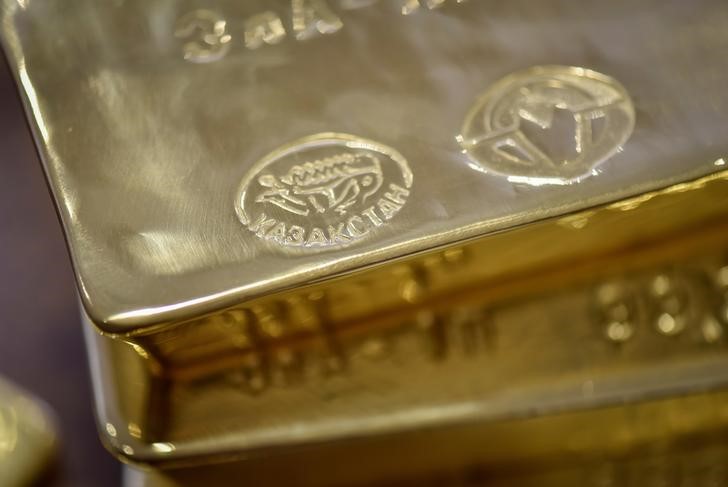
Gold fell 1.3% to $4,483.67/oz and gold futures dropped 1.7% to $4,484.82/oz as surging developed-market yields and a firmer dollar pressured bullion. U.S. 10-year Treasury yields hit a one-month high and Japanese 10-year yields reached a 29-year high amid bets that Iran-war-related energy inflation will keep central banks hawkish. Silver slipped 1.9% to $74.5840/oz and platinum fell 0.3% to $1,972.05/oz as U.S.-Iran tensions remained elevated.
The market is shifting from a pure geopolitical hedge bid to a rates-and-fiscal regime trade. That matters because gold’s prior support was anchored in fear of tail-risk escalation; if the conflict premium fades while sovereign yields stay elevated, the marginal buyer disappears and real rates become the dominant driver. In that setup, precious metals are vulnerable not just on price direction but on positioning air pockets: systematic de-risking can extend the move over 1-3 weeks even without a clean fundamental catalyst.
The second-order effect is that higher developed-market yields compress the relative attractiveness of non-yielding assets and tighten financial conditions at the margin, especially for long-duration equities and leveraged balance sheets. A firmer dollar is the transmission mechanism that can export this stress into commodities broadly, even if the initial impulse is gold-specific. The clearest beneficiaries are not obvious “war winners,” but assets sensitive to disinflation and lower risk premia: short-duration credit, cash-rich defensives, and rate-sensitive sectors that have already de-rated.
The bigger medium-term question is whether this is a transient spike in yields or the start of a fiscal credibility trade. If markets begin treating energy-driven inflation as persistent, central banks may lean less dovish than consensus expects, which would keep pressure on gold for months rather than days. Conversely, if the Iran headline risk de-escalates faster than yields normalize, the metal could rebound quickly as a crowded short-covering rally, so timing matters more than directional conviction.
Consensus seems to be overemphasizing the headline war risk and underestimating the policy channel. In practice, gold is trading like a real-rate asset here, not a pure safe haven; that means the downside can continue even if geopolitics stays noisy but non-escalatory. The contrarian setup is that any sign of fiscal stress or central-bank reluctance to tighten into higher energy prices would re-ignite the inflation hedge bid, making this a tactical fade rather than a strategic top.
AI-powered research, real-time alerts, and portfolio analytics for institutional investors.
Request DemoOverall Sentiment
mildly negative
Sentiment Score
-0.35
