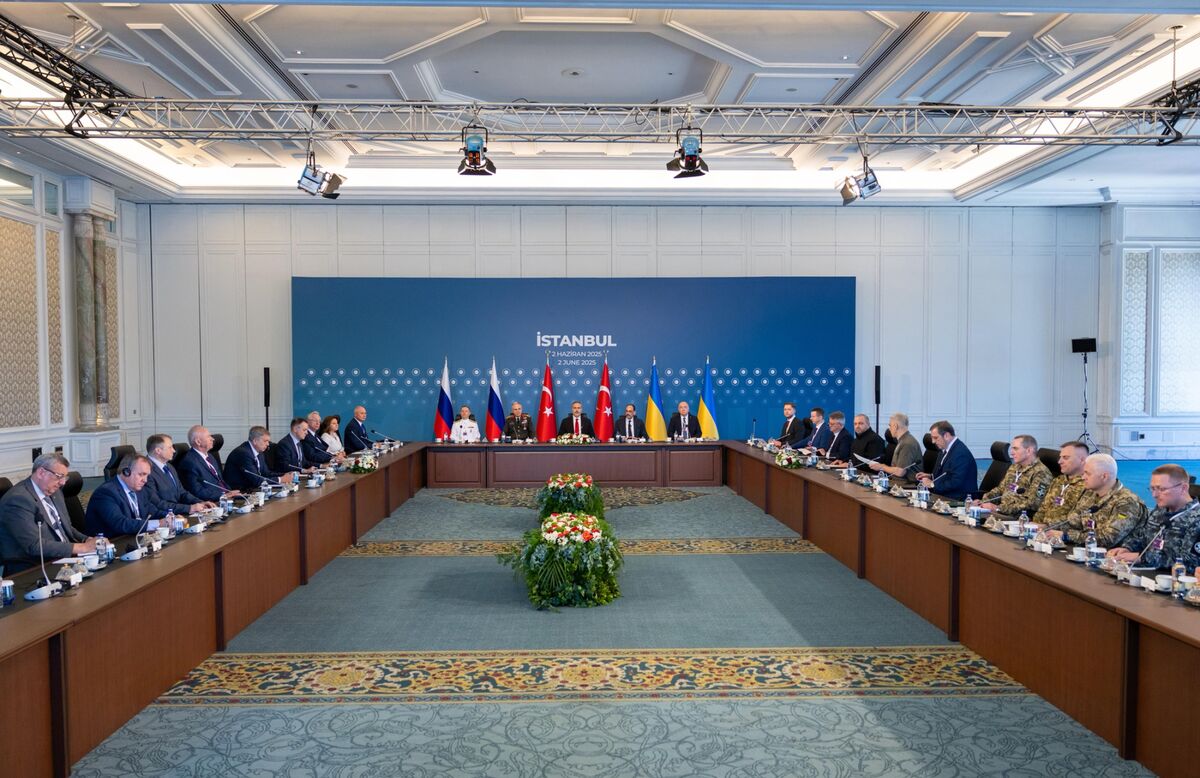
Russia and Ukraine concluded a second round of negotiations in Istanbul, resulting in no progress toward a ceasefire but establishing a foundation for a prisoner exchange. Ukraine reiterated its demand for an unconditional truce, while Russia proposed a temporary two-to-three-day ceasefire in specific areas to facilitate the removal of deceased soldiers.
The second round of negotiations between Russia and Ukraine in Istanbul concluded without achieving a ceasefire, signalling persistent geopolitical instability. While an agreement was reached to lay the groundwork for a new prisoner exchange, this represents a limited humanitarian development rather than a significant de-escalation of the broader conflict. Ukraine's chief negotiator, Defense Minister Rustem Umerov, stated Kyiv's demand for an unconditional truce, which contrasts with Russia's proposal, articulated by presidential aide Vladimir Medinsky, for a two-to-three-day ceasefire restricted to certain front-line areas for the evacuation of war dead. This fundamental disagreement on ceasefire terms highlights the substantial obstacles remaining for a comprehensive resolution. The reported sentiment score of -0.4, labelled 'moderately negative', reflects the prevailing disappointment over the lack of progress towards ending hostilities, and the market impact score of 0.6 suggests these ongoing geopolitical uncertainties continue to be a relevant consideration for financial markets.
AI-powered research, real-time alerts, and portfolio analytics for institutional investors.
Request DemoOverall Sentiment
moderately negative
Sentiment Score
-0.40
