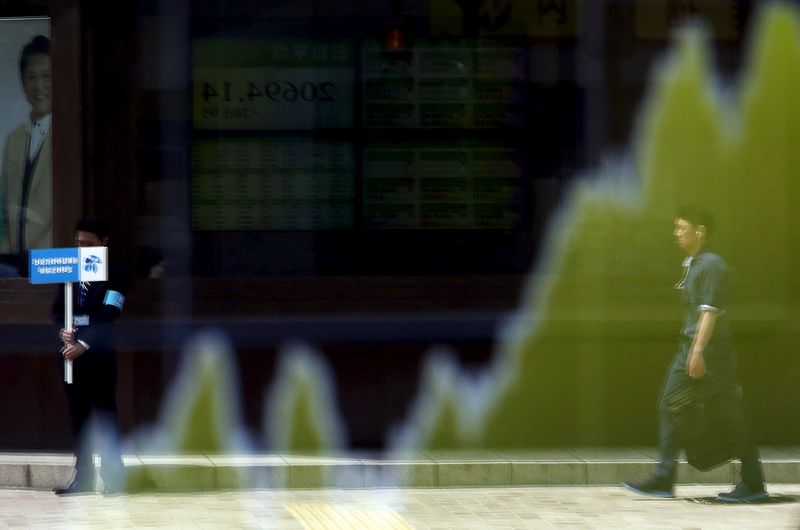
Oil prices slid more than 6% as reports of a potential U.S.-Iran deal eased tensions in the Strait of Hormuz, supporting a broad risk-on move across global markets. Japan's Nikkei 225 jumped nearly 6% to a record 62,958.0, while the TOPIX rose 3.4%; Hong Kong's Hang Seng gained 1.5% and Australia's ASX 200 added 0.8%. South Korea's KOSPI slipped 0.2% after recent record highs, and India's Nifty 50 futures fell 0.5%.
This is a classic volatility compression setup: the market is pricing a rapid de-escalation premium into cyclicals, semis, and Asia beta, but the underlying geopolitical regime is still binary. The immediate beneficiaries are the most duration-sensitive risk assets—Japanese large-cap tech, Korea semis, Hong Kong internet, and any index with heavy export beta—because lower energy and lower tail-risk in shipping reduce the probability of a near-term growth scare and multiple compression. The second-order effect is that a softer oil tape acts like an exogenous tax cut for Asia ex-Japan, while simultaneously easing pressure on central banks that were getting boxed in by imported inflation.
The part the market may be missing is that a peace headline can be more bearish for oil vol than for oil level: if implied volatility collapses before spot does, energy equities can underperform crude on a lag as hedges bleed and upstream cash-flow expectations are de-risked. That creates a cleaner relative-value opportunity than outright directional energy shorts. On the winner side, advanced semis and AI infrastructure names should continue to outperform if the risk-on impulse persists, but the better expression is through firms with high operational leverage to multiples expansion rather than pure earnings revisions.
The key catalyst window is days, not months: any reversal in the deal narrative, fresh disruption in Hormuz, or disappointment in U.S.-China tech diplomacy would likely unwind this move fast because positioning has likely chased the gap higher. If the story holds for several sessions, the broader implication is a stronger bid for Asian equities via lower risk premia and a weaker dollar, which would also support EM breadth. But if oil retraces only modestly while shipping and credit spreads stay calm, the move may be overextended in the most crowded risk-on names and better expressed through selective longs instead of index beta.
AI-powered research, real-time alerts, and portfolio analytics for institutional investors.
Request DemoOverall Sentiment
moderately positive
Sentiment Score
0.45
Ticker Sentiment
