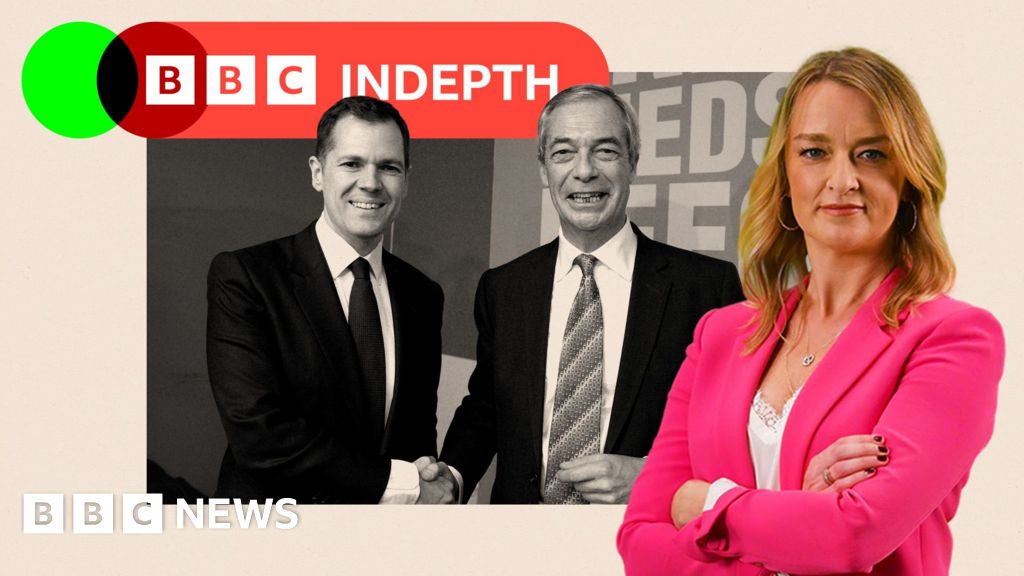
Robert Jenrick, a high-profile former Conservative minister, has defected to Reform UK, amplifying tensions on the centre-right and raising questions about trust, party discipline and policy alignment within Reform. His move could deepen vote-splitting risks for the Conservatives and increase political uncertainty ahead of the next election as Reform seeks clearer stances on welfare and NHS policy; the development is politically significant but unlikely to trigger immediate market-moving policy shifts.
Market structure: A high‑profile Tory-to‑Reform defection increases political fragmentation risk in the UK, widening the risk premium on domestically‑focused assets (FTSE 250, small caps, regional banks) while benefiting large multinationals and commodity exporters (FTSE 100) that earn in dollars. Expect spot GBP to trade 1–3% weaker on headline shocks and a knee‑jerk bid into gold and core sovereign bonds; domestic credit spreads can widen 10–50bps on sustained polling swings.
Risk assessment: Immediate (days) risk is headline‑driven volatility; short term (weeks/months) a run of defections or poll moves >5–10ppt for Reform could force repositioning and an elevated volatility regime (IV +30–50% vs prior). Tail scenarios include a snap election or hung parliament that pushes 10y gilt yields +/-75bps and GBPUSD +/-8–12% in extreme cases. Hidden dependencies: internal Tory discipline, leaked resignations, and Reform’s policy clarity (or lack thereof) will be the main catalysts.
Trade implications: Tactical plays: favor large‑cap UK exporters vs small‑cap domestic plays; hedge currency exposure with short-dated GBP puts and add gold as convex hedge. Position sizing should be modest (1–3% NAV per trade) and horizon layered: immediate hedges (1 month), tactical relative-value (1–3 months), strategic duration/gilt exposure (6–12 months).
Contrarian angle: Consensus focuses on short‑term chaos; underappreciated is a path where sustained Reform polling forces policy convergence (Tory collapse → Labour consolidation) which would reduce long‑run risk premia and tighten gilt yields. That scenario creates a mean‑reversion opportunity — buy long gilts and UK cyclicals on signs polls stabilise or Reform plateaus below 20% within 60 days.
AI-powered research, real-time alerts, and portfolio analytics for institutional investors.
Request DemoOverall Sentiment
neutral
Sentiment Score
0.00
