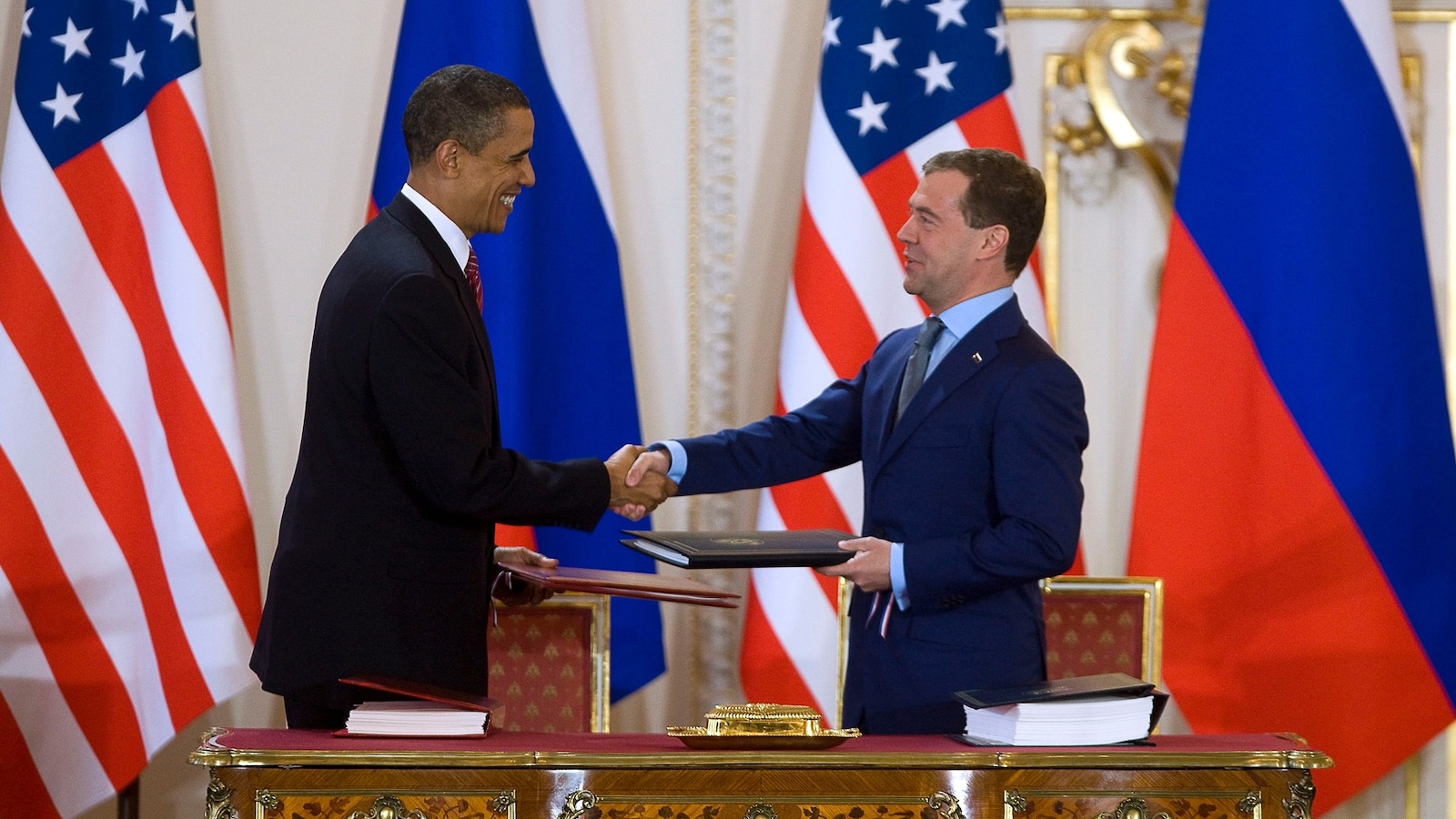
The New START strategic arms treaty between the U.S. and Russia formally expired after no U.S. response to a one‑year extension offer from Moscow, removing the last legal limits on deployed strategic nuclear warheads and delivery systems; both U.S. and Russian arsenals remain above 4,000 while China’s arsenal is around 600 and projected to exceed 1,000 by 2030. The Trump administration has signaled it wants China included in any successor arrangement, which Beijing rejects, leaving an interim period of heightened strategic uncertainty. Immediate market disruption is unlikely, but the lapse raises medium‑term geopolitical risk that could influence defense sector demand, securitized asset pricing in risk‑off environments, and long‑term intelligence and arms‑control planning.
Market structure: The expiration of New START increases political risk premium and is a structural positive for prime U.S. defense contractors (Lockheed LMT, Northrop NOC, Raytheon RTX, General Dynamics GD) and nuclear component suppliers (BWXT). Expect 3–6% incremental government procurement upside to prime contractors over 3–5 years if appropriations follow rhetoric, with downstream pricing power for specialized subsystems (radar, missiles, nuclear-packaging). Near-term winners also include safe-haven assets (Gold GLD, U.S. Treasuries TLT) and the USD; downside pressure on travel/exposed cyclicals and EM FX is likely in the first 0–90 days.
Risk assessment: Tail risk of nuclear escalation is extremely low probability but catastrophic; model a >200bps instantaneous equity risk-off shock in portfolios for contingency planning. Time horizons: days — safe-haven flows and volatility spikes; weeks–months — re-rating of defense capex expectations and earnings revisions; years — sustained modernization programs altering supplier revenue mixes. Hidden dependencies include U.S. Congressional appropriations (must watch FY26 budget cycle), China’s policy response, and intelligence/verification opacity that could erode forward visibility.
Trade implications: Tactical plays: buy GLD and TLT immediately as 0–30 day hedges (size 1–3% each); overweight primes LMT/NOC (initiate 2% position each, add to weakness) and BWXT (1%) for nuclear supply exposure over 12–36 months. Use options: buy 6–12 month call spreads on LMT/NOC (15–25% OTM) to lever upside with capped cost; buy a 2–3 month SPX 5% OTM put spread sized 0.5% notional as tail insurance. Pair trade: long LMT vs short UAL (airlines) 1:1 notional over 3–12 months to express defense vs travel risk-off.
Contrarian angle: Consensus focuses on immediate geopolitics but underweights multi-year procurement inertia — primes already have backlog and are first beneficiaries; however markets may overprice persistent yield compression from safe-haven flows. Historical parallels (post-Cold War treaty lapses) show gradual rearmament, not overnight spikes — so favor staged entries and hedges tied to concrete triggers (Congressional votes, White House posture within 30–90 days). Watch for the unintended inflation/ tightening loop: rising defense spending + safe-haven flows can both compress real yields and pressure equities, so keep real-rate sensitive hedges in place.
AI-powered research, real-time alerts, and portfolio analytics for institutional investors.
Request DemoOverall Sentiment
moderately negative
Sentiment Score
-0.35
