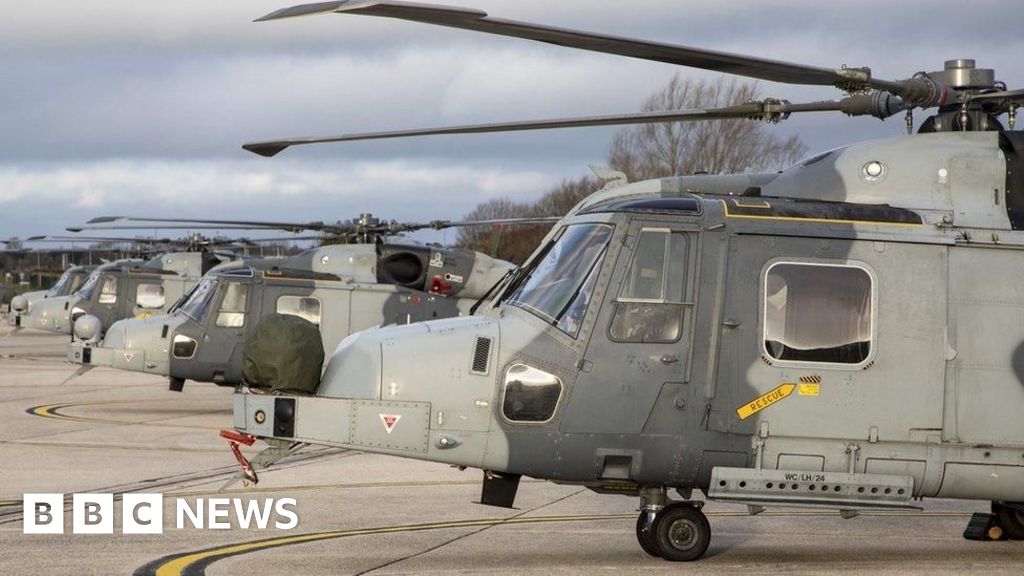
The UK is deploying HMS Dragon, a Type-45 destroyer, and two Wildcat helicopters from 815 Naval Air Squadron to Cyprus to bolster drone defences following a drone strike that caused minimal damage to RAF Akrotiri. The Wildcats will be armed with Martlet missiles to intercept incoming drones; British forces and Cypriot authorities have taken precautionary measures, including relocating families from the base. The move underscores heightened regional tensions linked to the US-Israel–Iran conflict and could sustain near-term geopolitical risk premiums, particularly for defence-sector exposures and nearby asset sensitivities, though no immediate economic shocks are indicated.
Market structure: Near-term winners are large defense primes (Lockheed Martin LMT, Raytheon RTX, Northrop NOC, BAE Systems BAES.L) and niche counter‑drone/sensor suppliers; losers are commercial aviation, regional tourism, and insurers exposed to Middle East operations. Urgent procurement bids and rapid deployments favor companies with available inventory and short lead times, compressing effective supply and enabling 5–15% tactical price power for producers over 1–6 months while backlog‑heavy suppliers see delayed revenue recognition.
Risk assessment: Tail risks include state‑level escalation (probability 5–15% over 3 months) leading to energy chokepoint closures and oil spikes >$95/bbl—this would lift defense names but crater travel/leisure; immediate (days) risk‑off likely, short term (weeks–months) defense equity outperformance, long term (1–3 years) higher baseline defense budgets but uneven award timing. Hidden dependencies: missile/munition inventories, semiconductor supply, export control approvals; catalysts are additional strikes, NATO commitments, and UK/French force deployments.
Trade implications: Favor 2–4% overweight in aerospace & defence ETF/large caps (ITA, LMT, RTX) with paired shorts in airlines (UAL, IAG) and travel ETFs (JETS). Use defined‑risk options (3‑month call spreads on RTX/LMT delta ~0.35, width 15–20%) to capture volatility with limited capital. Hedging: 1–2% gold (GLD) and tactical Brent exposure (BNO) if Brent >$95 triggers; buy 1–2% TLT if S&P falls >3%.
Contrarian angles: Consensus may price a durable boom in defence procurement too quickly—contract lags and budgets mean stock moves could be front‑loaded and retrace 10–20% post initial headlines. Underfollowed opportunities include small‑cap anti‑drone tech (select AVAV‑type names) that could re‑rate if awarded rapid contracts; monitor tender awards over 30–90 days for true signal of sustained demand.
AI-powered research, real-time alerts, and portfolio analytics for institutional investors.
Request TrialOverall Sentiment
mildly negative
Sentiment Score
-0.25
