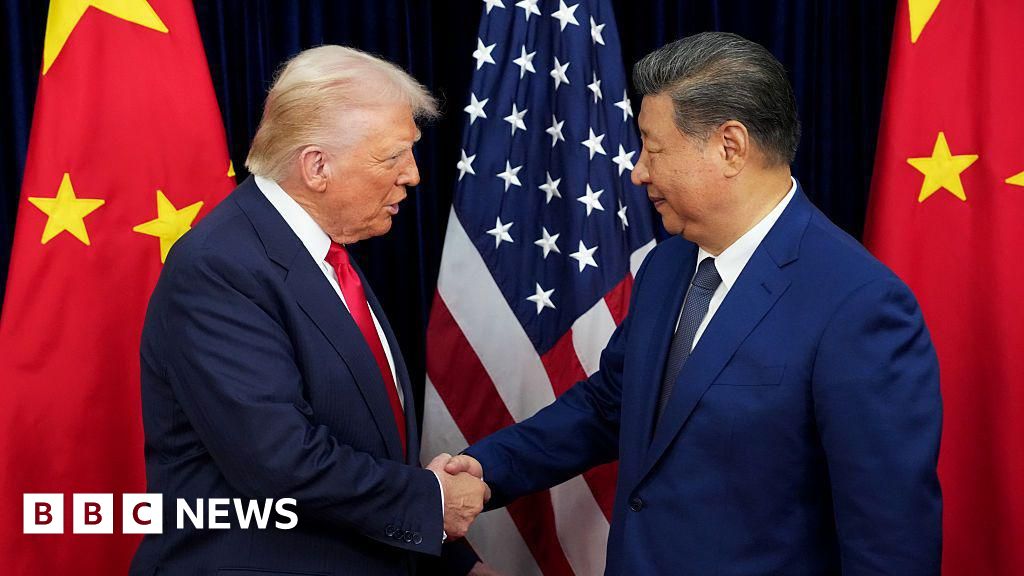
The White House announced a new trade deal with China, de-escalating trade tensions and addressing critical supply chain issues. China committed to easing its export ban on automotive computer chips, particularly legacy chips from Nexperia, which is crucial for the global auto industry. The agreement also includes China pausing export controls on rare earth minerals for a year and resuming significant purchases of US soybeans, restoring previous trade volumes. This deal aims to stabilize trade relations and mitigate global business uncertainty.
The recent trade deal between the US and China signals a significant de-escalation of trade tensions, confirmed by the White House following meetings between Xi Jinping and Donald Trump. This agreement, characterized by a "strongly positive" sentiment and "optimistic" tone, aims to mitigate global business uncertainty that arose from previous retaliatory tariffs. Treasury Secretary Scott Bessent acknowledged China as an "unreliable partner" but affirmed the intent to avoid decoupling.
A key component of the deal involves China easing its export ban on automotive computer chips, specifically "critical legacy chips" from Nexperia's facilities. This is crucial for the global auto industry, which faced potential plant shutdowns as warned by major manufacturers like Volvo Cars, Volkswagen, and Jaguar Land Rover due to chip shortages. The resumption of these exports directly addresses a critical supply chain bottleneck.
Furthermore, China has committed to pausing export controls on rare earth minerals for one year, which are vital for various industries including automotive, aerospace, and defense. The agreement also includes a substantial commitment for China to purchase US soybeans, with 12 million tonnes in late 2025 and 25 million metric tonnes annually for the subsequent three years, effectively restoring previous trade volumes and benefiting American farmers.
This comprehensive agreement, encompassing trade policy, supply chain stability, and commodity markets, suggests a concerted effort to stabilize economic relations. While not eliminating all underlying tensions, the immediate impact is a reduction in trade-related headwinds across several key industrial and agricultural sectors.
AI-powered research, real-time alerts, and portfolio analytics for institutional investors.
Request DemoOverall Sentiment
strongly positive
Sentiment Score
0.75
