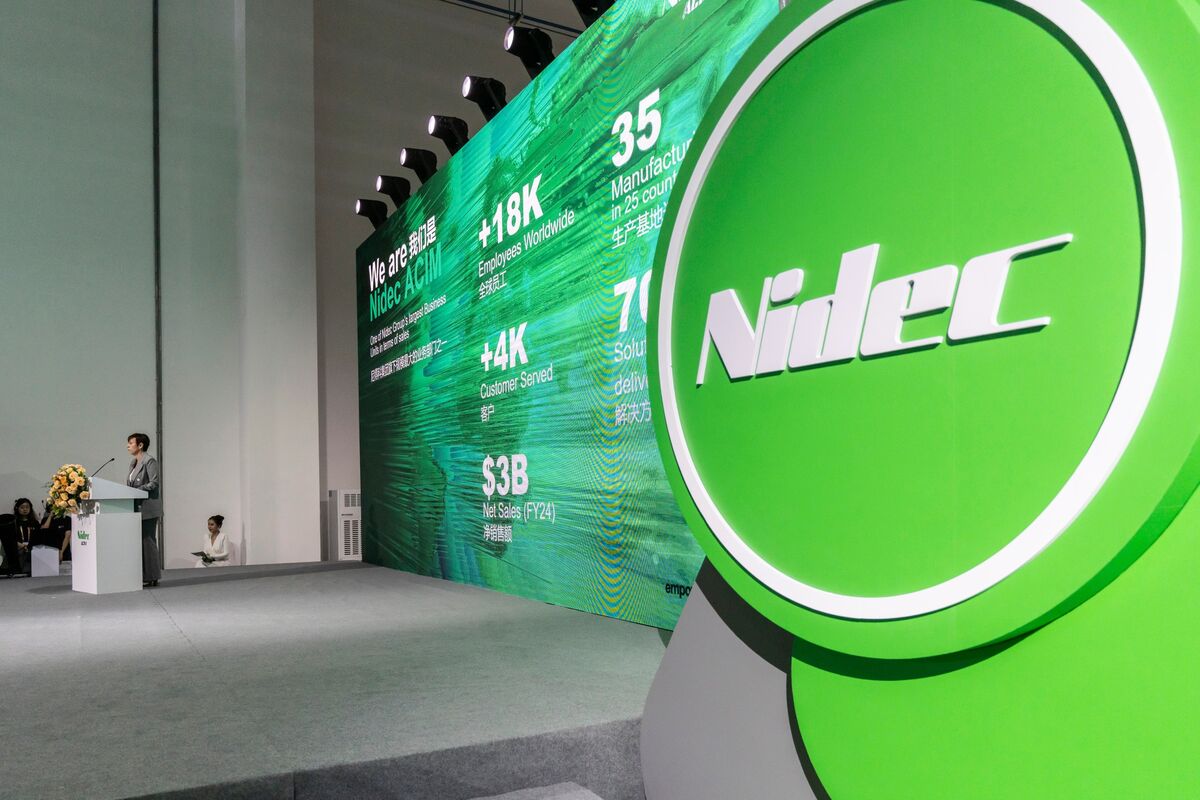
Oasis Management disclosed a 6.74% stake in Nidec Corp., which faces an accounting scandal that forced a delay in financial results, prompted a credit-rating downgrade and raised delisting risk. Investigations found improper bookkeeping at subsidiaries in Italy, Switzerland and China and issues in its car electric-motor inverter business, leaving the company vulnerable to activist investors and likely to pressure the stock and credit metrics.
A governance/financial-control shock at a large motor/inverter supplier will reallocate near-term order flow and bargaining power across the auto and industrial supply chain. OEMs will push for dual-sourcing and shorter lead-times, creating a 6–12 month window of incremental backlog available to peers with excess capacity; expect Yaskawa and Mitsubishi Electric to capture the first 30–50% of that flow, followed by tier‑2 specialists for niche inverter work. Secondary beneficiaries include power‑semiconductor suppliers and contract manufacturers who can step into electronics assembly vacuums, producing revenue upside without requiring immediate capex redeployment from OEMs.
Liquidity and credit are the immediate transmission channels for market stress: passive funds, volatility-targeting managers and Japanese banks with leveraged positions can force outsized equity moves within days-to-weeks, while rating actions and covenant triggers will drive bond/credit-spread volatility over weeks-to-months. Key catalysts with clear time bars are audit completion (weeks–months), rating agency reviews (1–3 months) and any announced board/management changes (weeks). A clean audit or pre-announced remediation plan could compress spreads and snap back equity value quickly; conversely, uncovered systemic bookkeeping issues would propagate a multi-quarter recovery and potential equity wipeout risk.
Tactically, trade opportunities are bifurcated: near-term volatility plays around disclosure dates and credit hedges to protect against forced liquidation, and medium-term directional bets on market-share reallocation. Quantify: a 20–40% equity gap is plausible in the first 10 trading days of a shock; credit spreads could widen +200–400bps in the same window, creating asymmetric payoffs for option and CDS-based trades. Monitor order-book flow, block trade prints, and cross‑border hedge ratios — they will be the fastest real-time signal of structural share reallocation.
The consensus risk-off may be overdone if the company can silo legacy cash-generative businesses from the problematic units and announce targeted asset sales or ring-fencing within 60–90 days. That path materially reduces default probability for senior creditors and restores optionality for equity within 6–12 months. However, treating the situation as a binary governance event is prudent: position sizing should assume a low-probability equity recovery and prioritize limited-loss option or credit‑first structures.
AI-powered research, real-time alerts, and portfolio analytics for institutional investors.
Request DemoOverall Sentiment
strongly negative
Sentiment Score
-0.70
