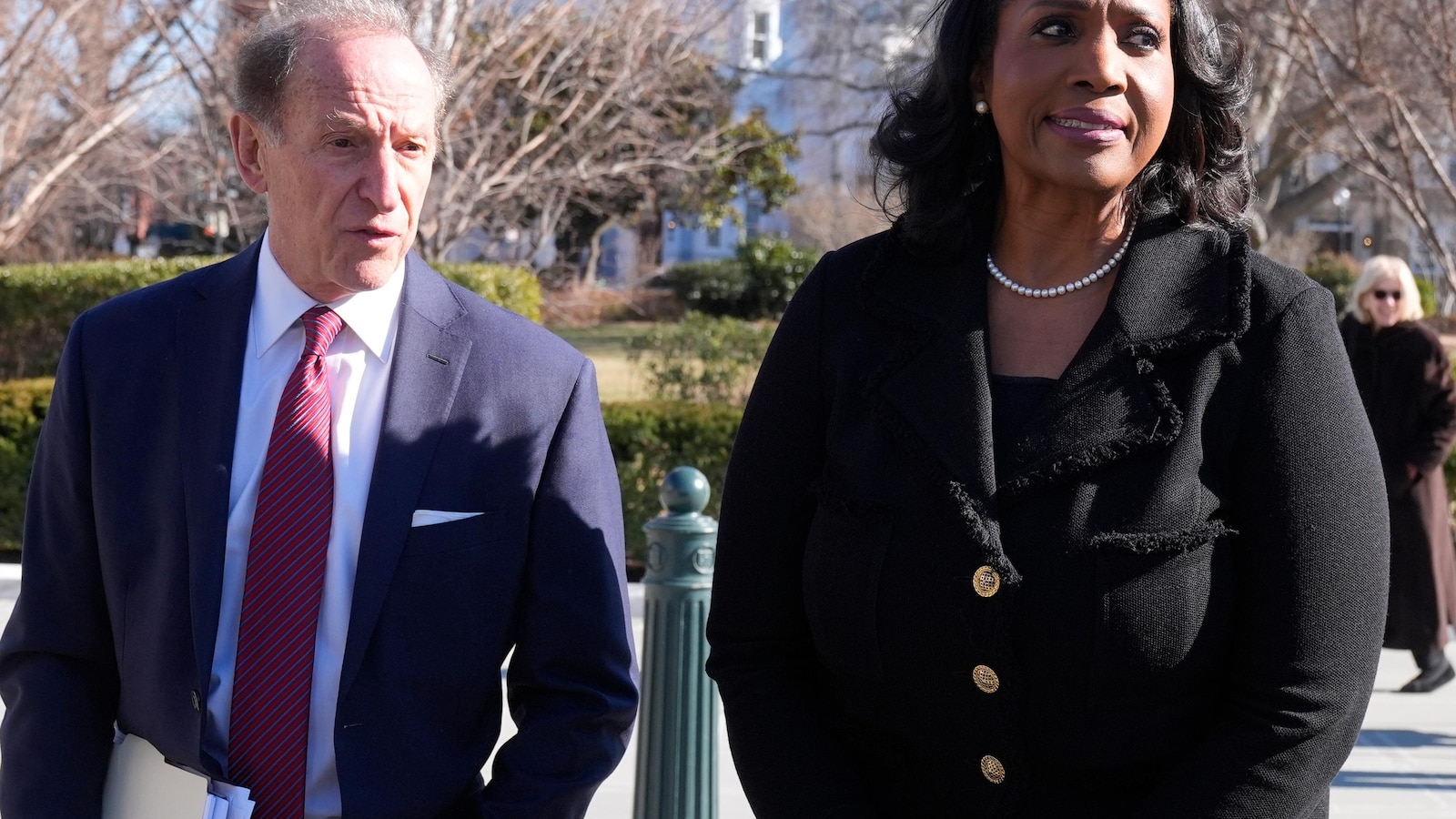
The Supreme Court signaled during oral argument that it is likely to block President Trump’s attempt to remove Fed governor Lisa Cook, treating the Federal Reserve as distinct from other independent agencies and preserving for-cause removal protections. Justices largely avoided articulating a firm legal principle separating the Fed from other agencies, leaving open broader constitutional questions about executive control that could affect future challenges to agency independence. Markets should note the court’s inclination to protect Fed independence for now — a development that supports continuity in monetary policy decision-making even as legal uncertainty about the scope of executive removal power persists.
Market structure: A Supreme Court signal preserving Fed independence reduces the political tail-risk discount on policy interference and likely raises the term premium vs a politicized Fed. Mechanically, this favors financials (banks, insurers) and cash/money-market yields while penalizing long-duration growth and rate-sensitive REITs; expect a 10–30 bps upward pressure on 10y term premium over 3–6 months if the view firms. Cross-asset, a firmer independent Fed implies a stronger USD and softer gold/commodities in the near term as real yields rise.
Risk assessment: Tail risks include a later adverse SCOTUS ruling or Congressional caps on Fed autonomy (low probability, high impact) that could cut term premium by >50 bps in days and spike equity vols. Immediate (days): knee-jerk moves around the preliminary opinion; short-term (weeks/months): market re-pricing on FOMC/CPI; long-term (quarters): structural changes to Fed governance if cases escalate. Hidden dependency: bank regulatory rulemaking and supervision by the Fed could still transmit political shifts into credit availability even if governor removal is constrained.
Trade implications: Overweight cyclical/financial banks and underweight long-duration growth; express via equities and derivatives for 3–6 month horizon. Use rate instruments (Treasury futures, TLT/TBT) to short duration and FX to express a stronger USD; prioritize option structures (put spreads on QQQ, call spreads on KRE) to limit cost while keeping convexity. Monitor 2s10s, PCE prints, and the final SCOTUS ruling as primary catalysts.
Contrarian angles: The market may underprice lasting regulatory risk — preserving independence could paradoxically increase systemic risk if political backstops disappear, lifting term premium further than consensus (+30–75 bps scenario). Conversely, the relief rally for risk assets could be overdone if inflation re-accelerates and the Fed must tighten materially; historical parallel: late-1970s/early-1980s regime shifts where independence signaled multi-year rate normalization rather than one-off moves.
AI-powered research, real-time alerts, and portfolio analytics for institutional investors.
Request DemoOverall Sentiment
neutral
Sentiment Score
0.00
