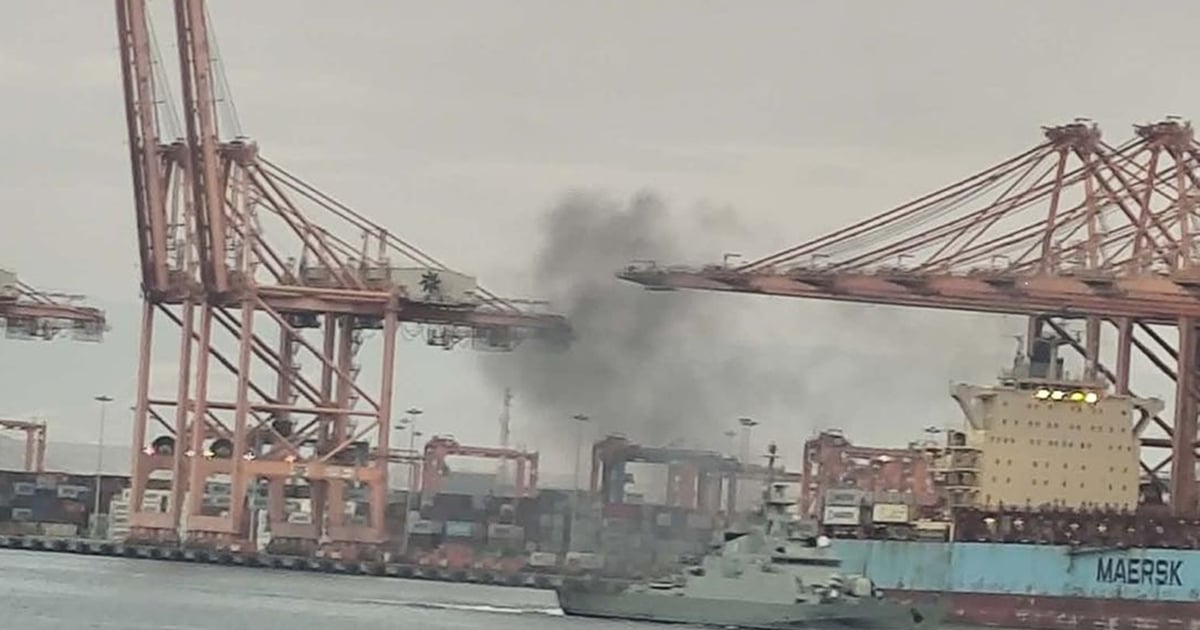
A drone strike on 28 March damaged a ship-to-shore quay crane at the Maersk-operated Port of Salalah, forcing evacuation and a temporary suspension of terminal operations for approximately 48 hours. Maersk’s APM Terminals said all crew are safe and no vessels or cargo were damaged; the terminal is a regional hub for Maersk’s Gemini Cooperation with Hapag-Lloyd. The incident creates near-term shipping and supply-chain disruption risk in the region and highlights escalation risk after previous attacks on oil storage at the port.
A tactical disruption at a Gulf transshipment hub creates an asymmetric short-term shock: volumes that would have used a centralized relay will be redistributed to nearby ports, raising ton-mile exposure and bunker consumption per voyage. My conservative estimate: rerouting and diversion-related sailing/handling adds 1–4 days and $40–$180 per TEU to delivered cost for affected strings, which should show up in spot rate spikes and thinner disposable margin for contractual shippers over the next 1–8 weeks.
Ports and terminal operators with physical redundancy and spare berthing capacity are net beneficiaries as they capture diverted volumes, but their realized margin depends on how quickly they can scale labor and yard capacity without incurring overtime inefficiencies. Liner companies that own or have long-term control of terminals will see a smaller gross margin hit and greater operational optionality versus pure-play common carriers that must absorb higher voyage costs and war-risk surcharges.
Key tail risks are an escalation that forces deeper rerouting (e.g., circumnavigating the Arabian Sea) or a rapid surge in war-risk insurance premia that makes certain sailing lanes uneconomical; both would extend impact from weeks to months and materially compress supply of available tonnage. The main de-risk catalysts are credible naval protection/convoys and an insurance-market reprice that restores affordable cover — either could normalize congestion within 1–3 months.
Contrarian angle: the market will likely overshoot on persistent structural damage to trade lanes. Terminal downtime is modular and capital is mobile; within a quarter to two, capacity reallocation and targeted capex typically plug the gap. That argues for selectively fading immediate panicked moves against diversified terminal operators while being more cautious on leveraged, spot-exposed carriers.
AI-powered research, real-time alerts, and portfolio analytics for institutional investors.
Request DemoOverall Sentiment
mildly negative
Sentiment Score
-0.30
