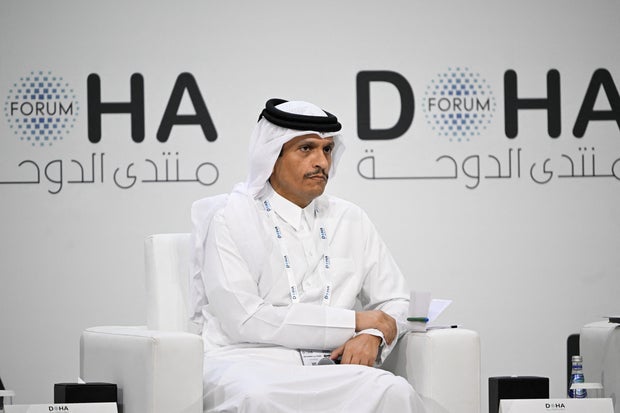
Ceasefire talks over Gaza are at a critical juncture as the first phase of a U.S.-backed truce that began Oct. 10 winds down, with militants still holding the remains of one Israeli hostage and international mediators scrambling to secure a second phase that has not yet begun. The proposed next stage — including an international security force, a technocratic Gaza government, disarmament of Hamas and eventual Israeli withdrawal — faces major political and operational hurdles, including disputes over guarantors and Turkey’s exclusion from the force, while violence and Israeli strikes persist (UNRWA warns of a funding shortfall after U.S. cuts). The conflict’s human toll (Gaza authorities cite more than 70,000 dead since Oct. 7 and some 360 Palestinians killed since the truce) and continued uncertainty increase regional risk and could keep markets in a cautious, risk-off stance until a durable agreement or clearer implementation plan emerges.
Market-structure: The ceasefire reduces immediate headline tail risk but leaves a binary outcome (successful second phase vs. renewed conflict). Expect a sustained risk premium in energy and defense for quarters: price of Brent likely to trade in a wider range (US$75–95) vs. pre‑ceasefire baseline, supporting XLE/USO and defense sector earnings visibility (ITA, LMT). Financials with MENA exposure and travel/tourism (airlines, hotels) remain downside candidates while global risk assets trade with higher realized volatility (VIX +5–15 pts on shock news).
Risk assessment: Immediate (days) risk is headline-driven—hostage/ISF announcements—while short-term (weeks–months) risk centers on failure to deploy an international security force and funding shortfalls for humanitarian agencies; long-term (quarters) risk is structural if the conflict regionalizes (Hezbollah/Iran) leading to sustained oil shocks and higher defense budgets. Tail scenarios: a regional escalation could push Brent +20–40% and equity risk-premia higher (SPX -8–15%); probability materializes if ISF composition is contested or UNRWA collapse sparks unrest.
Trade implications: Tactical trades should buy volatility and convexity: 1–3 month oil call spreads (USO or Brent futures) and 1–3 month GLD calls as tail-hedges; establish 2–3% strategic overweight in ITA or LMT for 6–18 months to capture procurement rerates, funded by 2–3% underweight in JETS (airline ETF) and regional tourism names. Use pair trade: long ITA vs short JETS to express defense upside vs travel downside while hedging beta.
Contrarian angles: Consensus bids safe-havens and defense; what’s underappreciated is credit and insurance re-pricing—reinsurers (RNR, MMC) may raise pricing and widen margins over 2–4 quarters. Also UNRWA operational vacuum is a medium-term catalyst for humanitarian-driven volatility; mispriced opportunity: buy 6–12 month out-of-the-money calls on LMT/RTX (~1–2% notional) rather than broad market long-only exposure, because defense stock re-rating is likely gradual and underpinned by visible backlog acceleration.
AI-powered research, real-time alerts, and portfolio analytics for institutional investors.
Request DemoOverall Sentiment
strongly negative
Sentiment Score
-0.60
