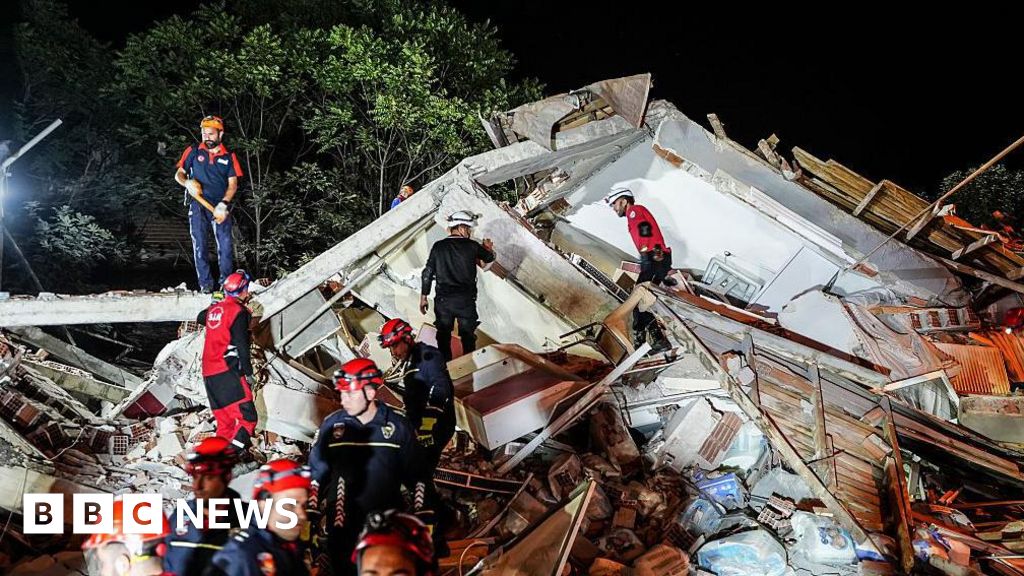
A magnitude 6.1 earthquake struck Turkey's north-west Balikesir province, resulting in one fatality, 29 injuries, and 16 building collapses. While search and rescue operations have concluded with officials reporting no further serious casualties, the event underscores Turkey's ongoing seismic vulnerability, coming less than two years after the catastrophic 7.8 magnitude quake that killed over 50,000 people and displaced hundreds of thousands in the region.
A magnitude 6.1 earthquake in Turkey's north-west Balikesir province has caused localized damage, including 16 building collapses and one fatality, but its direct financial market impact is assessed as minimal. The conclusion of search and rescue operations suggests the immediate human and structural cost is contained. This event, however, serves as a powerful reminder of Turkey's significant and ongoing seismic vulnerability, a structural risk factor that was tragically highlighted by the catastrophic 7.8 magnitude quake in February 2023. While much smaller in scale, this tremor reinforces the persistent threat to the nation's infrastructure and the potential for larger-scale economic disruption, keeping the themes of natural disaster risk and infrastructure integrity at the forefront for any Turkey-focused investment thesis.
AI-powered research, real-time alerts, and portfolio analytics for institutional investors.
Request DemoOverall Sentiment
mildly negative
Sentiment Score
-0.25
