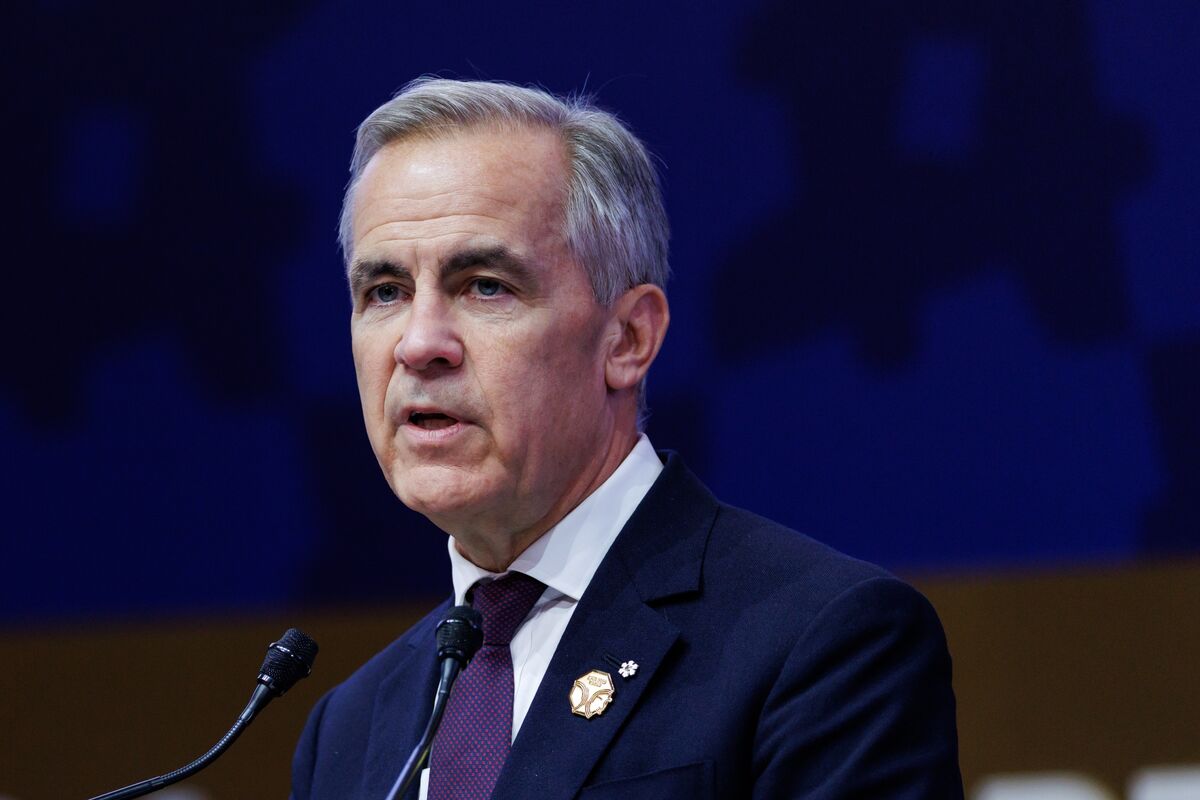
Prime Minister Mark Carney and the province of Alberta unveiled a broad energy plan to enable a new oil pipeline, a large-scale carbon-capture project and construction of nuclear power to service data centers, framed as a move to reduce Canada's economic dependence on the U.S. and to "unlock" Alberta’s energy resources while creating "hundreds of thousands" of high-paying jobs. The announcement could positively re-rate Canadian energy, pipeline and infrastructure contractors as well as firms in carbon-capture and nuclear sectors, but the release lacks concrete financing, timeline or regulatory details that would determine near-term market impact.
Market structure: The Alberta–federal deal is a structural positive for Canadian midstream and upstream cash flows — pipeline owners (ENB, TRP, PPL.TO/PPL.NYSE Pembina) and integrated producers (CNQ, SU) gain pricing power via narrower WCS differentials; uranium/nuclear suppliers (CCJ, NXE) and carbon‑capture equipment vendors benefit long term. Refiners and traders that arbitrage wide heavy‑oil discounts are the short‑term losers if takeaway tightens; expect the Canadian heavy discount to compress by 10–30% over 6–18 months conditional on pipeline FID and permitting.
Risk assessment: Tail risks include legal/Indigenous challenges, federal political change, cost overruns on CCUS/nuclear projects (>$1bn programs) and technology underperformance; any of these could reverse gains within 3–12 months. Immediate market moves will hinge on permit news (days–weeks); medium term (3–12 months) depends on FID and financing; long term (12–48 months) on project execution and oil price path. Hidden dependencies: federal fiscal support, carbon pricing trajectories, and US crude demand — monitor carbon price levels and provincial bond issuance as funding signals.
Trade implications: Favor midstream and select upstream longs with event‑driven sizing: buy ENB/TRP to play takeaway tightening and CNQ/SU for improved realizations; use 9–18 month defined‑risk option spreads to limit execution risk. Add selective uranium exposure (CCJ) for a 12–36 month thematic if nuclear for data centers advances; hedge CAD exposure dynamically as pipeline news materializes. Fixed income: underweight long Alberta provincial duration; credit spreads could widen on heavy capex until projects are financed.
Contrarian angles: Consensus underestimates execution risk and cost of CCUS/nuclear — market may be overoptimistic on timelines, underpricing legal/regulatory drag. Conversely, if permits and FID land within 6–9 months, the rally in midstream/upstream and CAD could be sharp (15–30% moves) and currently underbought. Historical parallel: Keystone XL debates show policy can flip; therefore size positions with clear stop‑losses and milestone triggers to avoid policy reversal losses.
AI-powered research, real-time alerts, and portfolio analytics for institutional investors.
Request DemoOverall Sentiment
mildly positive
Sentiment Score
0.30
