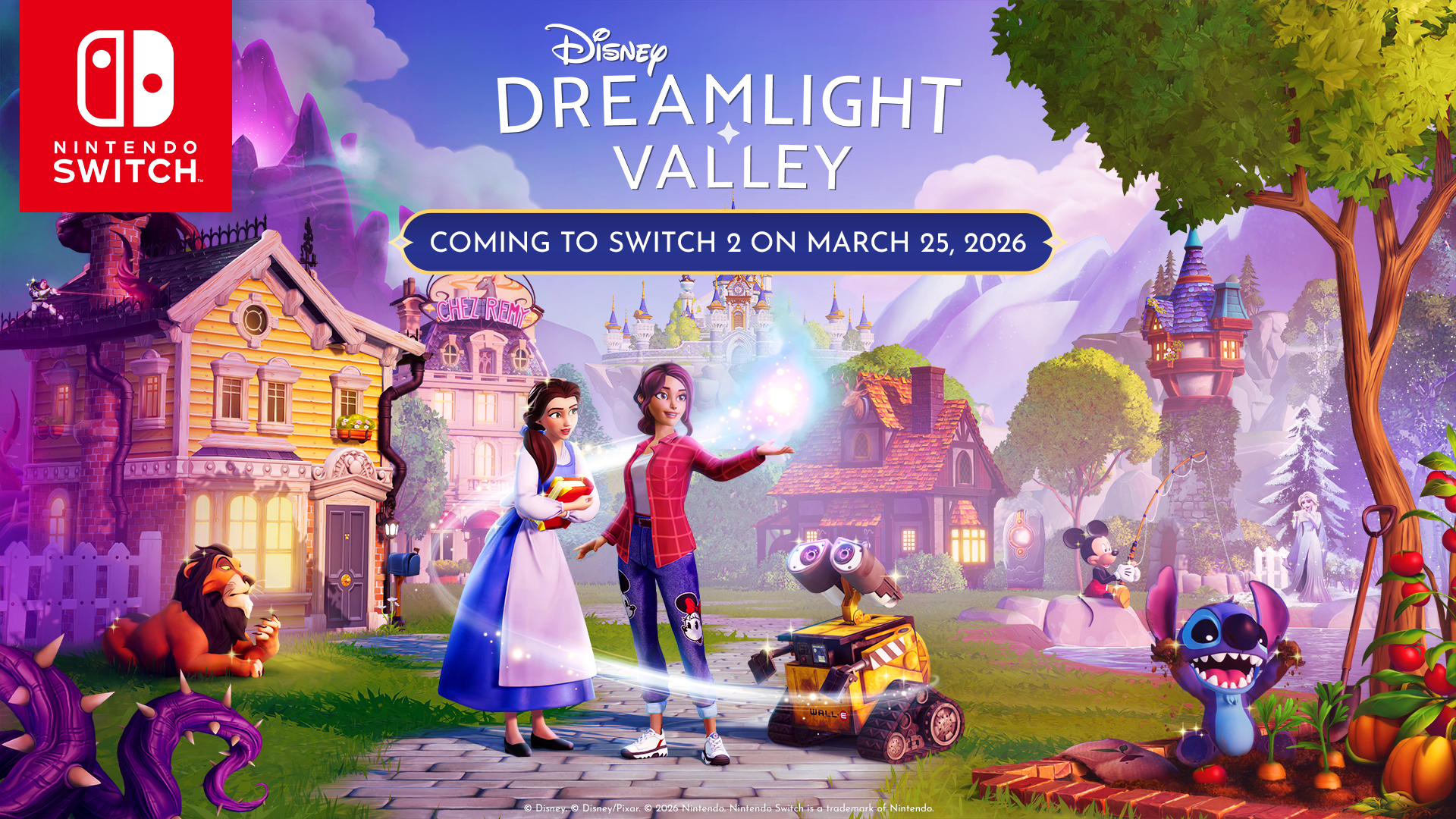
Disney Dreamlight Valley will launch a Nintendo Switch™ 2 version on March 25, 2026, announced during a Nintendo Direct; the upgrade delivers higher frame rates, increased resolution, faster load times and raises the in‑game item limit to 6,000. The update will be provided free to owners of the original Nintendo Switch version, which should boost user experience and engagement but is unlikely to materially move financial markets or company fundamentals in isolation.
Market structure: The Switch 2 port primarily benefits Disney (DIS) via extended lifetime value (LTV) for Disney Dreamlight Valley and Nintendo (NTDOY / 7974.T) via additional first-party content supporting console sales. Direct winners are digital/live‑service revenue lines and licensors; losers are small console-first indie studios that lose player attention and wallet share. Expect modest pricing power for Disney in microtransactions/DLC (low‑single digit revenue lift) rather than material box‑office style revenue shifts.
Risk assessment: Tail risks include a poor port (frame‑rate/bugs) that compresses engagement, Nintendo policy changes capping monetization, or consumer backlash to pay mechanisms—each could wipe out anticipated LTV gains within 30–90 days. Immediate reaction (days) should be muted, short term (3–6 months) could show engagement spikes, and long term (12–36 months) the game’s contribution depends on sustained monthly active users (MAU) and ARPU. Hidden dependencies: cross‑platform account linking, eShop revenue share terms, and regional rating/loot‑purchase regulation.
Trade implications: For equity, a tactical long in DIS sized 2–3% of portfolio targets the March 25, 2026 launch tailwind; alternatives include a defined‑risk call spread to limit downside. Pair trade: long DIS versus short a pure‑play game publisher (e.g., EA or ATVI) to capture IP and cross‑media resilience; rotate modest overweight into Consumer Discretionary/Interactive Entertainment on any post‑launch engagement beats. Entry: initiate 3–6 months pre‑launch, scale into confirmed MAU/revenue beats, trim 20–50% within 30 days of launch if share price outperforms.
Contrarian angles: Market will likely underprice long‑tail monetization from a free Switch 2 upgrade — even a 1–3% incremental contribution to Disney’s Games & Interactive segment could be materially positive given low current expectations. Conversely, if market extrapolates Animal Crossing‑style hardware booms, upside may be capped; beware overpaying — use volatility (sell premium if IV spikes post‑Direct) and prefer defined‑risk structures. Historical parallel: Animal Crossing drove multi‑quarter platform engagement but required continual content cadence; Disney must deliver post‑launch updates to avoid rapid dropoff.
AI-powered research, real-time alerts, and portfolio analytics for institutional investors.
Request DemoOverall Sentiment
mildly positive
Sentiment Score
0.32
Ticker Sentiment
