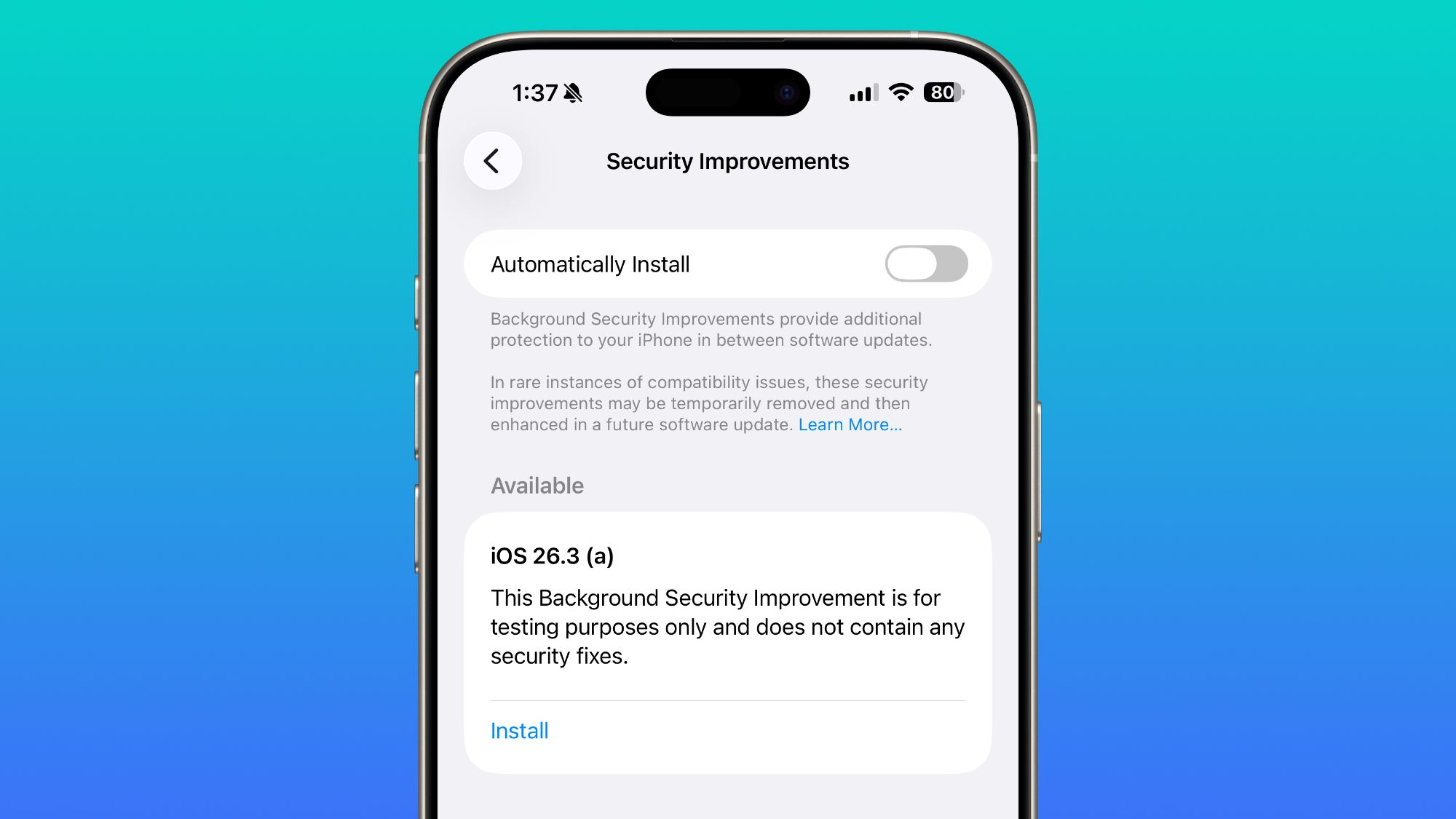
Apple is testing a Background Security Improvement mechanism in iOS 26.3, iPadOS 26.3 and macOS Tahoe 26.3 that lets developers and public beta testers install interim security updates for Safari, WebKit and other system libraries via the Settings > Privacy & Security pane, with an automatic install option available. The feature replaces the underused Rapid Security Response system introduced in iOS 16; Apple warns of rare compatibility issues that could lead to temporary removal and subsequent fixes—an operational and support consideration but one with limited near-term financial or market impact.
Market structure: Apple (AAPL) is the primary beneficiary — Background Security Improvements raise platform trust and marginally increase device stickiness, preserving hardware and Services ARPU; third‑party mobile security patch vendors and some enterprise MDM services face small demand erosion. Competitive dynamics shift incrementally in Apple’s favor: tighter ecosystem control raises switching costs and supports pricing power for devices/services; expect modest compression of implied volatility in AAPL options and a 5–20bp tightening in Apple credit spreads if adoption is broad.
Risk assessment: Tail risks include a compatibility or WebKit regression that sparks developer backlash or a class action (low probability, 3–7% short‑term AAPL drawdown); regulatory scrutiny around background updates is plausible but unlikely to be material. Timeframes: immediate (days) — negligible market move; short (weeks–months) — beta tester reports could create 1–3% swings; long (2–3 years) — small uplift to retention and Services revenue (order of +0.5–1% revenue). Hidden dependency: heavy reliance on WebKit/Safari means a single bug scales widely.
Trade implications: Tactical: establish modest bullish exposure to AAPL via 9–12 month call spread (buy 10% OTM, sell 25% OTM) sized 1–2% portfolio to capture platform premium while limiting spend; hedge concentrated tech risk with 3–6 month AAPL puts 5–7% OTM sized at 0.25–0.5% portfolio. Sell short-dated AAPL volatility (30–45d) selectively if IV > realized by >50% — collect premium but cap risk with defined‑loss spreads. Rotate 1–2% from generic enterprise security names into consumer hardware/Apple suppliers if earnings confirm stickiness.
Contrarian angles: The market underestimates cumulative effect of incremental security + Wi‑Fi 6E + foldable supply signals — together they extend upgrade cycles and Services monetization beyond what a single update implies. Conversely, the market also underprices reputational risk from a repeat of the 2023 Rapid Security Response bug; consider buying cheap 3–6 month protective puts if position sizes exceed 3% of portfolio.
AI-powered research, real-time alerts, and portfolio analytics for institutional investors.
Request DemoOverall Sentiment
neutral
Sentiment Score
0.00
Ticker Sentiment
