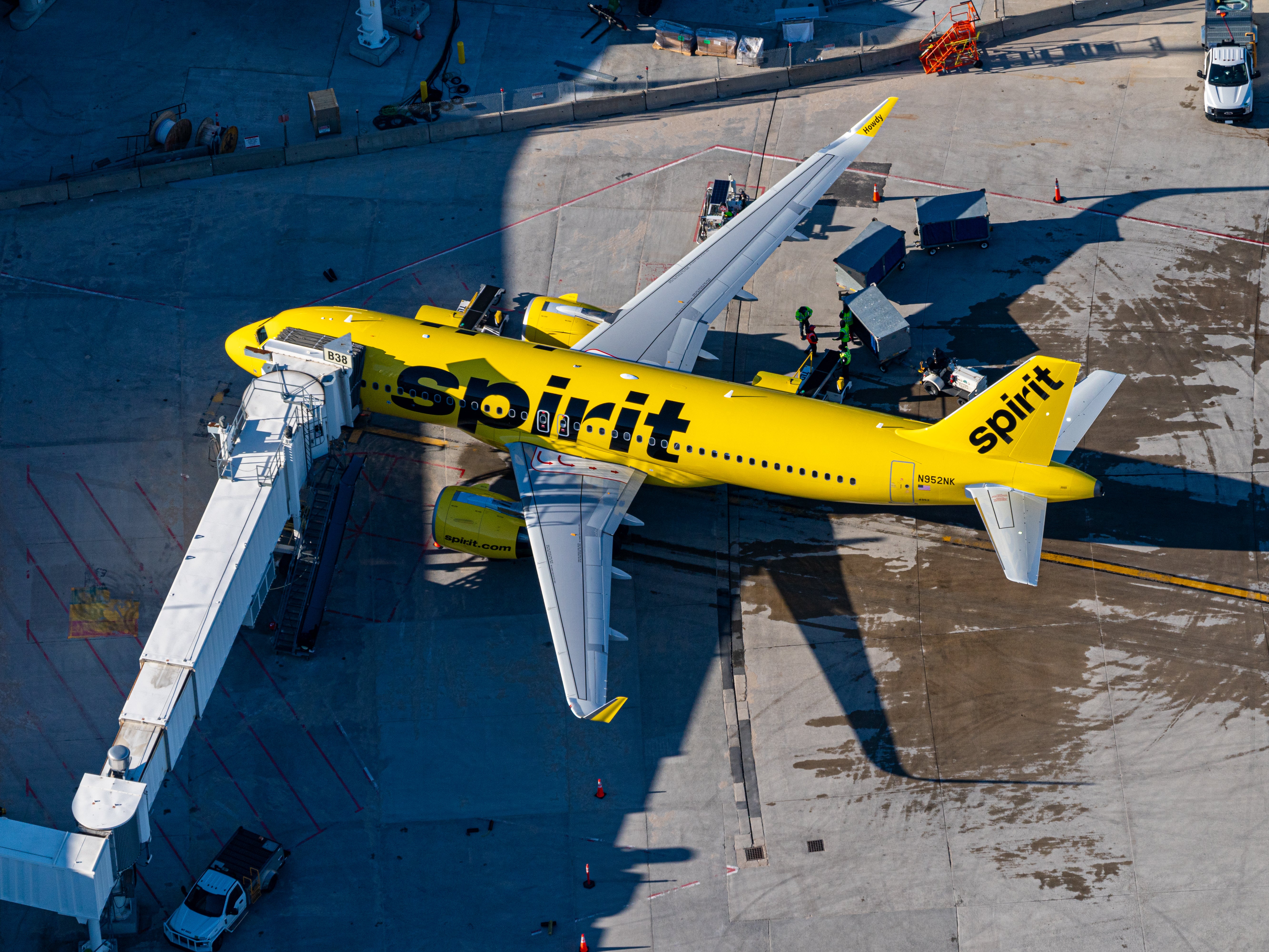
Spirit Airlines is warning of an imminent cash shortfall and potential shutdown/liquidation, while seeking U.S. government aid and even offering an equity stake in exchange for support. The airline's recovery has been derailed by a surge in jet fuel prices from $2.50 to $3.79 per gallon since Feb. 27, and it may also need creditors to extend additional liquidity. The situation adds pressure to Spirit's bankruptcy exit plans and underscores broader stress on low-cost carriers facing higher fuel costs.
This is less a single-company credit event than a policy signal that the government may be asked to backstop the weakest balance-sheet names in a sector where fuel is an exogenous shock and liquidity is already thin. If any relief is granted, it likely creates a bifurcated outcome: the most distressed low-cost carriers get temporary survival capital, while better-capitalized incumbents and network carriers benefit from reduced capacity dumping and less fare pressure over the next 1-3 quarters. The immediate second-order winner is likely anyone with pricing power and a stronger cash cushion, because an orderly shrink in ultra-low-cost supply should improve industry yields faster than fuel costs can squeeze margins. The bigger risk is that a government-supported lifeline simply extends the runway without fixing the model, which can turn an acute liquidity problem into a drawn-out dilution or restructuring overhang. For ULCC specifically, the equity is in a classic optionality trap: any aid package that arrives with warrants, senior claims, or operating restrictions can still be economically punitive to common shareholders even if it averts liquidation. The market should also discount the possibility that creditors use this moment to force harsher terms, which would likely cap any relief rally unless there is a clean, unconditional cash injection. From a trading perspective, the fastest money is in volatility rather than direction. A binary outcome window over the next several days favors long-dated puts or put spreads on ULCC into any headline-driven bounce, while a paired long in stronger airline names can express the view that capacity discipline, not rescue value, is the real beneficiary. If the government declines to intervene or delays action, the liquidation probability rises sharply over a 1-4 week horizon, which should widen ULCC’s implied credit stress and compress residual equity value quickly. The contrarian view is that consensus may be overestimating how easy it is to rescue a subscale airline without setting a precedent that invites moral hazard across the sector. Even if aid is approved, the market may have to recognize that equity holders are not the primary constituency in a government-assisted restructuring. That means any sharp rally in the stock could be a selling opportunity unless investors see a credible path to positive unit economics after fuel normalizes, which still looks more like a 6-12 month story than a near-term fix.
AI-powered research, real-time alerts, and portfolio analytics for institutional investors.
Request DemoOverall Sentiment
extremely negative
Sentiment Score
-0.88
Ticker Sentiment
