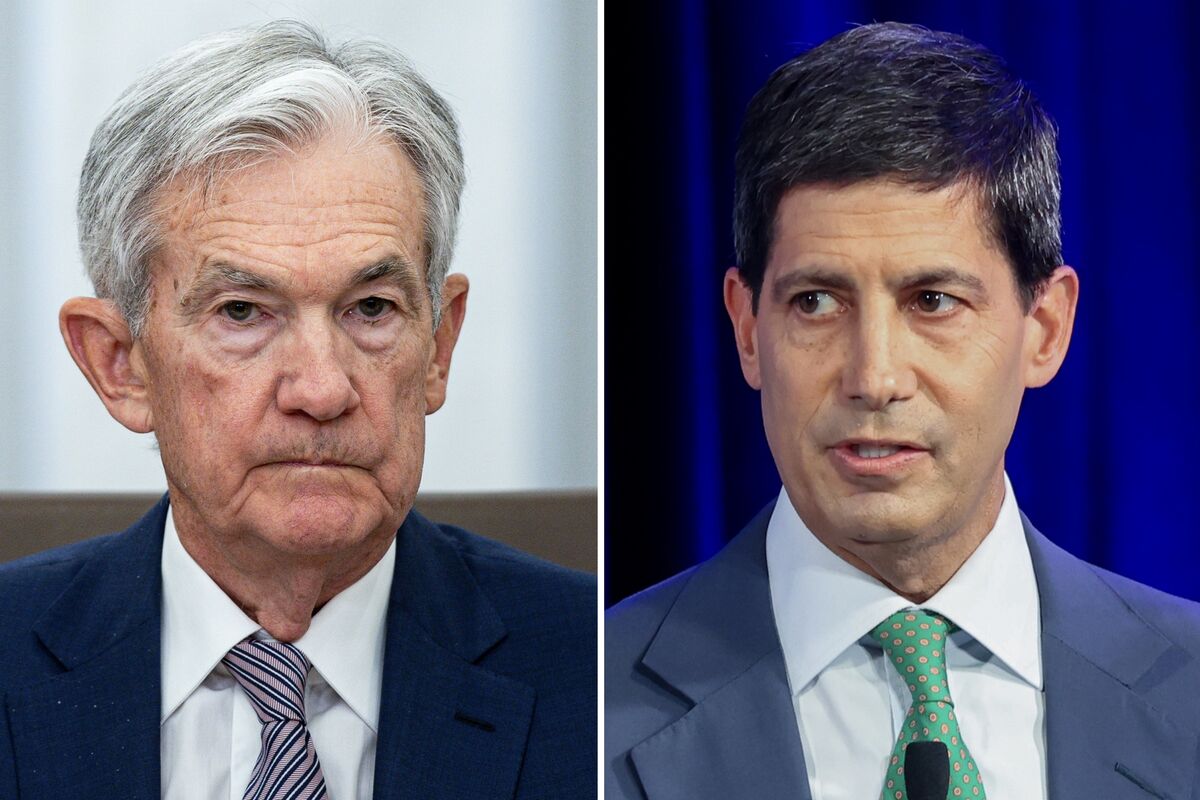
Chair Jerome Powell's term ends in May and ongoing legal and political standoffs raise the likelihood the Senate won't confirm a successor in time. Powell says he intends to remain in charge, citing the law and historical precedent. The dispute increases near-term uncertainty around Fed leadership and policy signaling, presenting risks to interest-rate expectations and market volatility.
Legal uncertainty around Fed leadership materially raises the probability the market prices a higher term premium rather than a lower policy rate; expect the 10y term premium to move +20–50bps over a 1–3 month window if the impasse persists. Mechanism: politicization reduces credibility of forward guidance, foreign demand for long-duration UST softens, and dealers widen internal hedging reserves — together that pours supply pressure onto the long end while the front end remains anchored by standing Fed operations.
Second-order impacts concentrate in interest-rate sensitive sectors. A +30bp move in 10y yields would mechanically knock ~2–3% off agency MBS prices (30y duration ~6–8; back-of-envelope: 0.3%*7=~2.1%), amplify convexity hedging flows and inflict outsized mark-to-market losses at levered MBS holders and some regional banks with mortgage pipelines. Conversely, a persistent steepening helps bank NIMs and long-duration cash-flow businesses that reprice assets upward — expect relative winners among large retail banks and relative losers among mortgage REITs, homebuilders, and rate-sensitive CRE borrowers.
Timing and catalysts to watch: Senate calendar and procedural votes in the next 2–8 weeks are the highest-probability triggers for a step change in volatility; a carry-through into May is the regime-shift that forces repricing across term-premium-sensitive instruments. The main reversal risks are quick bipartisan confirmation, a strong Fed communication on operational continuity, or a large-scale foreign bid for duration (e.g., sovereign buying), any of which can compress term premium by 10–30bps in days to weeks.
AI-powered research, real-time alerts, and portfolio analytics for institutional investors.
Overall Sentiment
neutral
Sentiment Score
0.00
