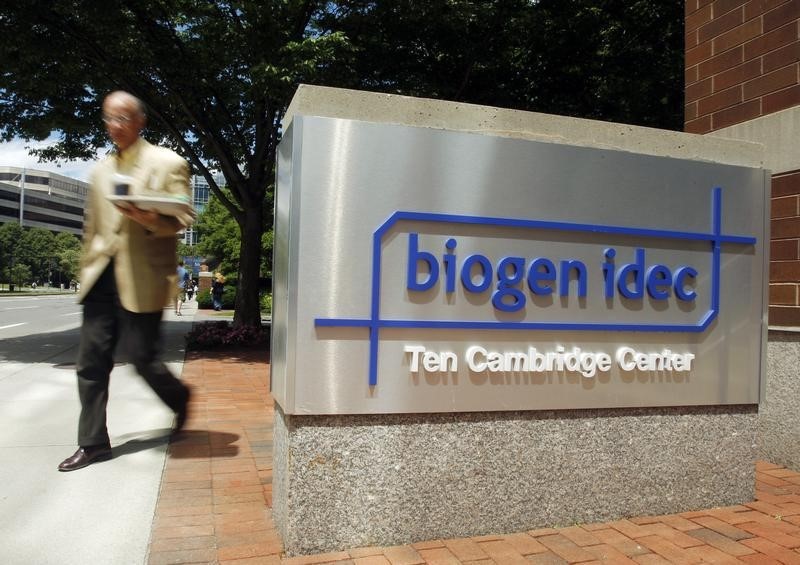
Biogen’s phase 2 CELIA study for diranersen missed its primary endpoint, but showed reductions in tau biomarkers and cognitive benefit signals across doses, prompting the company to advance the drug into late-stage development. Wolfe Research reiterated a Peerperform rating, while other brokers remained constructive; Biogen also trades near its 52-week high at $204.53 after a nearly 70% gain over the past year. The news is mixed for the stock, but the continued Alzheimer’s pipeline progress should keep BIIB in focus.
The market is starting to price BIIB less as a binary Alzheimer’s readout and more as a platform with multiple shots on goal. The key second-order effect is that even a failed primary endpoint can be enough to reset the optionality if biomarker suppression and cognitive signal persist; that tends to keep strategic value elevated and compresses downside from the old “one-done” Alzheimer’s failure pattern. In practice, this shifts the stock from event-risk driven to expectation-management driven over the next 3-6 months, with late-stage program advancement becoming the main catalyst. The bigger winner may be not BIIB’s near-term revenue base, but the whole anti-amyloid/anti-tau ecosystem: contract researchers, imaging vendors, and competing CNS platforms now have a more credible proof point that tau modulation can show human signal in placebo-controlled settings. That raises the bar for rivals that are still purely biomarker-led, and it may pull capital toward companies with clearer mechanistic readthrough rather than broad neurodegeneration baskets. At the same time, higher serious adverse events at the top dose create a natural ceiling on enthusiasm; the commercial path likely depends on a lower-dose regimen, which can blunt peak-sales expectations versus the most bullish Alzheimer’s models. The contrarian miss here is that the upside may be more muted than the headline optimism suggests because the Alzheimer’s market is already crowded with “promising but imperfect” assets. If lecanemab-related timing uncertainty persists, BIIB could get another sentiment boost, but that is more a window for multiple expansion than a step-change in fundamentals. Over 6-12 months, the stock’s biggest risk is a replay of the same pattern: good biomarker story, equivocal clinical utility, and gradual mean reversion once the next catalyst passes.
AI-powered research, real-time alerts, and portfolio analytics for institutional investors.
Overall Sentiment
mildly positive
Sentiment Score
0.15
Ticker Sentiment
