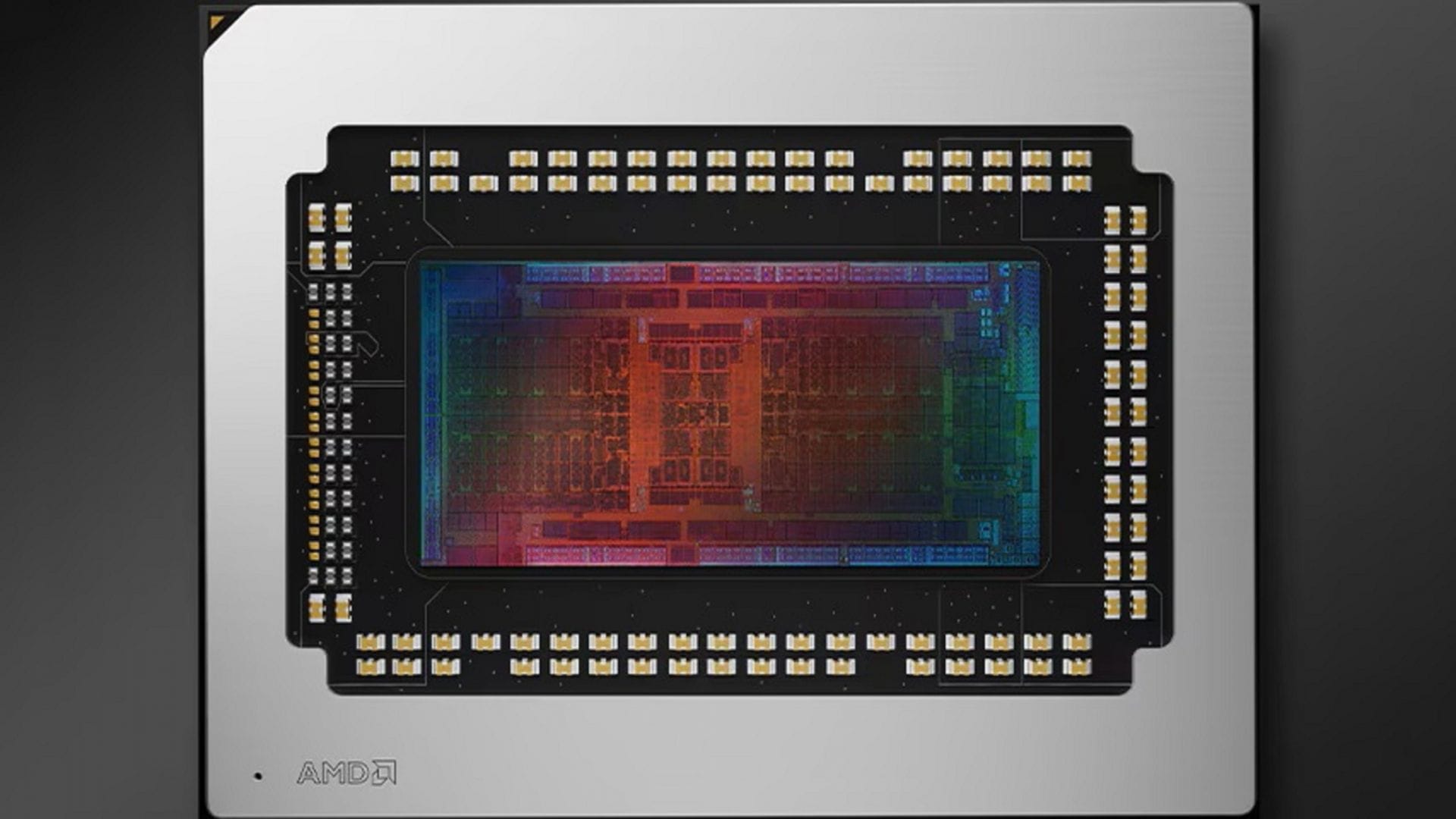
AMD code-named 'gfx1310' has appeared in the LLVM repository and is widely believed to represent the company's RDNA 5 (GFX13 / UDNA) architecture, following the gfx naming convention from prior RDNA generations. Public commentary from Sony's Mark Cerny and AMD's Jack Huynh suggests RDNA 5 may include new Radiance Cores and Radiance Cache for improved ray tracing, a Neural Rendering pipeline and Neural Arrays for AI tasks, and Universal Compression to reduce memory use. The find implies RDNA 5 is in early-to-mid development and could be 18–24 months from consumer launch, signaling a potential future upgrade cycle for Radeon GPUs and competitive pressure on NVIDIA, but with limited immediate market impact.
Market Structure: RDNA5 hints (gfx1310) are a positive signal for AMD (AMD) as a potential product-cycle catalyst 18–24 months out; winners would be AMD, console partners (Sony), and vertically integrated foundries (TSMC) if capacity is secured. Losers could be NVIDIA (NVDA) pricing power and second‑tier GPU OEMs if AMD regains 5–10 percentage points of discrete GPU share over 12–24 months; memory (GDDR/HBM) demand may rise, pressuring spot prices by +10–20% if inventory tightens around launch.
Risk Assessment: Tail risks include development delays (>12 months slip), underperformance of Radiance/Neural features versus NVIDIA’s DLSS/RT stack, and foundry capacity shortfalls — each could erase anticipated share shifts and compress AMD upside by >50% vs base case. Immediate (days) impact is noise/leak-driven, short-term (weeks–months) depends on earnings/roadmap confirmations, long-term (quarters–years) hinges on software ecosystem, ISV support, and console integration.
Trade Implications: Tactical trades: overweight AMD via 12–24 month LEAP call spreads sized 1–3% portfolio to capture product-cycle upside; hedge with 6–9 month NVDA put spreads (0.5–1%) if market prices a price/perform advantage. Consider pair trade: long AMD / short NVDA equal-dollar (1–2% net exposure) if AMD demonstrates benchmark parity within 12 months; rotate into semicap and memory suppliers on confirmed tapeouts.
Contrarian Angles: Consensus assumes RDNA5 equals immediate competitive parity; missing factors are drivers, developer adoption, and console software dependency — historically (Zen CPU cycles) AMD needed 2–3 product cycles to monetize design wins. The market may underprice implementation risk and margin compression from aggressive AMD pricing; a victory could still be delayed or muted, creating opportunities to buy on >15% post-announcement pullbacks.
AI-powered research, real-time alerts, and portfolio analytics for institutional investors.
Request DemoOverall Sentiment
mildly positive
Sentiment Score
0.35
Ticker Sentiment
