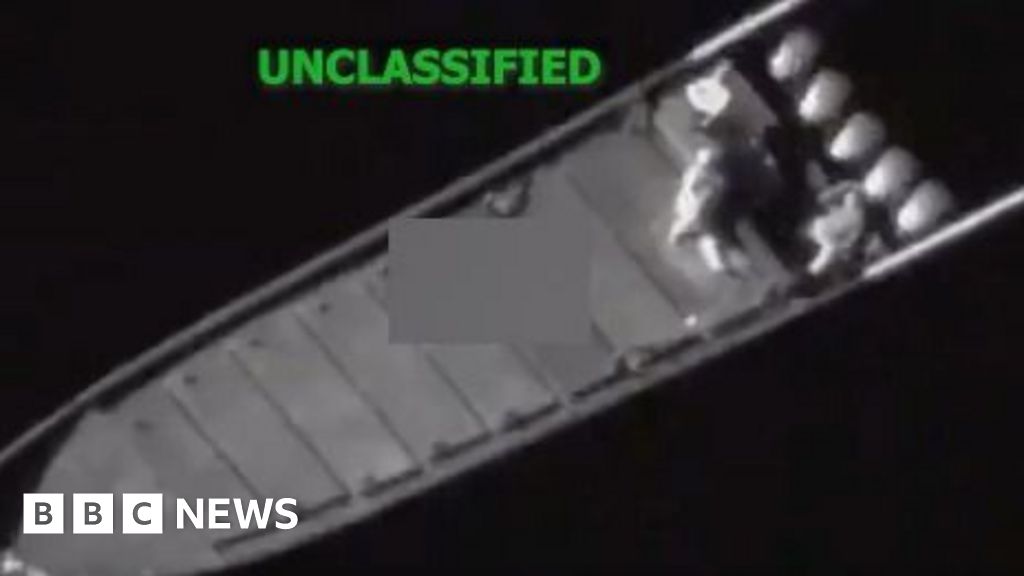
US forces conducted lethal strikes late Monday that killed 11 people across three alleged drug-trafficking vessels in the Eastern Pacific and Caribbean, with the US Southern Command saying intelligence showed the boats were on known narco-trafficking routes. The Trump administration has carried out more than 40 such strikes since September—over 130 fatalities in total—and has declared a formal armed conflict with drug cartels, labeling boat crews "combatants," while legal experts and some families have sued, alleging potential violations of international law and civilian targeting. For investors, the episode elevates geopolitical and legal risk in the region and increases potential reputational, operational and litigation exposures for US forces and contractors, though direct near-term market impact is limited.
Market structure: Short-term winners are defense/aerospace contractors and ISR/maritime-surveillance vendors (e.g., LMT, NOC, RTX, KTOS, iShares U.S. Aerospace & Defense ETF ITA) who stand to capture modest, near-term patrol and avionics contracts; expect incremental contract flows of roughly $0.5–2.0bn annually industry-wide if operations persist. Losers are travel/cruise exposure to the Caribbean (e.g., CCL, NCLH) and regional tourism-dependent equities which may see 3–10% demand shocks in booking windows of 0–3 months. Insurance and freight-risk premia should tick up modestly (estimated 5–15% on marine insurance spreads) raising short-term costs for shippers and insurers.
Risk assessment: Tail risks include international legal rulings or UN sanctions that could curtail US operations (low probability 5–15% in 3–12 months but high impact), and geopolitical escalation — e.g., state-to-state confrontation raising oil/commodity volatility by +10–30% in stressed scenarios. Immediate (days) impact is localized risk-premium repricing in FX and regional bonds (USD tighten, EM spreads +10–30bp), short-term (weeks–months) is contract awards and defense stocks re-rating (+3–8%), long-term (quarters–years) depends on congressional funding cycles and litigation outcomes. Hidden dependencies include congressional appropriations timelines and third-party contractor supply chains for electronics; catalysts to watch: court decisions and congressional hearings in the next 30–120 days.
Trade implications: Direct plays — establish small tactical longs in ITA (1.5–3% portfolio) or equal-weight LMT/NOC/RTX (1–2% each) with a 3–12 month horizon; profit target 10–15%, stop 6–8%, enter within 2 weeks. Pair trade — long ITA or LMT vs short CCL (size 1:1 dollar-neutral, 1–2% gross exposure) for 1–3 months to capture defense re-rating vs near-term travel weakness. Options — buy a 3-month LMT call spread (buy ATM+2%, sell ATM+15%) sized 0.5% portfolio and buy a 3-month CCL 5% OTM put spread sized 0.5–1% as asymmetric downside protection. Also allocate 1–2% to GLD as a short-duration geopolitical hedge for 0–3 months.
Contrarian angles: Consensus may overstate sustainable upside for large-cap defense names — historical parallels (post-9/11 spikes) show defense capex impulses often mean-revert over 12–24 months, so prefer niche ISR/maritime-security SMEs (e.g., KTOS) for asymmetric upside. The market is underpricing legal/regulatory backlash risk; an adverse court ruling within 30–90 days could force de‑risking and create short opportunities in defense if contract pipelines stall. Unintended consequence: aggressive strikes can elevate regional risk premia and materially benefit energy and hard-asset plays only in high‑probability escalation scenarios (>15% likelihood); avoid over-allocating until judicial/congressional clarity arrives.
AI-powered research, real-time alerts, and portfolio analytics for institutional investors.
Request DemoOverall Sentiment
moderately negative
Sentiment Score
-0.30
