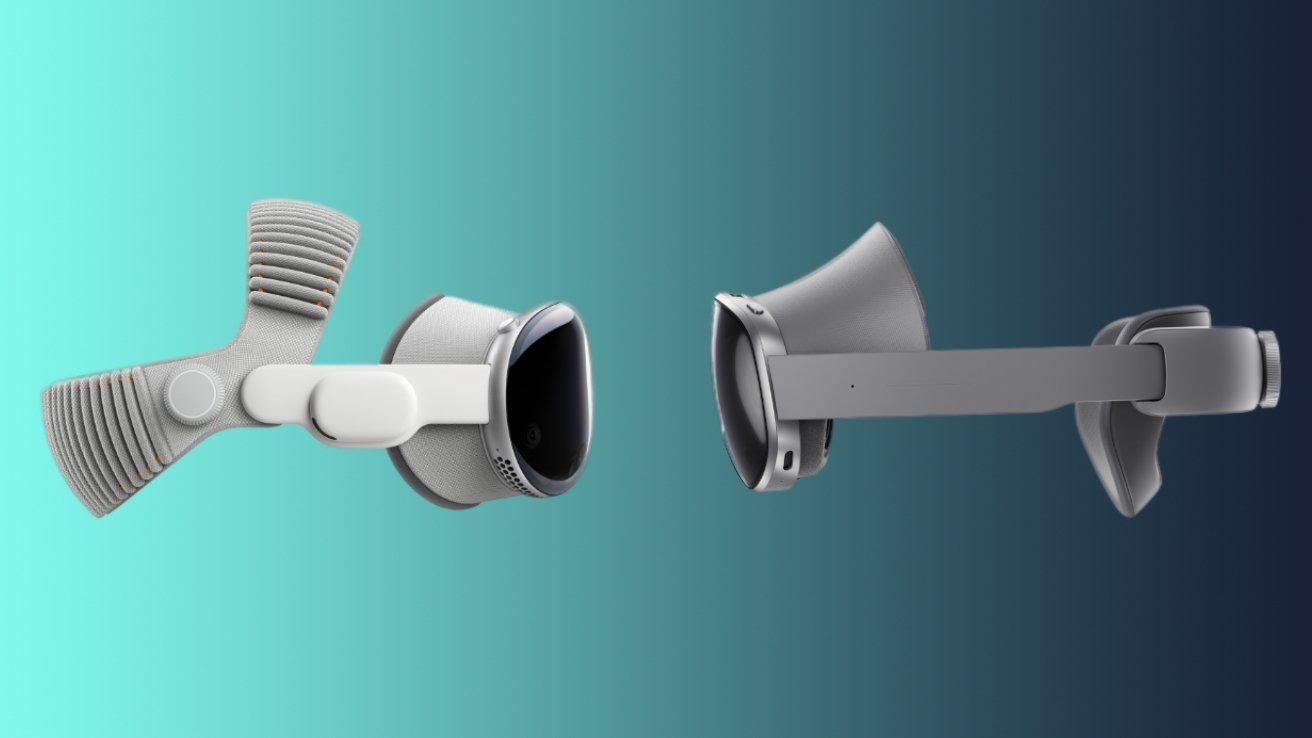
Samsung has launched its Galaxy XR headset at $1,799.99, positioning it as a direct, more affordable competitor to Apple's $3,499 M5 Vision Pro. While Samsung's device is significantly lighter and boasts deeper, system-wide Google Gemini AI integration, offering advanced context-aware capabilities, Apple's M5 Vision Pro maintains a substantial performance lead with its M5 chip, delivering superior processing power crucial for demanding applications and gaming. Apple also offers higher display refresh rates and slightly longer battery life, with both devices finding traction in enterprise applications, highlighting a developing extended reality market with distinct value propositions based on price, performance, and AI focus.
The launch of Samsung's Galaxy XR headset at $1,799.99 introduces a significant competitive dynamic to the premium extended reality (XR) market, directly challenging Apple's M5 Vision Pro, which retails for $3,499. This substantial price differential of $1,700 positions the Galaxy XR as a more accessible alternative, despite its design being noted as derivative of Apple's aesthetic. The market now presents two distinct value propositions: Apple's high-performance, premium offering versus Samsung's more affordable, AI-centric device.
Apple's M5 Vision Pro maintains a considerable lead in raw processing power, with its M5 chip achieving significantly higher Geekbench 6 scores (4,263 single-core, 17,862 multi-core) compared to Samsung's Snapdragon XR2+ Gen 2 (990 single-core, 2,453 multi-core). This processing advantage, coupled with higher display refresh rates (up to 120Hz vs. 90Hz) and hardware-accelerated ray tracing, positions the Vision Pro as superior for demanding applications, gaming, and media consumption, including its unique Immersive Video format. Conversely, the Samsung Galaxy XR offers a lighter form factor (19.22 oz vs. 26.4-28.2 oz) and boasts a higher pixel count (27 million vs. 23 million) and lower pixel pitch, suggesting potentially sharper visuals, along with newer Wi-Fi 7 and Bluetooth 5.4 standards.
A key differentiator lies in artificial intelligence integration; Samsung's Galaxy XR is marketed as "AI-first," featuring system-wide, context-aware Google Gemini capabilities that currently surpass Apple Intelligence's generative features. Gemini offers real-time suggestions, object identification, and deep app integration, leveraging cloud-based processing, whereas Apple's more privacy-focused, on-device AI is less functionally advanced, with critical Siri upgrades delayed. Both devices are actively pursuing enterprise applications, with Apple seeing use in medical and design fields, and Samsung in shipbuilding and product visualization, indicating a growing professional market segment.
AI-powered research, real-time alerts, and portfolio analytics for institutional investors.
Request DemoOverall Sentiment
mixed
Sentiment Score
0.00
Ticker Sentiment
