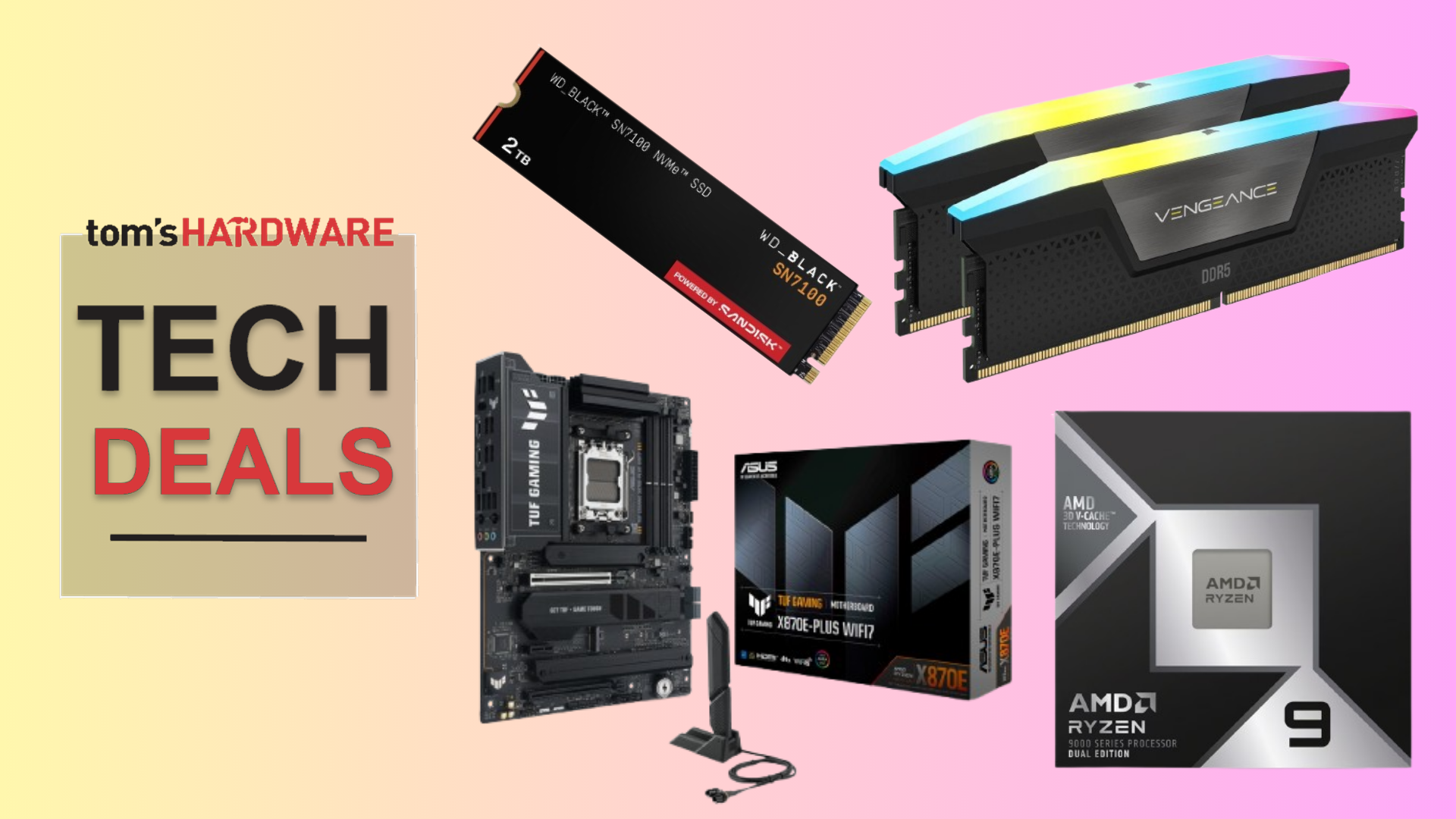
Newegg is offering an AMD Ryzen 9 9950X3D2 bundle for $1,729.99, a $441.98 discount versus buying the components separately. The package includes an Asus TUF Gaming X870E-Plus WiFi 7 motherboard, 32GB of Corsair DDR5-6400 RAM, and a 2TB WD Black SN7100 SSD, making the RAM effectively cost $28.01. The deal highlights premium PC hardware pricing pressure and strong value for builders, but it is retail deal news with limited broader market impact.
AMD is using the halo effect of a premium CPU launch to pull forward an entire AM5 build cycle. The real signal is not the processor itself but the bundling behavior: when OEM bundles are needed to clear high-value inventory, it usually means channel partners are trying to convert enthusiast demand into a faster attach rate for motherboard, memory, and SSD slots before component pricing normalizes. That matters because the bundle effectively subsidizes the long-tail adoption of the new platform, increasing the odds that AM5 remains the default upgrade path for enthusiasts over the next 1-2 quarters.
The second-order winner is the ecosystem, but not evenly. Memory and SSD vendors get a near-term volume pop from bundle-driven demand, while standalone premium pricing is likely to stay sticky until AI-driven supply tightness eases. For AMD, the mix is better than it looks: even if the CPU is niche, it reinforces brand leadership at the top of the stack and supports ASPs across the Ryzen family by widening the perception gap versus Intel's consumer lineup. The risk is that the performance delta is too small to expand the addressable market; if buyers view it as a showcase product rather than a must-have, the launch becomes a margin story for retailers more than a unit-growth catalyst for AMD.
The key contrarian read is that this is less a demand breakout than a carefully timed value transfer in a supply-constrained market. If component prices have already peaked, bundle economics can compress quickly, and the promotional savings may look less compelling in 30-60 days. That creates a short window where the market may over-interpret the launch as evidence of broad-based enthusiast demand when it may simply reflect inventory optimization and channel promotion.
Near term, the cleanest risk is disappointment if the bundle sells through without follow-on demand, which would cap any earnings revision benefit. Medium term, the catalyst is whether AMD can convert this flagship halo into higher attach rates on mainstream Ryzen and motherboard SKUs, not just headline launch buzz.
AI-powered research, real-time alerts, and portfolio analytics for institutional investors.
Request TrialOverall Sentiment
mildly positive
Sentiment Score
0.35
Ticker Sentiment
