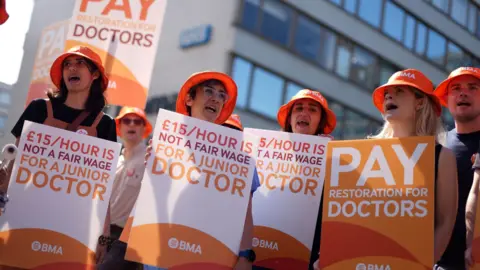
Scotland's resident doctors voted 92% in favour of a national strike (turnout 58% of 5,185 eligible voters; 3,008 votes cast) scheduled from 07:00 on 13 January to 07:00 on 17 January 2026 in a pay-restoration dispute. The Scottish government has offered a two-year pay package of 4.25% in 2025/26 and 3.75% in 2026/27 (examples: newly qualified basic pay rising from £34,500 to £37,345; a 10-year doctor from £71,549 to £77,387), which BMA Scotland says breaks a prior commitment to restore pay to 2008 levels. The strike threatens cancellations and further pressure on NHS capacity, risks undermining the government's pledge to reduce waiting times by March 2026, and increases political and fiscal risk in an election year.
Market structure: The immediate winners are UK private healthcare providers and staffing/locum suppliers who can capture displaced elective-case demand; losers are the Scottish NHS (operational capacity) and any domestic suppliers reliant on elective throughput. Expect private-pay volumes to rise 5–15% regionally around a multi-day strike window (13–17 Jan 2026), favouring short-term revenue capture but not long-term structural share shifts unless strikes repeat.
Risk assessment: Tail risks include prolonged/rolling NHS strikes across UK regions, a pre-election fiscal shock if Scottish govt concedes large back-pay (an incremental wage bill shock of several % of the Scottish health budget) and political escalation that pressures UK gilts/GBP. Immediate window risk is headline volatility in next 2–6 weeks; medium-term (3–12 months) risks are higher public wage inflation and persistent staffing shortages driving outsourcing spend.
Trade implications: Primary tradeable vectors are (a) UK staffing names and private hospital operators for near-term revenue upside into Jan–Mar 2026, (b) FX (short GBP) and sovereign fixed income (buy protection on UK gilts) to hedge fiscal/political risk, and (c) buy short-dated call spreads on staffing stocks into strike dates rather than outright long exposure to limit downside.
Contrarian angles: Consensus focuses on service disruption — markets underprice the revenue lift to private providers and temporary staffing agencies and overprice permanent fiscal doom. If the Scottish govt backs down with a <=5% sweetener, private providers could see only modest upside; but if it refuses and strikes recur, staffing agencies could re-rate. Historical parallels: 2012–2013 NHS industrial actions produced durable locum spend increases, not permanent public-to-private patient shifts, so trades should be sized for a 3–9 month event window rather than indefinite exposure.
AI-powered research, real-time alerts, and portfolio analytics for institutional investors.
Request DemoOverall Sentiment
moderately negative
Sentiment Score
-0.40
