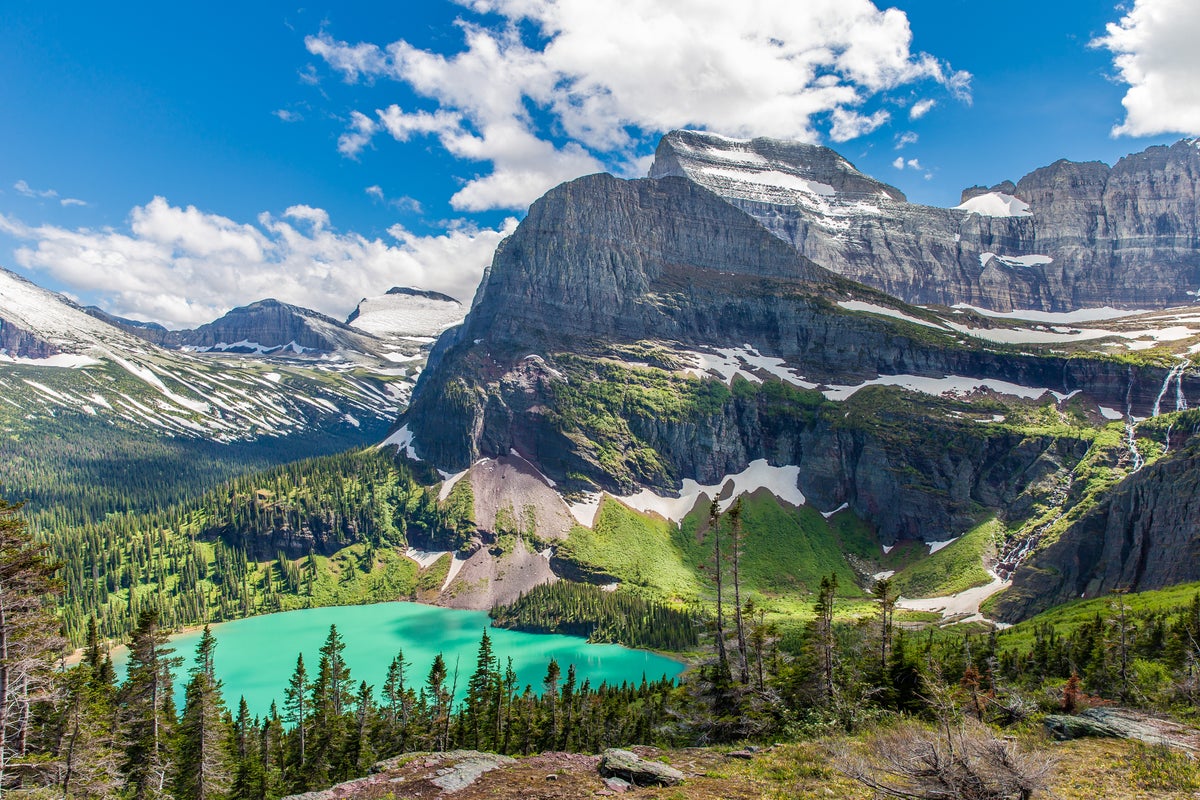
Fodor's placed Glacier National Park on its 2026 'No' list, advising visitors to avoid the site amid overtourism driven by 'last-chance tourism' as the park's glaciers rapidly shrink. The designation cites severe congestion, increased litter, wildlife disturbance, higher carbon emissions affecting air quality, and strain on trail maintenance and rescue operations; Fodor's frames the guidance as a temporary restraint and encourages alternatives from its 'Go' list.
Market structure: Expect demand to reallocate within domestic experiential travel rather than vanish. Platforms that aggregate alternative experiences and short-term rentals (ABNB, EXPE, BKNG) gain pricing power for summer 2026 bookings; I estimate peak-night pricing leverage of +5–15% in substitute destinations within 100–600 miles of Glacier as capacity tightens. Local service providers and privately-held concessionaires face revenue volatility and higher per-visitor operating costs, compressing margins by an estimated 200–400 bps in the 12–24 month window.
Risk assessment: Tail risks include federal visitation caps or higher per-visitor fees (material if >10% of current revenue), large litigation/ESG tax actions, or amplified climate events (wildfires, floods) that could eliminate peak-season revenue for multiple years. Short-term (days–months) risk centers on booking flows and social-media amplification; medium (3–12 months) on re-pricing of substitute destinations; long-term (3–10 years) on secular decline in 'last-chance' demand tied to glacier loss. Hidden dependency: regional airline route economics and local labor markets can amplify or mute demand shifts.
Trade implications: Direct plays: establish modest long exposure to ABNB (2–3% position) and EXPE (1–2%) to capture redistributed bookings for Summer 2026, funded by a small short in MAR (Marriott; 1%) to reflect share loss to non-branded lodging. Use options: buy ABNB 6–9 month 10% OTM call spreads sized to 0.5–1% notional to cap downside while capturing summer-season upside. Rotate into outdoor apparel (COLM, VFC) overweight by 1–2% to capture higher gear spend.
Contrarian angles: The narrative may be overconcentrated on one park; historically (Yellowstone 2016 crowding actions) visitation caps produced higher per-visitor spend and public infrastructure funding within 12–24 months, which can benefit concessionaires and local construction/engineering contractors. If governments push targeted fee hikes rather than closures, concessionaires and platforms that collect fees could see revenue per-visitor rise >10%, creating asymmetric upside for booking aggregators rather than pure demand destruction.
AI-powered research, real-time alerts, and portfolio analytics for institutional investors.
Request DemoOverall Sentiment
moderately negative
Sentiment Score
-0.35
