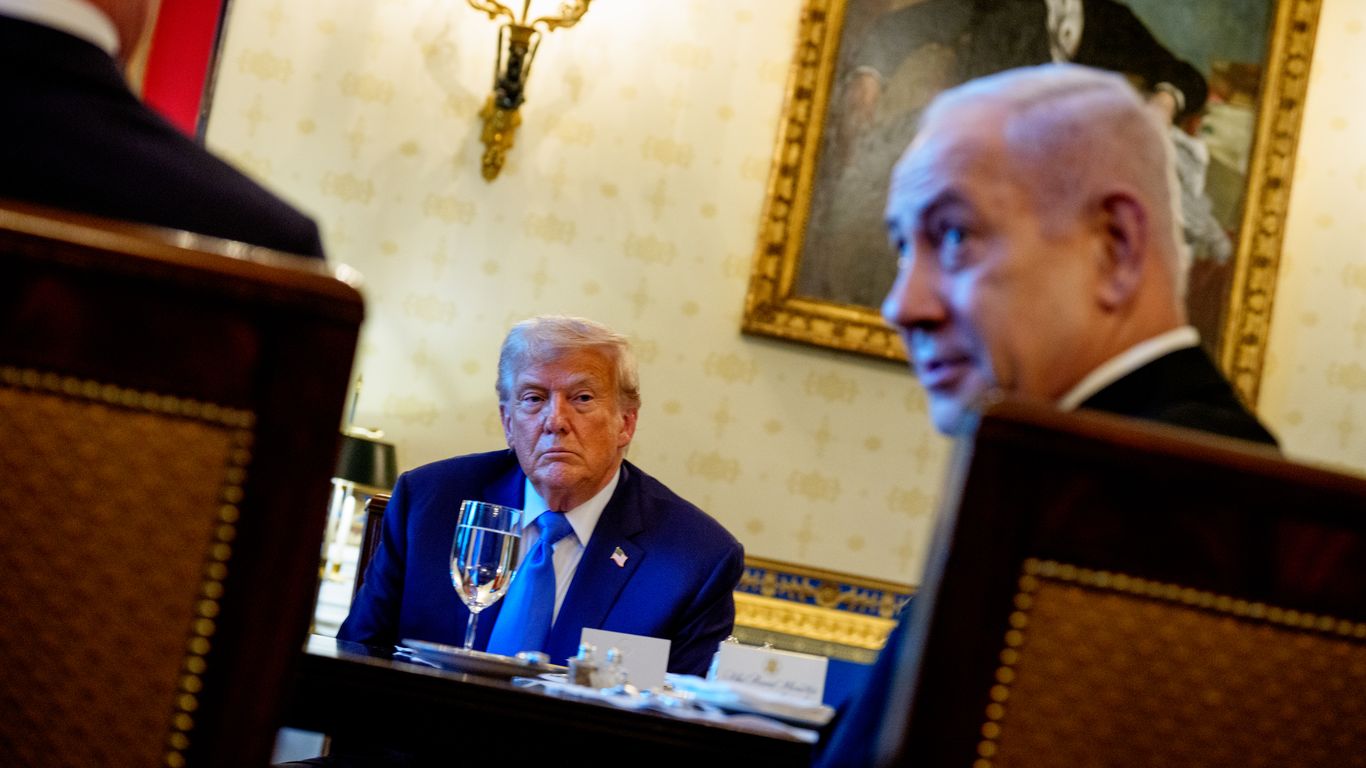
An Israeli missile strike targeting Hamas leaders in Doha, Qatar, has significantly strained U.S.-Israeli relations, with President Trump demanding a halt to such actions and expressing strong disapproval. Qatar's Prime Minister views the attack as a 'betrayal,' prompting a reevaluation of the nation's security partnership with the U.S. and a potential shift towards alternative alliances, which could alter regional geopolitical dynamics. Despite international condemnation, Israeli Prime Minister Netanyahu remains unapologetic and has hinted at further strikes, escalating tensions and posing risks to broader regional stability and U.S. influence in the Gulf.
A significant escalation in geopolitical risk is emerging from the Middle East following an uncoordinated Israeli missile strike in Doha, which has severely strained relations between the U.S. and Israel. President Trump's demand for a halt to such actions, which he described as 'unacceptable,' contrasts sharply with Israeli Prime Minister Netanyahu's defiant public statements, signaling a critical fracture in the strategic alliance. The most immediate and material fallout is Qatar's formal reevaluation of its security partnership with Washington, with its Prime Minister citing a 'betrayal' and openly considering 'other partners' for its security needs. This development, flagged by the signals with a 'strongly negative' sentiment and a 'volatile' tone, poses a direct threat to U.S. strategic interests and stability in the Gulf. The situation is compounded by broad international condemnation and explicit warnings from Qatar of a coordinated regional response, elevating the risk of a wider conflict and justifying the high market impact score of 0.65.
AI-powered research, real-time alerts, and portfolio analytics for institutional investors.
Request DemoOverall Sentiment
strongly negative
Sentiment Score
-0.75
