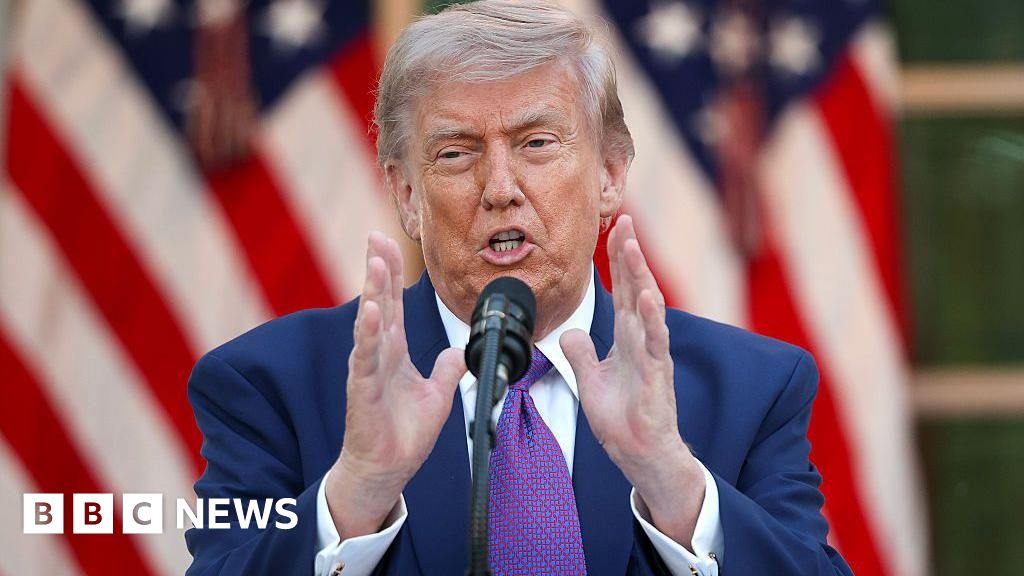
The Justice Department unveiled a $1.776 billion "Anti-Weaponization Fund" tied to Trump dropping his $10 billion IRS tax-return lawsuit. The fund is intended to compensate selected claims from allies and pardoned Capitol riot participants, drawing criticism from Democrats who called it a taxpayer-funded "slush fund." The move raises governance and legal concerns, but the direct market impact is likely limited.
This is less a one-off legal settlement than a pricing signal that the current administration is willing to convert legal/oversight conflict into a discretionary payout channel. The second-order effect is not just headline risk for government agencies; it raises the expected value of future political-influence claims, which can keep legal-defense and investigations-related spending elevated across the DOJ, Treasury-adjacent functions, and any regulated company with exposure to politically charged enforcement. The market should treat this as a governance shock: institutions tied to rule-of-law credibility typically see a small but persistent multiple discount when investors begin to price in process risk rather than just policy risk.
For NYT specifically, the issue is not direct revenue sensitivity but optionality around investigative journalism demand and elevated audience engagement during political controversy. The near-term read-through is better monetization of political news cycles, but the medium-term risk is that normalization of ad hoc state settlements and retaliation narratives further polarizes readers, potentially widening churn at the margin. Any meaningful selloff in media peers on "political exhaustion" would likely be overdone over a 3-6 month horizon because controversial institutional events usually extend the engagement tail rather than shorten it.
The contrarian view is that the cash amount is large in optics but small versus federal scale, so the direct fiscal impact is not the tradeable part. The investable edge is in secondary consequences: higher probability of litigation over agency independence, more volatility in tax/regulatory headlines, and a modest but real increase in the political premium embedded in U.S.-exposed defensives and large-cap media. If this becomes a template rather than an outlier, the market will likely re-rate the probability of future discretionary government actions faster than the underlying legal process can correct it.
AI-powered research, real-time alerts, and portfolio analytics for institutional investors.
Request DemoOverall Sentiment
mildly negative
Sentiment Score
-0.20
Ticker Sentiment
