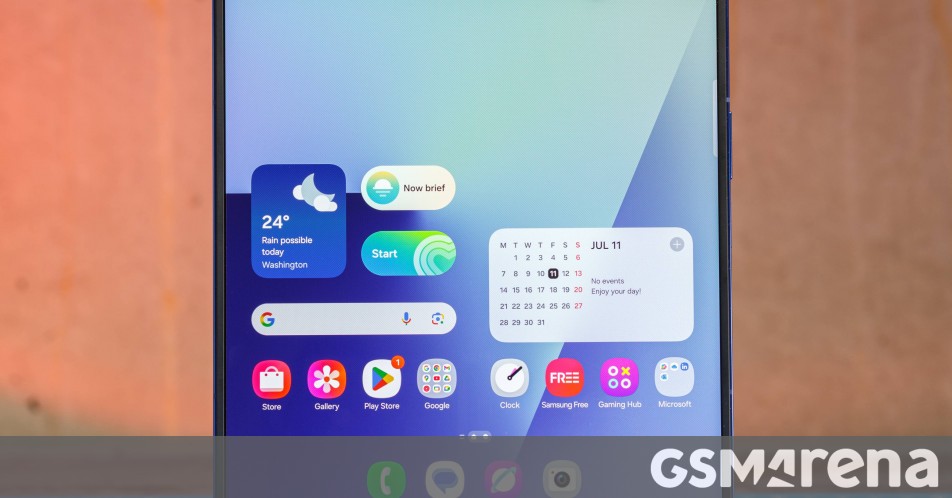
Samsung plans to use new display technology in the Galaxy Z Fold8 this summer, employing Ultra Thin Glass (UTG) on both the top and bottom layers and a laser-drilled metal support plate to reduce visible crease by roughly 20%. The approach contrasts with the rumored iPhone Fold, which may use a glass substrate while sourcing the foldable screen from Samsung, and follows Samsung's CES 2026 demo of a crease-free foldable — though it is unclear if the same panel will be used on the Z Fold8. Investors should view this as incremental product innovation that could modestly strengthen Samsung's competitive position in foldables rather than a near-term market-moving event.
Market structure: Samsung Electronics (SSNLF / 005930.KS) and Samsung Display (private) are direct winners — success with UTG on both layers and a laser-drilled metal support plate lowers a visible-crease metric by ~20%, which can sustain a premium ASP for foldables and expand TAM by accelerating replacement cycles; glass/laser-equipment suppliers (e.g., GLW, IPGP) are second-order beneficiaries. Competitors (Apple AAPL, BOE 000725.SZ) face tighter product-differentiation windows; if Samsung preserves panel exclusivity for 6–12 months, pricing power on high-end foldables could rise 5–15% in ASPs.
Risk assessment: Tail risks include production yield shortfalls ( >10% miss), large-scale returns from crease complaints, or IP litigation with Apple that could delay volumes by quarters; each would pressure SSNLF margins and KRW. Immediate (days) impact is limited; short-term (weeks–months) centers on prelaunch supplier order flows and review-cycle sentiment; long-term (quarters–years) depends on adoption curve—assume 20–30% annual unit growth if crease reduction is validated by reviews. Hidden dependencies include Samsung Display captive sourcing decisions (could crowd out third-party glass suppliers) and metal-support supply constraints that could raise capex or COGS.
Trade implications: Tactical direct plays: long SSNLF exposure ahead of summer launch (3–6 month horizon) given asymmetric upside from a successful product cycle; small long exposure to GLW for UTG demand and IPGP for laser tooling exposure with 6–12 month timeframes. Use options to define risk: buy 3–6 month call spreads on SSNLF/SSNLF-equivalent ADR sized 2–3% of portfolio, or buy GLW 9–12 month calls (ITM/ATM mix) sized 1–2%.
Contrarian angles: Consensus underestimates margin tailwind if foldable ASPs rise and replacement cycles shorten — a validated crease improvement could raise segment EBIT margins by >200–300 bps over 12–18 months. Conversely, market may be underpricing captive sourcing risk: if Samsung internalizes UTG production, public glass suppliers (GLW, 5214.T) could see revenue upside capped or delayed. Historical parallel: early OLED upgrades produced multi-year supplier winners and losers; watch order disclosure within 60 days as a decisive signal.
AI-powered research, real-time alerts, and portfolio analytics for institutional investors.
Request DemoOverall Sentiment
mildly positive
Sentiment Score
0.30
