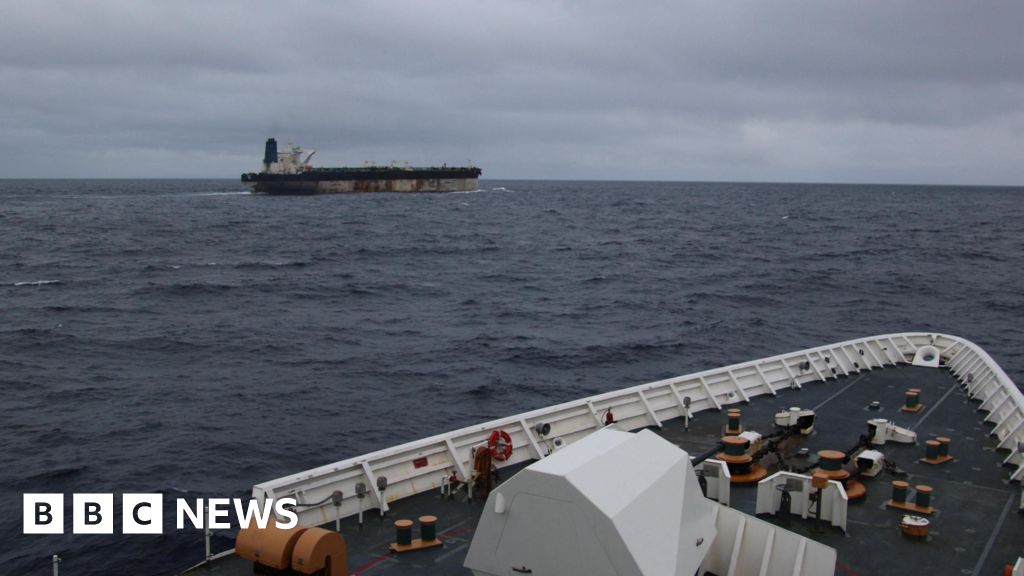
The UK government says it has identified a legal basis — invoking the Sanctions and Money Laundering Act 2018 — to allow military boarding and detention of so-called 'shadow fleet' tankers operating without legitimate flags; ministers plan to ramp up military options alongside allied action. British forces recently assisted the US in the seizure of the Marinera (formerly Bella 1), and the UK has sanctioned over 500 vessels, believes around 200 ships have been pushed off the seas, and has increased insurance checks with more than 600 ships stopped near the British Isles. The move raises the risk of further disruption to illicit crude shipments and insurance availability for unflagged vessels, potentially tightening tanker markets and raising operational and legal uncertainty for traders and insurers.
Market structure: Immediate winners are compliant, Western-listed tanker owners and brokers who can credibly underwrite flagged voyages (e.g., FRO, EURN, DHT) and marine insurers/reinsurers (MMC, RNR) because removal of ~200 shadow vessels can tighten available tonnage by an estimated 2–4% and push spot VLCC/AFRA rates +15–30% over 3–6 months. Defence and surveillance primes (BAESY, LMT, RTX, LHX) gain longer‑duration service revenues from higher maritime patrol and ISR budgets. Losers are opaque operators, shadow brokers and refiners depending on murky crude grades; oil traders taking arbitrage positions will see elevated execution risk and basis volatility.
Risk assessment: Tail risks include a sanction/wartime escalation that triggers a >$10–20/bbl spike in Brent within days and retaliatory cyber/AIS spoofing that paralyzes Atlantic traffic—low probability but high impact. Near term (days–weeks) expect volatility spikes around seizures; short term (1–6 months) see rising insurance premia +10–25% and freight-rate dislocation; long term (1–3 years) anticipate structural reflagging costs, higher compliance capex and potential permanent fleet rationalisation. Hidden dependencies: legal rulings, China/India trade acceptance of interdiction, and availability of alternative pipeline capacity.
Trade implications: Tactical longs: establish 2–3% position in FRO and EURN (expect 3–6 month upside tied to spot rate recovery) and 1–2% in DHT as diversification across VLCC/ULCC exposure. Buy 1% positions in MMC and RNR to capture tightened insurance spreads; size 6–12 month call spreads on FRO/EURN (buy ATM, sell +25% strikes) to limit theta. Hedge macro tail risk with 0.5–1% Brent 1–3 month straddles around major seizure dates or UK legal rulings.
Contrarian angles: The market underestimates persistent freight-rate upside if enforcement reduces illicit tonnage permanently; conversely defence names are likely priced for multi‑year budgets so incremental UK/US operations may be an underperformer—avoid >2% concentrated positions in BAESY/LMT for this thesis. Watch for unintended consequences: insurance capacity withdrawal could choke legitimate trade and depress volumes, creating a 6–12 month window where rates rise but cargo volumes fall (stagflationary for shipping earnings). Historical parallel: 2019 IMO ballast water/sulphur rules tightened supply and sustained higher earnings for compliant owners for 12–24 months.
AI-powered research, real-time alerts, and portfolio analytics for institutional investors.
Request DemoOverall Sentiment
neutral
Sentiment Score
-0.10
