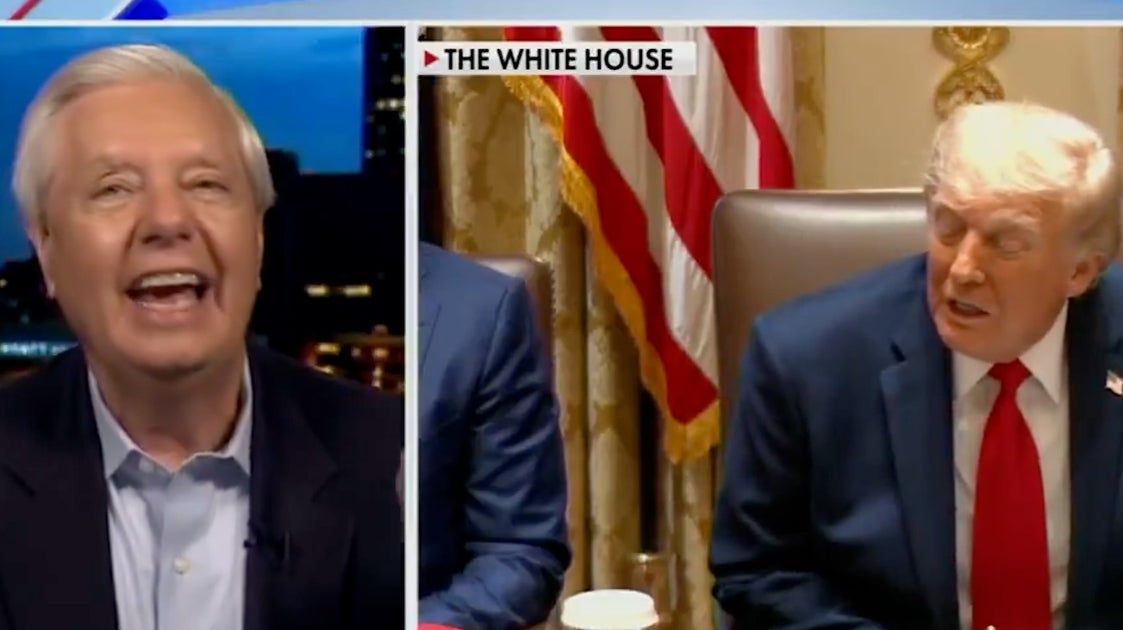
Sen. Lindsey Graham praised Donald Trump’s potential role in brokering Middle East normalization deals involving Saudi Arabia, Pakistan, and Qatar, even suggesting the Nobel Prize should be renamed the Trump Prize. The piece is primarily political commentary and criticism rather than market-moving news. No direct economic or corporate impact is indicated.
The market implication here is not about diplomacy itself; it is about the probability distribution on regional risk premium. Any credible path toward Saudi-Israel normalization would compress tail-risk pricing in energy, defense, and shipping far more than it would move broad equities, because the investable impact is mostly through lower odds of escalation, not higher growth. The key second-order effect is that even incremental progress can weaken the “geopolitical hedge” bid in crude and defense primes before any formal accord is signed, as positioning tends to unwind on headlines rather than final agreements.
The likely winners are the usual anti-risk proxies: airlines, consumer discretionary, semis with heavy Asia exposure, and global industrials with Middle East logistics exposure. The more interesting loser set is less obvious: regional defense contractors and select cyber names can underperform if investors start to price a multi-year de-escalation path, while US shale names face a lower implied war premium even if fundamentals remain intact. If normalization discussions gain traction, expect a faster decline in implied oil volatility than in spot prices, because options markets reprice first.
The contrarian view is that the market may be overestimating the durability of any headline-driven peace narrative. Normalization is a multi-step process with high veto risk from domestic politics, and the probability of a stalled or symbolic announcement is much higher than a clean regime change in the regional order. That makes this a classic event-risk setup: short-dated downside in crude and defense can work on enthusiasm spikes, but the trade should be managed tightly because disappointment can snap risk premiums back within days.
Catalyst horizon matters: over the next 1-4 weeks, headline sensitivity dominates; over 3-6 months, the main determinant is whether the rhetoric translates into formal security commitments or trade normalization. If the process advances, the greatest alpha may come from rotating out of geopolitical hedges rather than outright index longs. If it fails, the unwind is likely concentrated in the most crowded “peace trade” expressions, not the broader market.
AI-powered research, real-time alerts, and portfolio analytics for institutional investors.
Request TrialOverall Sentiment
neutral
Sentiment Score
0.05
