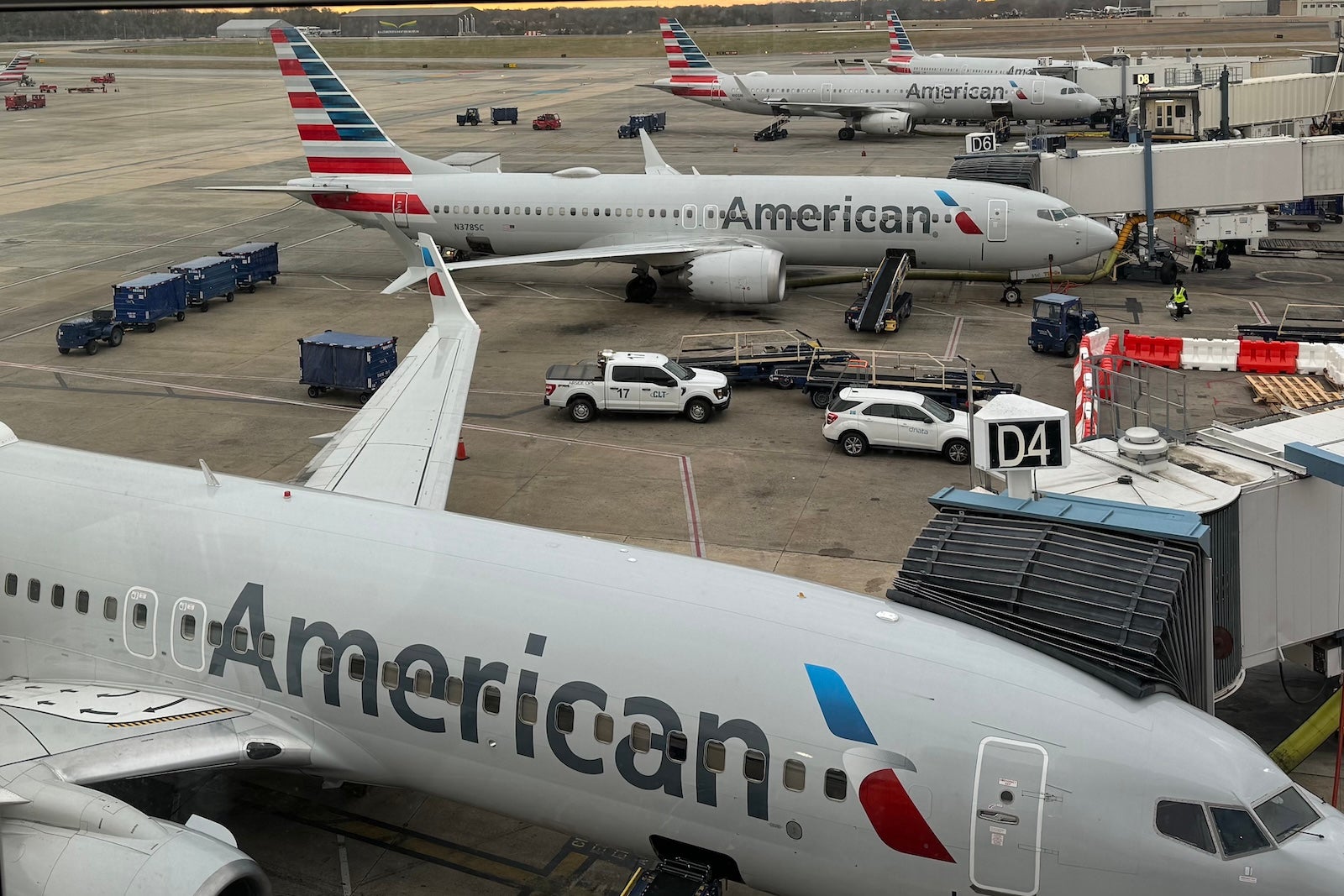
American Airlines will keep AAdvantage Loyalty Points thresholds unchanged for 2026 (Gold 40,000; Platinum 75,000; Platinum Pro 125,000; Executive Platinum 200,000) while revising Loyalty Point Rewards by adding perks (inflight food/beverage coupons, New York Times 12‑month subscriptions, premium retail selections) and removing a Bang & Olufsen option at higher tiers. Partner spend bonuses increase at 60,000 Loyalty Points from 20% to 25% (capped at 25,000 Loyalty Points for six months) while the prior 30% uplift at 100,000 points is eliminated; the airline is also expanding event redemptions and will introduce gift-card redemptions later in 2026. Operationally notable for customer experience, American expects free inflight Wi‑Fi on 100% of mainline narrow‑body and two‑cabin regional jets by end of January, requiring an AAdvantage account. The changes are consumer‑facing and likely supportive of retention and ancillary revenue but are unlikely to be material near‑term drivers of the stock.
Market structure: American Airlines (AAL) is the direct beneficiary — free onboard Wi‑Fi rollout to 100% of mainline narrow‑bodies by end of Jan and modestly improved Loyalty Point Rewards increase product differentiation versus DAL/UAL. NYT stands to gain incremental recurring‑revenue from packaged 12‑month subscriptions offered at multiple Loyalty thresholds. Pricing power impact is small but positive: incremental loyalty stickiness may lift ancillary yields ~1–3% over 12–24 months if retention improves; competitors maintaining status parity limits a broader fare‑war reaction.
Risk assessment: Key tail risks are operational (Wi‑Fi rollout delays, service outages, cyber incidents) and margin pressure from incremental opex for connectivity — a 1–2% margin compression in the medium term is plausible if connectivity costs aren’t monetized. Short term (days–weeks) market reaction should be muted; medium term (3–9 months) impacts arise as registration/use metrics and partner spend data emerge; long term (1–3 years) hinges on whether loyalty enhancements materially raise RPU (revenue per user) above break‑even. Hidden dependencies include co‑brand credit card spend elasticity and partner economics (removal of 30% bonus at 100k points could reduce partner‑driven Loyalty Point flow).
Trade implications: Tactical long bias to AAL versus peers is justified but should be size‑limited and hedged — product improvements and modest loyalty upgrades support a 5–12% upside case over 3–9 months if Wi‑Fi adoption and registration exceed 20% of active AAdvantage base in 6 months. Options provide asymmetric payoff: use 3–6 month 5–10% OTM call spreads to limit premium outlay; hedge tail risk with small 9–12 month OTM puts. Rotate modest capital from commodity‑sensitive airline suppliers into consumer subscription plays (small allocation to NYT) because of new distribution channel and recurring revenue lift potential.
Contrarian angles: Consensus may overvalue the customer‑experience upside — free Wi‑Fi is low ARPU and could be a net cost if not monetized; downside risk is underappreciated if AAL absorbs >$100m incremental opex annually without offsetting spend. Historical parallel: Delta’s product investments only paid off after multi‑year reliability gains; AAL must execute operationally. Unintended consequence: richer LoyaltyPoint menus may shift spend to non‑airline partners, reducing seat revenue per LoyaltyPoint; watch partner redemption economics closely.
AI-powered research, real-time alerts, and portfolio analytics for institutional investors.
Request DemoOverall Sentiment
mildly positive
Sentiment Score
0.25
Ticker Sentiment
