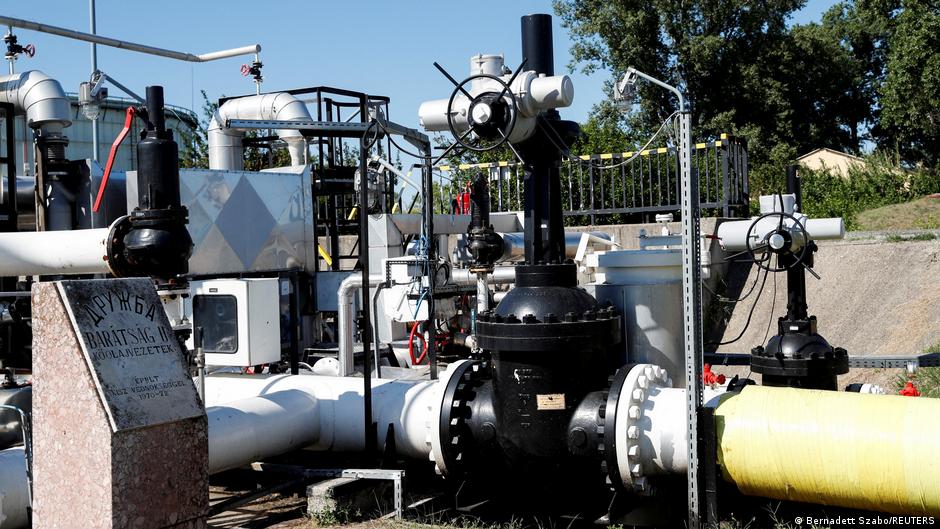
At least 40% of Russia's oil export capacity is estimated offline after drone attacks, pipeline damage and tanker seizures, a major supply shock likely to support higher oil prices and elevate market volatility. Hungary's PM Viktor Orban is threatening to gradually halt gas deliveries to Ukraine until Druzhba pipeline oil flows resume (though Kyiv says gas deliveries have not yet stopped), introducing political risk to regional gas transit ahead of Hungary's election. Russia reported intercepting 398 drones overnight and attacks forced suspension of loadings at Primorsk and Ust-Luga; related power outages affected ~450,000 people around Belgorod and ~150,000 Ukrainian households, increasing near-term downside risk to European energy infrastructure, utilities and defense-exposed sectors.
Energy-export chokepoints and politically motivated transit threats are amplifying a structural premium on liquid transport and storage capacity. With seaborne routes now carrying a larger share of marginal barrels, expect time-charter rates and storage contango to spike episodically; a 2x move in short-term tanker TC rates within 30–90 days is plausible if disruptions persist and shadow-fleet workarounds remain constrained.
The politicization of transit increases short-dated volatility but also accelerates durable demand for alternative supply infrastructure (LNG cargoes, floating storage, and fast-cycle US production). Policy-driven interruptions tied to electoral cycles have asymmetric effects: they create sharp near-term price spikes while also increasing capital allocation to medium-term fixes (LNG terminals, stor age, re-routing), compressing realized returns for refiners dependent on specific crude grades.
Tail risks sit on two axes: a rapid diplomatic de-escalation or successful emergency repairs could unwind much of the premium within 30–90 days, whereas escalation to broader interdiction of export terminals or further sanctions on mid-stream actors would extend elevated margins into 12+ months. Market signals to watch are TC rate moves, insurance/war-risk premia, and incremental long-term LNG offtake tenders from Europe and Asia — any of which flip the trade from tactical to structural.
For portfolio construction, bias toward liquid, short-duration exposures to shipping and storage where the convexity to episodic supply shock is highest; favor fee-generating intermediaries that capture re-pricing of risk rather than pure commodity producers with geopolitically constrained access. Maintain disciplined hedges (short-dated puts or collars) against the scenario of rapid diplomatic repair that would produce sharp downside in commodity-related longs.
AI-powered research, real-time alerts, and portfolio analytics for institutional investors.
Request DemoOverall Sentiment
strongly negative
Sentiment Score
-0.70
