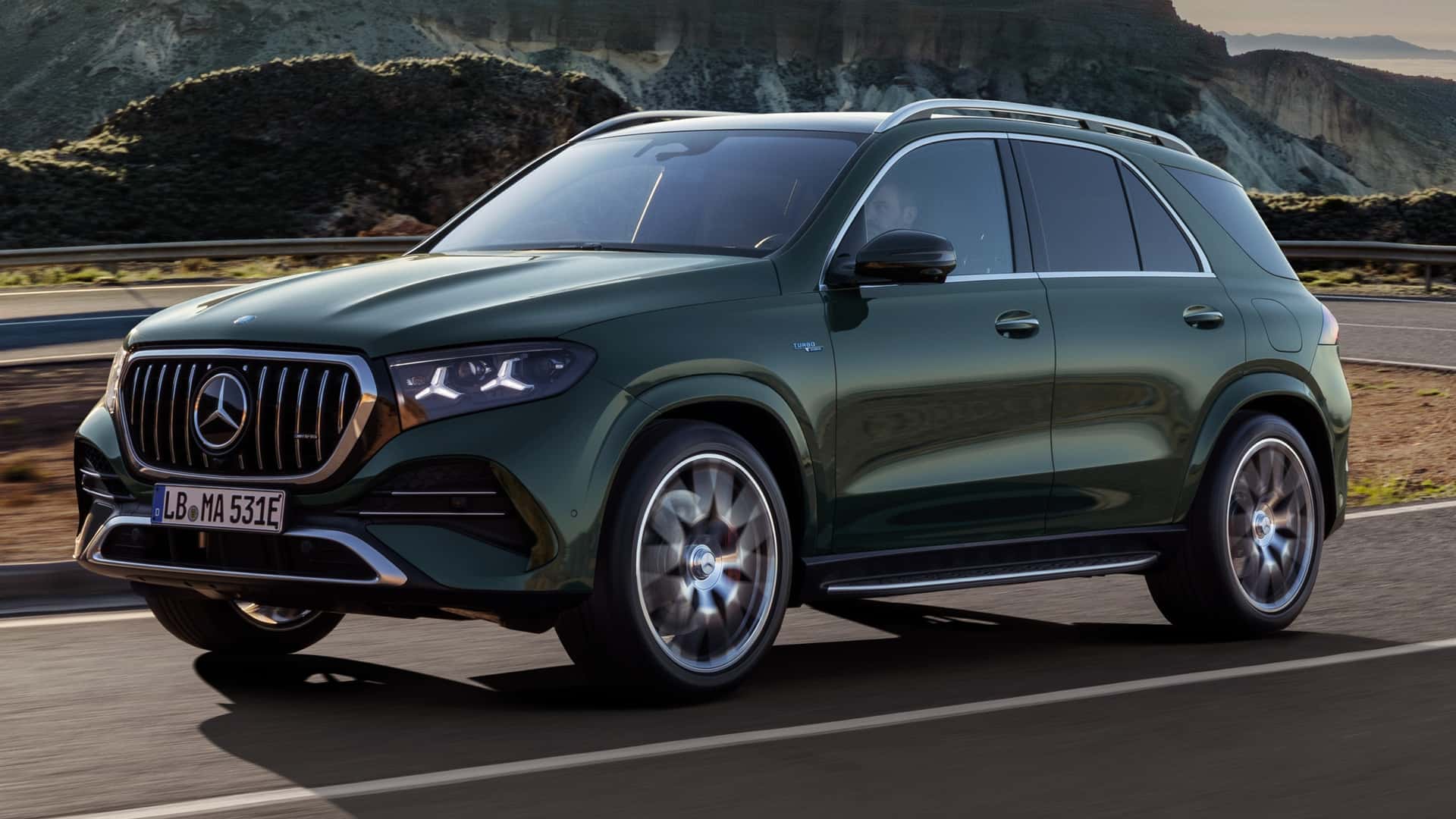
Mercedes unveiled the 2027 GLE refresh with revised styling and powertrains, headlined by the AMG GLE 53 Hybrid at 577 hp and 553 lb-ft and the GLE 580 4Matic at 530 hp and 553 lb-ft. The range also includes the GLE 450 (375 hp/413 lb-ft), GLE 350 (255 hp/295 lb-ft), and plug-in GLE 500e (429 hp/502 lb-ft); Mercedes cites ~3,000 new or revised components, 7,700 lb towing capacity and a 130 mph top-speed limit. On-sale timing and pricing are to be announced (2026 GLE 350 started at $63,600; AMG GLE 53 at $91,350).
The refresh is less about headline power figures and more about engineering detente: Mercedes is buying time by densifying ICE/hybrid content across its volume and performance SKUs, which favors suppliers of advanced combustion, turbocharging, and e‑motor integration while compressing the runway for pure‑EV conversion at scale. Expect incremental ASP upside from AMG halo variants and higher‑content midrange trims, but also rising BOM complexity that will increase warranty and R&D cadence over the next 12–24 months.
Second‑order winners include tier‑1 electronics and high‑torque e‑machine suppliers (components for electric auxiliaries and integrated motor/generator units) and specialized machining/metal vendors needed for flat‑plane crank and revised head components; downside pressure should appear for pure software/OTA‑centric vendors who leaned on EV rollouts as their main near‑term growth case. Competitive dynamics: legacy luxury OEMs (BMW, Audi/Volkswagen group) will be forced to match hybrid performance content to defend share, increasing short‑cycle tooling orders and semi‑capital‑intensive supplier bookings in 6–18 months.
Key risks: (1) macro sensitivity—luxury SUV demand is rate and wealth‑sensitive so a sustained tightening cycle could materially compress volumes inside 3–9 months; (2) regulatory and fleet CO2 targets—higher ICE mix raises the probability of mitigation costs or accelerated EV capex over the next 2–4 years; (3) execution—complex variants can create service/warranty shocks that hit margins within the first 12 months after launch. Watch monthly fleet registrations, ASP/mix disclosure, and supplier orderbooks as the main near‑term catalysts.
Contrarian lens: the market will celebrate the power bump but underestimates margin dilution from increased SKU complexity and higher capex to keep ICE competitive. That means short‑term P&L beats may be offset by long‑term capital intensity and slower EV monetization — a two‑phase story where suppliers see immediate benefit but OEM FCF could lag through FY+2.
AI-powered research, real-time alerts, and portfolio analytics for institutional investors.
Request DemoOverall Sentiment
mildly positive
Sentiment Score
0.25
