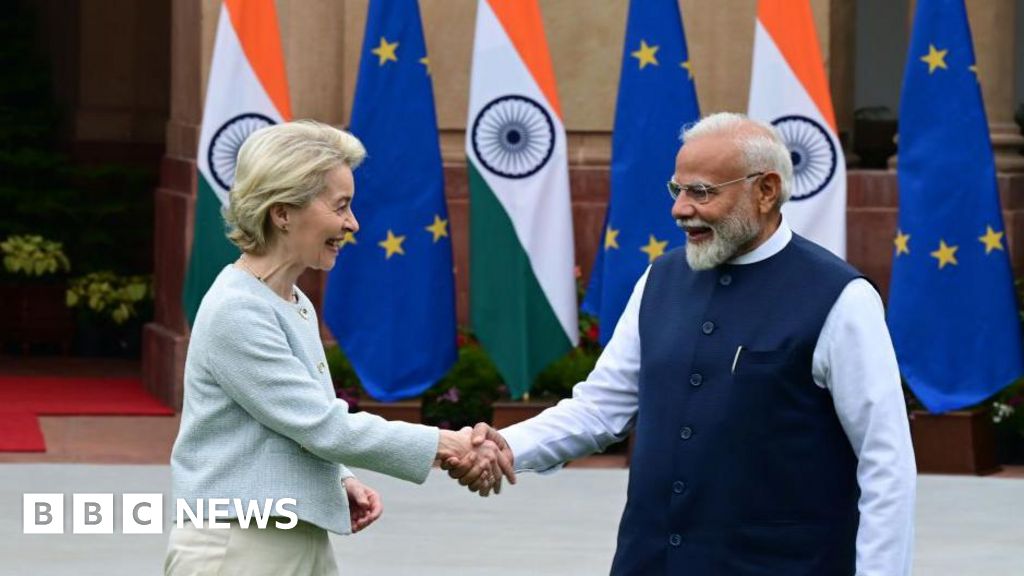
India and the EU are close to concluding a major free trade agreement — billed as the “mother of all deals” and possibly announced around the Jan. 27 summit — that would restore EU GSP preferences and lower tariffs on key Indian exports (garments, pharmaceuticals, steel, petroleum products and machinery), potentially reversing competitiveness losses after 2023 and helping India offset higher US tariffs. The pact would deepen trade ties between a $4tn-plus, fast-growing India and the EU (India exported ~$76bn to the EU and imported ~$61bn), but significant sticking points remain, notably EU demands on IP/data protection and the EU’s Carbon Border Adjustment Mechanism (CBAM), which could raise compliance costs for Indian MSMEs; the deal also requires EU parliament approval. Geopolitical dynamics — US tariff friction and EU desire to reduce China dependency — are accelerating the negotiations, making the agreement strategically important though still contingent on resolving final regulatory and climate-related disputes.
Market structure: A signed India–EU FTA shifts pricing power to Indian exporters (garments, pharmaceuticals, machinery, petroleum products) and EU manufacturers targeting India (autos, wine/spirits). Expect 5–8% incremental export volume tailwind to these sectors in the first 12–24 months vs status quo as tariff lines are phased down; MSMEs face headwinds from CBAM compliance raising per-unit costs by an estimated low double-digits for carbon‑intensive goods. Cross-asset: anticipate INR upside vs USD/EUR (2–4% over 6–12 months on ratification) and 10y Indian yields tightening ~15–30bps on sustained foreign inflows; EU industrial credit should tighten modestly if export momentum materialises.
Risk assessment: Key tail risks are deal collapse or EU parliament rejection (political/human‑rights/IP blockers), aggressive US tariff escalation, and protracted CBAM implementation that materially offsets tariff gains. Timing matters: market reaction will be front‑loaded on an announcement (possible Jan 27) but economic effects are phased over 6–24 months as tariff lines and CBAM rules apply. Hidden dependency: benefit accrues only if compliance costs for MSMEs are mitigated — otherwise gains concentrate in large, certified exporters.
Trade implications: Tactical trades favor long India equity exposure and selective long EU industrials; prefer defined‑risk option structures (debit spreads) to capture phased tariff cuts while limiting downside if ratification stalls. By sector, overweight: India exporters (pharma, apparel), EU autos; underweight/hedge: high‑emitting commodity exporters lacking CBAM preparedness (steel/cement MSMEs). Catalysts to watch: Jan 27 summit, EU parliamentary timetable (3–9 months), India’s announced reduction in Russian crude purchases (Nov 2025 timeline) which eases EU approvals.
Contrarian angles: Consensus underrates CBAM and IP friction — real net benefit could be skewed to large corporates while small exporters see margin erosion; market may underprice implementation friction, presenting mispricings in small‑cap Indian exporters. Historical parallel: EU–South Korea FTA delivered outsized gains to autos/components but only after multi‑year tariff phase‑ins; expect similar lags here. A positive headline at Jan 27 could be followed by a 3–9 month consolidation as technical legalities and CBAM rules are negotiated.
AI-powered research, real-time alerts, and portfolio analytics for institutional investors.
Request DemoOverall Sentiment
mildly positive
Sentiment Score
0.28
