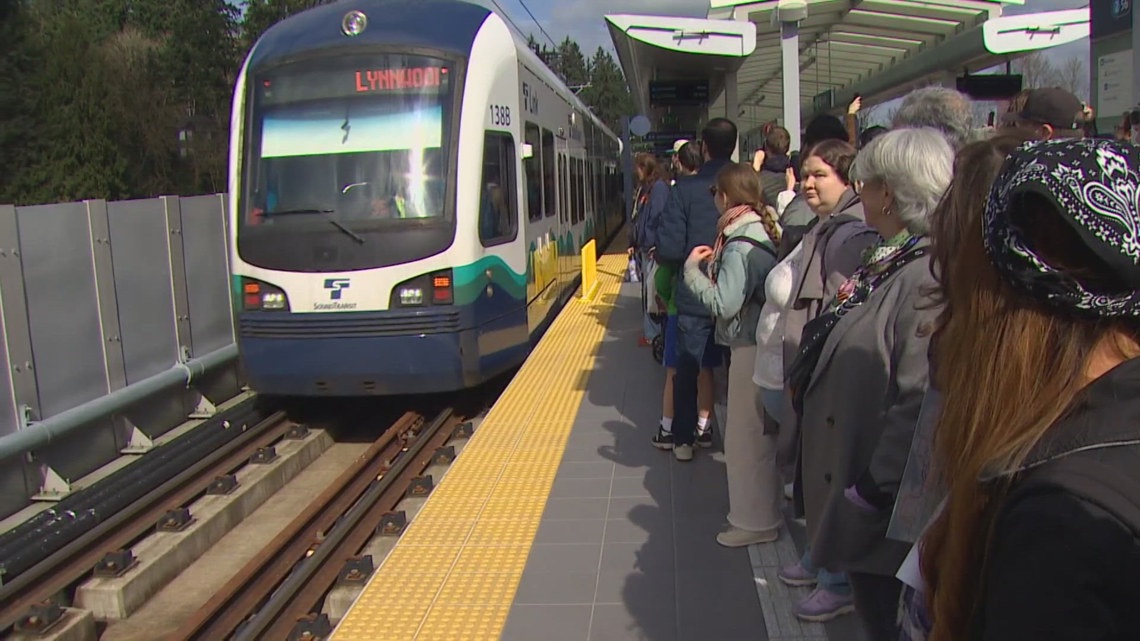
The new cross-lake light rail is now in service; the system carries ~130,000 riders daily and the new segment is projected to add roughly 50,000 daily riders. Early weekday usage shows high parking occupancy at Mercer Island and South Bellevue and riders citing traffic avoidance and improved connectivity, though some report limited station amenities and incomplete network links. Sound Transit will monitor parking occupancy and ridership patterns as daily habits settle, leaving longer-term modal shift uncertain.
The opening will drive a sustained increase in “hybrid commute” behaviors rather than a pure modal shift — expect park-and-ride occupancy to become the binding constraint in the first 3–12 months and act as the choke point for incremental ridership growth. Municipal responses (dynamic pricing, permit zones, rapid construction of overflow lots or shuttle services) are the most likely near-term arbitrage: each 10–15% increase in peak occupancy creates immediate revenue upside for parking-tech/payments players and political pressure that can accelerate local capex decisions.
A quieter second-order effect is redistribution of bus and microtransit resources: overlapping bus routes will be rationalized into feeder services, raising demand for smaller buses, on-demand software and dispatch platforms over 6–24 months. That redeployment shrinks long-haul local bus miles while increasing short-trip vehicle turnover — favorable for platform companies that monetize frequency and for suppliers of light-vehicle fleets.
Over 1–3 years, transit-induced re-pricing of land and commercial rents near nodes is the largest macro effect most investors underweight today. Expect a two-speed real estate outcome: near-station multifamily and convenience retail re-rate positively, while surface parking and drive-dependent retail see margin pressure. Key near-term signals to monitor: parking occupancy curves, feeder-bus load factors, local permit changes, and any toll/lane policy adjustments — each can flip the ROI calculation for developers and operators within quarters.
AI-powered research, real-time alerts, and portfolio analytics for institutional investors.
Request DemoOverall Sentiment
mildly positive
Sentiment Score
0.25
