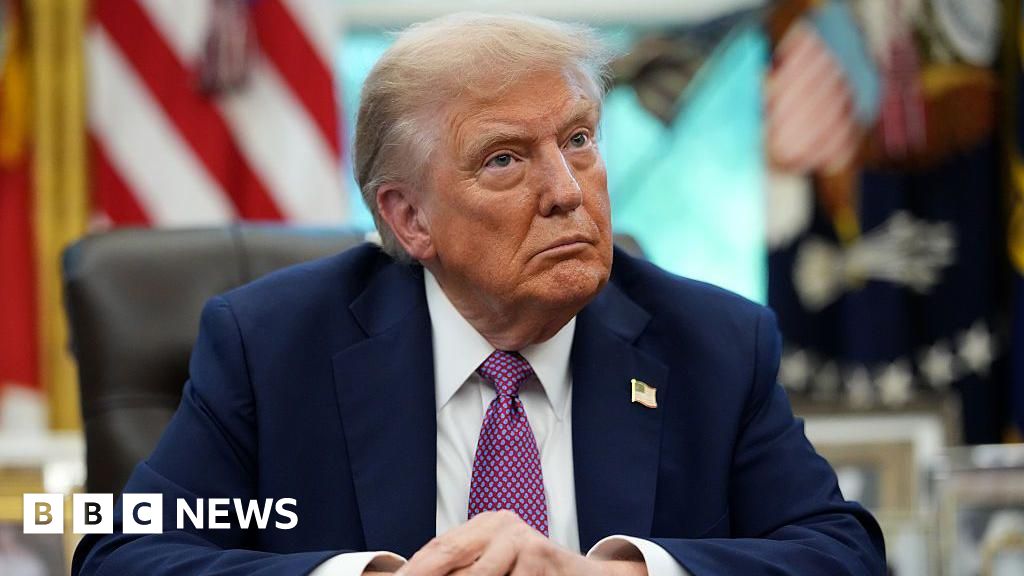
US President Donald Trump has proposed the European Union impose 100% tariffs on China and India, aiming to pressure Russia to end the Ukraine war by targeting major buyers of Russian oil. This significant demand, made amidst intensifying Russian attacks and Trump's peace efforts, signals a potential strategic shift for the EU from traditional sanctions to direct trade levies as a tool for economic coercion against Moscow, with implications for global trade dynamics and energy markets.
The Trump administration is proposing a significant escalation in economic pressure against Russia by urging the European Union to implement 100% tariffs on goods from China and India. This strategy is designed to cripple Moscow's war-funding capabilities by targeting the primary buyers of Russian oil, a critical revenue source for the Kremlin. The proposal comes amid an intensification of Russian military aggression, including recent heavy aerial bombardments in Ukraine and a failed US-Russia peace summit, and is framed by the US Treasury as a necessary step requiring strong European backing. For the EU, which still sources 19% of its natural gas from Russia, adopting such a policy would mark a major strategic pivot from direct sanctions to punitive secondary trade levies. This potential for severe market disruption is underscored by a recent unilateral US action that imposed a 50% tariff on Indian goods, partly as a penalty for its transactions with Russia, setting a precedent for this approach even as bilateral US-India trade talks proceed with stated optimism from both sides.
AI-powered research, real-time alerts, and portfolio analytics for institutional investors.
Request DemoOverall Sentiment
moderately negative
Sentiment Score
-0.50
Ticker Sentiment
