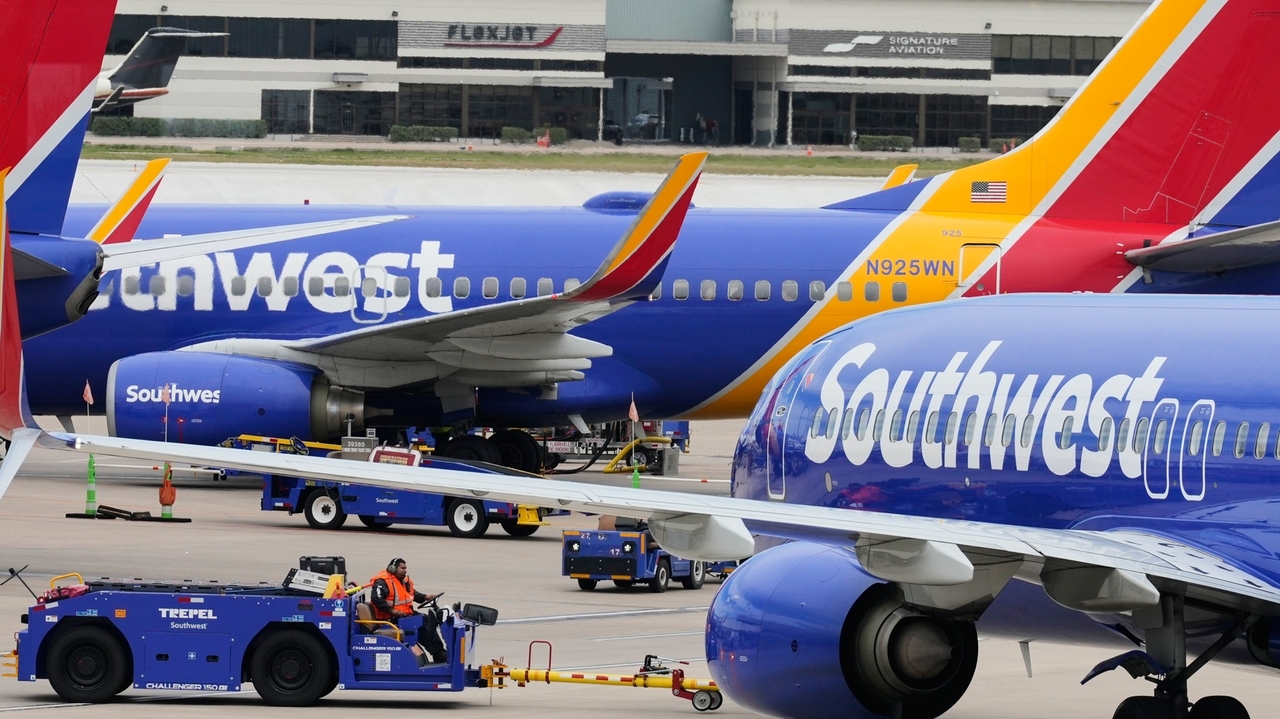
Southwest Airlines will limit passengers to one portable charger per person starting April 20 and ban chargers from overhead bins and checked luggage, while largely relying on communication rather than bag searches. The FAA logged 97 lithium battery incidents in 2025 and UL reported a 42% rise in portable charger incidents in 2025 after a January Air Busan fire that forced evacuation of 176 people. Southwest says the policy will reduce battery-fire risk and plans to equip its fleet with in-seat power by mid-next year to ease the restriction for travelers.
Airlines’ recent safety posture around lithium batteries will reallocate economics along the travel value chain: incremental cabin capex (in-seat power, containment equipment) and boarding/gate communication costs will be borne by carriers in the near term, while retailers and third‑party power bank OEMs face reduced impulse demand. Expect retrofit programs to show up as a modest, concentrated capex demand over 6–18 months (we estimate industrywide spend in the low‑hundreds of millions), creating a short window for suppliers of in-seat power gear and certified battery containment solutions to capture outsized revenue.
Operationally, there are offsetting second‑order effects. Better on‑board mitigation lowers frequency of expensive incidents and could compress airline insurance loss ratios within 12–36 months (we estimate a plausible 5–15% reduction in loss frequency for carriers who standardize protocols), but stricter screening/communication raises gate handling friction — even a 30–60 second additional average turnaround per flight scales to meaningful utilization loss across high‑frequency domestic networks.
Behavioral and revenue implications are subtle: carriers that convert safety upgrades into a marketed product (reliably powered seats, premium “safe charging” bundles, airport kiosk sales of certified banks) can convert a safety expense into an ancillary revenue stream and marketing advantage. Conversely, carriers that neither retrofit nor credibly communicate safety gains risk a relative PR and preference hit among frequent flyers, which could manifest as modest yield pressure in competitive domestic markets over 3–12 months.
Key catalysts to watch: regulator signals or an incident that forces industrywide mandates (would accelerate insurance repricing and retrofit demand), supplier order books for in‑seat power gear over the next two quarters, and quarterly commentary from carriers about realized insurance/maintenance savings. The asymmetry favors nimble carriers that monetize the change quickly and limit gate friction; slower adopters face both reputational and potential cost disadvantages.
AI-powered research, real-time alerts, and portfolio analytics for institutional investors.
Request DemoOverall Sentiment
mildly positive
Sentiment Score
0.15
Ticker Sentiment
